How to Stop an Elderly Parent from Driving
The talk most caregivers dread, the three signs that mean it's time, and the framing that gets a yes instead of a fight.
The conversation about taking the keys from an aging parent is the talk most caregivers dread. The three signs it's time: missed stop signs they used to catch, fender-benders they explain away, and getting lost on a route they've driven for 30 years. The fix isn't a fight. It's a substitute — a ride from a sister, a neighbor, a service — that gets your parent to the same Tuesday choir practice without the car. Tiina is the calm voice they can talk to after the doctor brings it up, before they decide.
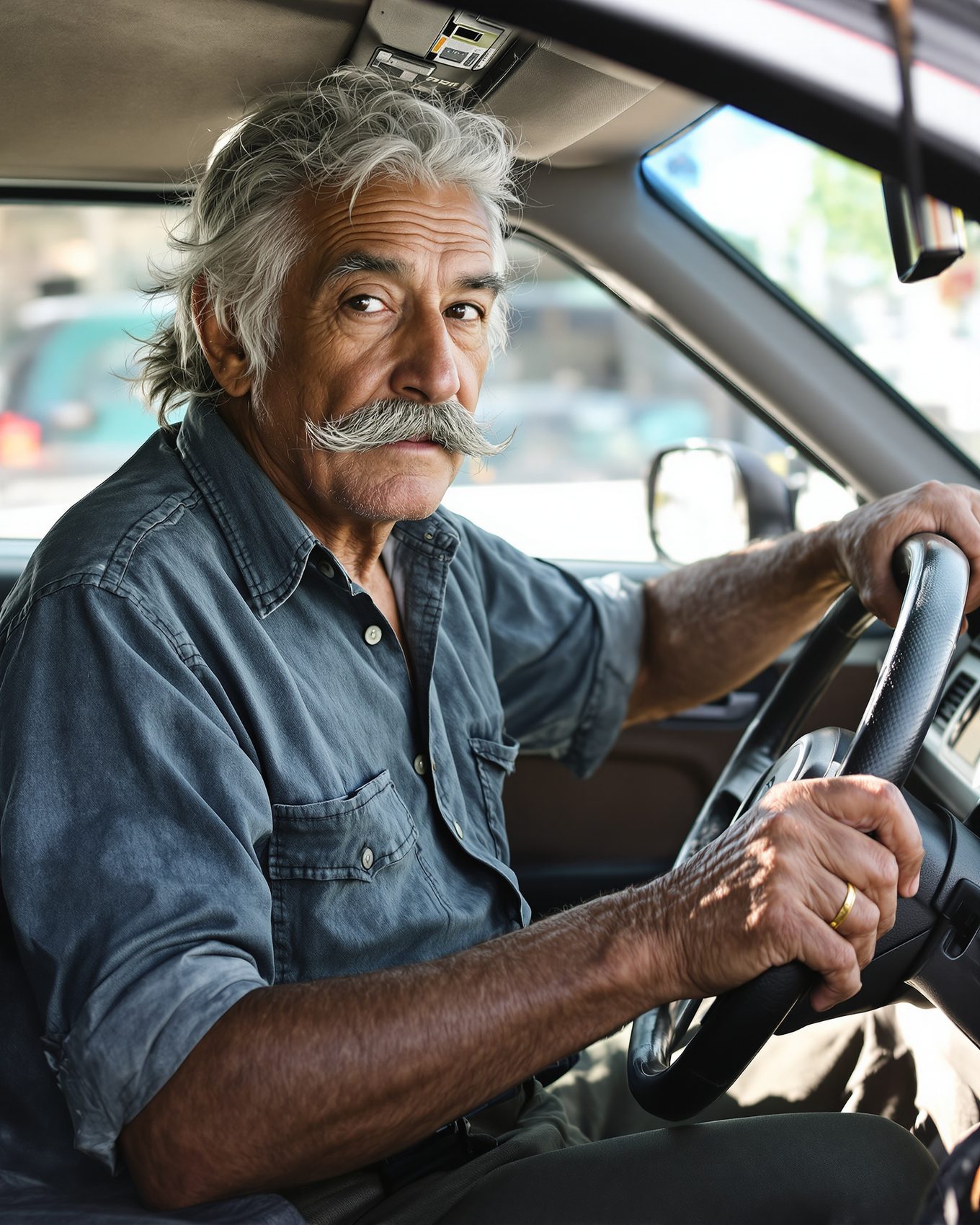
Hector's 2004 sedan flashed a blinking red wrench at exactly 2:14 PM on a Tuesday. He pulled over onto the shoulder of Route 89 and consulted the tabbed owner's manual he'd kept in the glove compartment for nineteen years. Page 142 offered zero comfort.
He pressed one button on the roadside app his daughter had forced him to download. Two separate tow trucks arrived in his driveway at the exact same moment. The mechanic walked around the car twice, opened the hood, and confirmed it: the engine was done. Hector's trusty vehicle of nineteen years was officially deceased.
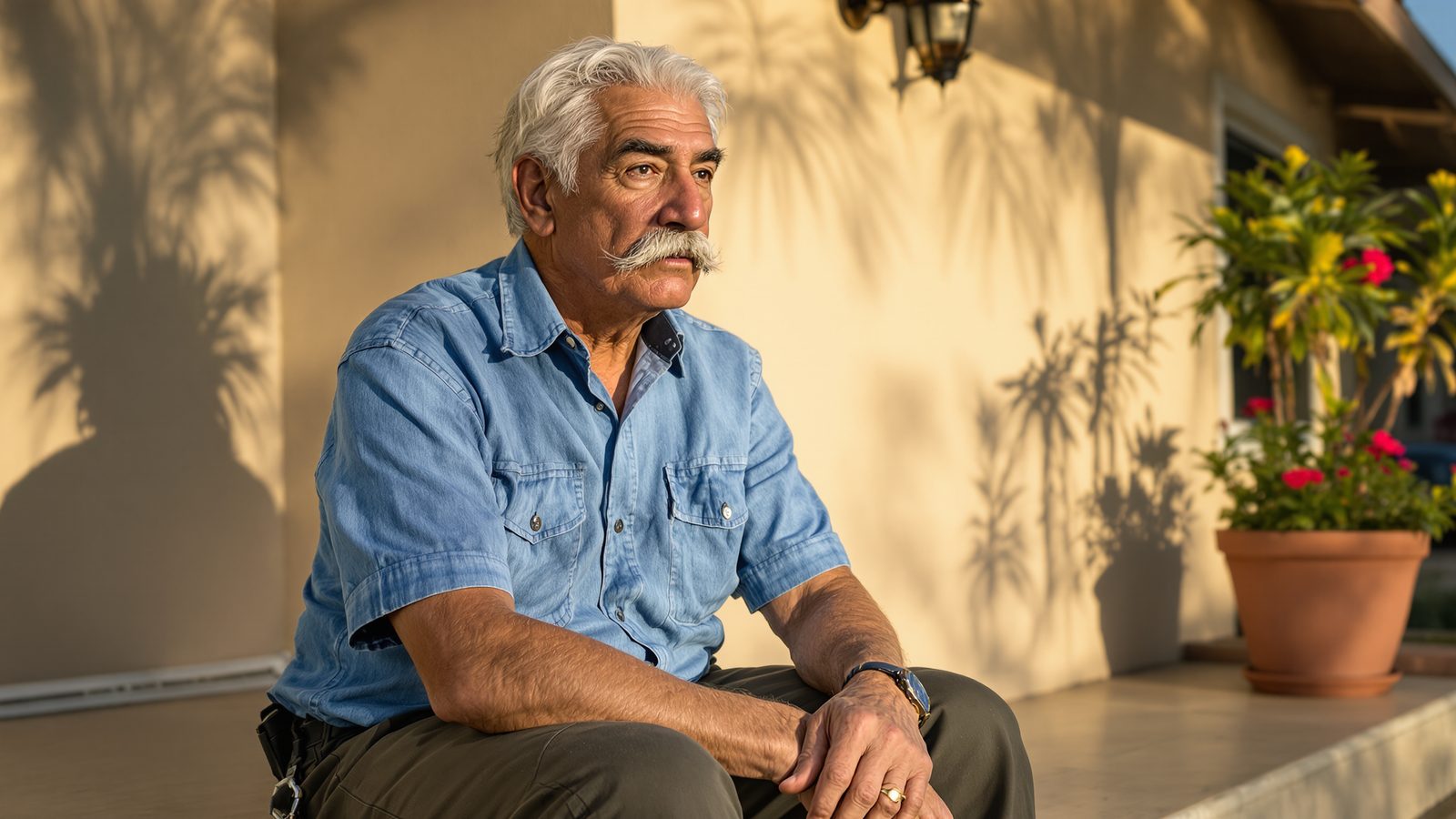
Hector is 78. He grew up in a town where the bus came twice a day. He stopped driving at night a year ago without telling anyone. He stopped driving on the highway six months ago after a panic attack at the I-95 merge. He hasn't admitted that to his daughter yet.
A composite, drawn from National Highway Traffic Safety Administration crash data. Names changed.
The three signs it's time
The conversation isn't about age. Plenty of 85-year-olds drive better than your nephew. The conversation is about three specific changes that the NIH and AAA research consistently link to crash risk in older drivers:
- Missed stop signs they used to catch. The classic visual-attention warning sign. Not "they slowed and rolled through." They drove past it and didn't notice.
- Fender-benders they explain away. One incident is an accident. Three in a year — even tiny ones in parking lots — is a pattern your insurance company already sees.
- Getting lost on a route they've driven for 30 years. The most under-reported sign and the most diagnostically significant. If your dad pulled over and called you because he didn't know which exit to take going to the same dentist he's seen since 1994, that's the conversation moment.
None of these means dementia. They mean reaction time and visual processing have changed — which they always do, just at different rates per person.
The conversation that works
Don't lead with "you're not safe." Lead with the alternative. The single thing that derails this talk is your parent imagining a future where they're stuck inside the house. If you can solve that fear in the same sentence as the ask, the talk gets shorter.
The sentence we recommend: "Dad, I want to talk about Tuesdays. What if Beth picked you up for choir? You wouldn't have to drive the 89 at dusk, and you'd get there earlier so you could see Marge before practice." The framing is: here is the THING you do that we can keep doing, with one piece replaced. Not "we're taking your keys." A specific ride, on a specific day, with a specific person.
Most parents say yes to the first one. After three weeks of Tuesday choir without driving, the second one is easier. After three months, the keys become symbolic — sometimes they keep them, sometimes they hand them over, but the daily driving has already stopped.
If they refuse
Some parents will refuse. That's not failure — that's normal. The fallback options, in order of escalation:
- The doctor's note. Most primary care physicians will write a "driving recommendation" letter at the family's request. State DMVs accept these as cause for a re-test.
- The state DMV referral. Most states accept anonymous family-member reports that trigger a written + road re-test. The DMV — not you — becomes the bad guy.
- The car itself. Disable the battery, "lose" the keys for a few days, schedule a "repair" that never quite finishes. Lower-conflict than confiscation. Not lower-dignity — be honest with yourself about this.
None of these is ideal. All are better than a crash.
Tiina talks with your parent between your visits — gentle, repeatable, always patient — so the quiet stretches of the day aren't so quiet.
The DMV path — when family can't do it alone
Every state allows family-initiated reports to the DMV that trigger a written + road retest for older drivers. Most states accept these reports anonymously, which is the key: the DMV becomes the entity asking your parent to prove they're still safe — not you. The conversation becomes "the state wants to retest you, here's the form" instead of "I'm taking your keys."
The path varies. In California, the DMV's Reexamination Request form (DS 699) can be submitted by family. In Florida, anyone can request a "medical referral" review. In New York, the state accepts confidential family reports. AAMVA maintains the state-by-state procedure index.
The doctor's note path is parallel and usually faster. Most primary-care physicians will write a "driving recommendation" letter at the family's request — sometimes a single sentence on the back of an after-visit summary. DMVs in nearly every state accept these as cause for retest. Ask your parent's PCP directly: "Would you write a note that says she should be reevaluated for driving safety?"
Real alternatives to driving (that don't make your parent feel disabled)
The single thing that derails this conversation is your parent imagining a future where they're stuck inside the house. Solve that fear and the keys talk gets shorter. Options that work better than they sound:
- Uber Health / Lyft Concierge. Family-managed rideshare your parent doesn't need an app for. You book; the driver picks them up. Costs $8-25/ride in most cities. Best for medical appointments and groceries.
- The local Area Agency on Aging. Most US counties have subsidized senior transport — usually $2-5 per round trip for medical, groceries, social. Wait times vary. Eldercare Locator (1-800-677-1116) routes you to the right program.
- The neighbor stipend. Pay the friendly neighbor $20 per round trip. More reliable than rideshare, your parent feels less institutional, you both win.
- GoGoGrandparent. Phone-based rideshare booking for seniors who refuse smartphones — they call a number, an operator books an Uber for them. $0.27/min surcharge but the friction reduction is worth it.
- The grocery delivery service. Instacart, Walmart+, Amazon Fresh. Removes the single highest-frequency reason your parent says they need to drive.
Most parents will pilot one of these for two months, find it works, and quietly stop driving themselves before you ever have the "keys" conversation. That's the goal.
What this sounds like with Tiina in the room
The day after the cardiologist mentioned night driving. Your dad is in the kitchen, not calling you yet, not calling his daughter Sarah. He taps Tiina. "They're going to take my license, aren't they?" Tiina doesn't answer that question — she's not a doctor and won't pretend. Instead, she walks him through what the doctor actually said. Reads the after-visit summary out loud, slowly. Tells him what "limited night driving" actually means, and what it doesn't. Asks him what he wants to talk to Sarah about when he calls her in the morning. He thinks about it. He says: "That I'm scared. And that I'm okay with the daytime." She writes it down so he doesn't forget.
For the silent drive home after the doctor takes the keys.
You can't be in the passenger seat every time the loss hits. But the next morning, when he's staring at the empty driveway, he can open Tiina and not be alone with it.
Set Tiina up for Dad →Methodology & editorial policy
Reviewed and updated May 10, 2026 by the Tiina Editorial Team. Re-checked monthly against NHTSA crash data and AAA Foundation older-driver research. Updated when a major state DMV changes its older-driver retest policy.
About composite scenarios. Hector and Tracy are composite. The three warning signs are sourced from published senior-driving research.
About Tiina. Tiina is a voice-first AI companion for older adults — an app for iPhone and iPad that your parent opens to talk through a moment that doesn't feel right.
Sharing. Quote freely with a link back to this page. For full reprints, email hello@tiina.ai.
Sources. 5 references — NHTSA, AAA Foundation, AARP, AAMVA, state DMV procedures.View all
- NHTSA — Older Drivers research summary. nhtsa.gov/road-safety/older-drivers
- AAA Foundation for Traffic Safety — Longitudinal Research on Aging Drivers (LongROAD). aaafoundation.org
- AAMVA — Driver License Renewal Procedures by State. aamva.org
- Hartford Center for Mature Market Excellence — We Need to Talk: Family Conversations with Older Drivers. thehartford.com
- AARP Driver Safety — When It's Time to Limit Driving. aarp.org/auto/driver-safety