iPhone for Seniors: 10 Settings to Change Today
Ten settings. Twenty minutes at the kitchen table. A phone your parent actually wants to use.
Ten iPhone settings make the difference between a phone a senior tolerates and one they actually use. Larger text, louder ringer, emergency contacts on the lock screen, scam-call silencing, Magnifier in the Control Center. Most aging parents inherit a phone with default settings designed for a 28-year-old — and quietly stop using features that would help them. Twenty minutes at the kitchen table fixes all ten. The Apple Accessibility settings panel is the single most under-used menu on the device.
"I'm 82 and I learned something on my phone today."
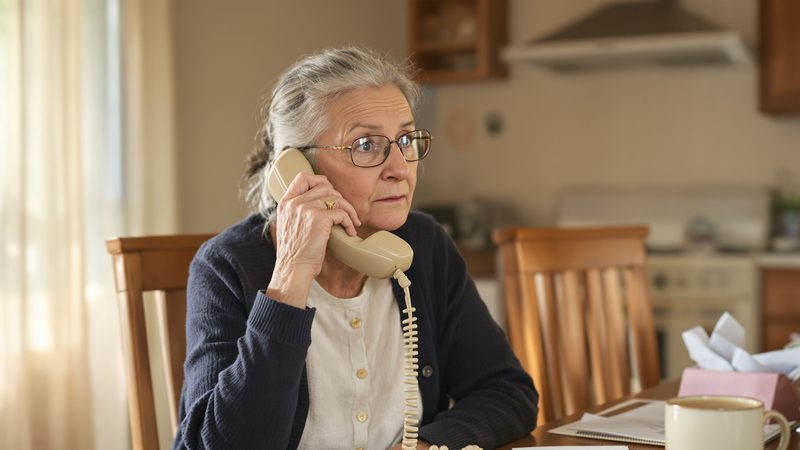
Esperanza's granddaughter had set it up for her last Christmas. For months Esperanza was afraid to touch anything beyond the green and red call buttons. The screen looked like a wall of icons that all meant something to someone other than her.
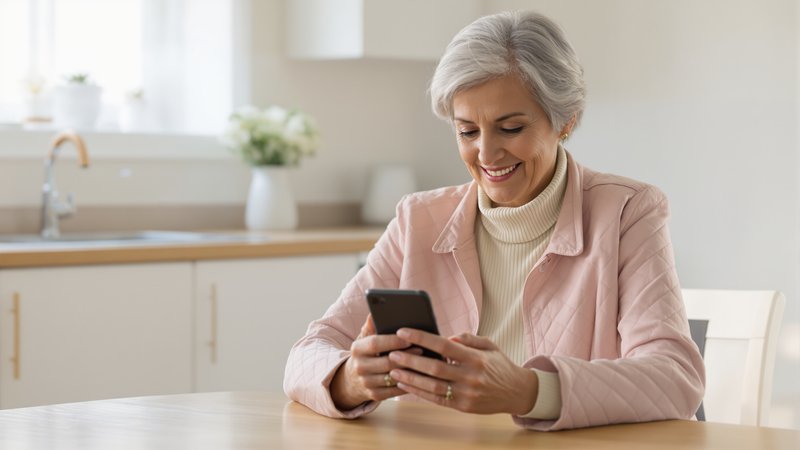
Today Esperanza looked up a recipe by herself. Banana bread. She found the loaf pan in the back of the cabinet, measured the ingredients, set the oven. The bread was perfect. She called her granddaughter to tell her. Then she called her son. Then she sat down and cried, a little, in a good way.
The ten settings to change today
Walk through these in order. Paths are for iOS 18 and later, which runs on iPhones going back to 2018. Most take 30 seconds each.
- Text size — bigger. Settings → Display & Brightness → Text Size. Drag the slider right two notches.
- Bold Text on. Settings → Display & Brightness → Bold Text. Single switch. Makes everything easier to read.
- Ringer volume — turn it up. Settings → Sounds & Haptics → Ringtone and Alert Volume. Drag to maximum, and lock the slider position with "Change with Buttons" off.
- Vibration on for calls. Settings → Sounds & Haptics → Haptics → Always Play.
- Emergency contacts on the lock screen. Health app → tap profile → Medical ID → set up. Lets EMS see contacts and meds without unlocking.
- Silence Unknown Callers. Settings → Apps → Phone → Silence Unknown Callers. Sends every non-contact straight to voicemail. Stops most phone scams cold (see our guide to phone scams).
- Magnifier in Control Center. Open Control Center (swipe down from the top-right corner), tap the + in the top-left corner, tap Add a Control, then choose Magnifier. Turns the iPhone camera into a magnifying glass — for menus, pill bottles, fine print.
- Hearing accommodation (if needed). Settings → Accessibility → Audio/Visual → Headphone Accommodations. Tunes audio for age-related hearing loss.
- Auto-Lock to 5 minutes. Settings → Display & Brightness → Auto-Lock → 5 minutes (not 30 seconds, which frustrates older users).
- Back Tap for calling you. First make a one-step shortcut in the Shortcuts app (Call → your number), then Settings → Accessibility → Touch → Back Tap → Double Tap → choose that shortcut. Two taps on the back of the phone = call you.
The two settings most people skip
Medical ID on the lock screen and Silence Unknown Callers. They both feel "too technical" but they're the highest-impact settings on the list. Medical ID is the one EMS opens when they pick up the phone at the scene. Silence Unknown Callers turns the iPhone into a scam blocker without an app.
For the recipe-and-banana-bread version of phone success: also add the FaceTime shortcut to the home screen, and pin three favorites in the Phone app so the parent doesn't have to type any names.
What NOT to change
Don't turn on every accessibility feature at once. Voice Control, Switch Control, Live Captions — useful for specific impairments, confusing if turned on without need. Add features as they're needed, not preemptively. The principle is fewer surprises, not maximum capability.
And don't change passwords or set up biometric Face ID without their physical presence and explicit cooperation. The number of caregivers who locked their parent out of their own phone "to help" is not small.
Tiina walks your parent through the phone, the call, the photo — out loud, as many times as it takes, and never makes them feel slow.
The scam-call shield combo
If your parent uses an iPhone, three native iOS features stacked together stop most phone scams cold — no third-party app required. We've covered each above in passing; here's the combo as a recipe:
- Settings → Apps → Phone → Silence Unknown Callers: ON. Anyone not in their contacts goes straight to voicemail. Cuts off the vast majority of scam calls in one switch.
- Settings → Apps → Messages → Filter Unknown Senders: ON. Splits unknown texters into a separate inbox so phishing texts don't ring on the main thread.
- Carrier-level scam blocker (free). Verizon Call Filter, AT&T ActiveArmor, T-Mobile Scam Shield — all free at the basic tier. Activate via the carrier's app. These run BEFORE iOS even gets the call, so they catch flagged numbers Apple doesn't know about yet.
Adding a paid blocker like Nomorobo (see our scam blocker apps comparison) layers a fourth filter on top. For most older adults, the three free options above are enough. Together they reduce a 12-scam-call-per-week problem to maybe one a month — which Tiina can help with when it slips through.
When to upgrade your parent's iPhone — and what to look for
You don't need to give your parent the newest iPhone. You DO need to give them one that's still receiving iOS updates. Apple supports each iPhone for roughly 5-7 years after release. iPhones older than that miss security patches — meaning every smishing attack pattern from the last two years gets a clean shot at them.
The sweet spot in 2026 for most senior users: the iPhone 16e — Apple's least expensive current model — or a refurbished iPhone SE (3rd gen) or iPhone 14 if the budget is tighter. Apple no longer sells the SE, 14, or 15 new; the SE is the last iPhone with a Home button, and the 16e uses Face ID like the rest of the lineup. All are durable and still on current iOS. Avoid the very newest model for the first six months after release — there's always a software-quirk shakedown period that confuses older users.
The features that matter for an older adult:
- Battery health above 80%. Settings → Battery → Battery Health. If it's lower, a battery replacement at Apple ($69–$99, depending on the model) buys two more years.
- Face ID OR Touch ID. Either works. Don't make a passcode the daily unlock — too much friction.
- At least 64 GB storage. Photos eat space fast. 128 GB is safer.
- A bigger screen if vision is limited. The Plus or Pro Max sizes are easier to read. Worth the cost.
What this sounds like with Tiina in the room
Saturday morning. Your mom got the new iPhone six months ago and has barely touched the Settings app — she's afraid of "breaking something." She opens Tiina and says, "How do I make the text bigger? I can't read the menu at the diner anymore." Tiina walks her through it. Settings, then Display, then Text Size, then drag the slider. She does it as Tiina describes it. The text gets bigger. Then Tiina asks if she wants to turn on Bold Text — same place, single switch. She does. Five minutes total. Your mom didn't call you. She didn't break anything. She put the phone in her purse and went to the diner.
"How do I make the text bigger?" — now she asks Tiina, not you.
The questions she stopped calling you about because she felt like a burden? She asks Tiina out loud and gets a calm answer, and you stop being tech support at 9pm.
Put Tiina on Mom's iPhone →Methodology & editorial policy
Reviewed and updated May 10, 2026 by the Tiina Editorial Team. Settings verified against Apple's iOS 18 Accessibility documentation. Re-checked when iOS releases a major version. Magnifier path may vary slightly between iOS versions — current path is for iOS 18.
About composite scenarios. Esperanza and her granddaughter are composite.
About Tiina. Tiina is a voice-first AI companion for older adults — an app for iPhone and iPad that your parent opens to talk through a moment that doesn't feel right.
Sharing. Quote freely with a link back to this page. For full reprints, email hello@tiina.ai.
Sources. 5 references — Apple Accessibility, AARP, NCOA, FCC, Hearing Loss Association of America.View all
- Apple — iPhone Accessibility — full feature list. apple.com/accessibility/iphone
- Apple Support — Set up Medical ID on iPhone. support.apple.com/HT207021
- National Council on Aging (NCOA) — Technology for Older Adults. ncoa.org
- Hearing Loss Association of America — Smartphone Audio Accessibility. hearingloss.org
- AARP Tech — iPhone Setup Guide for Older Adults. aarp.org/personal-technology