Care costs and receipts
When family members chip in, small care costs can turn into big misunderstandings.
Download the PDF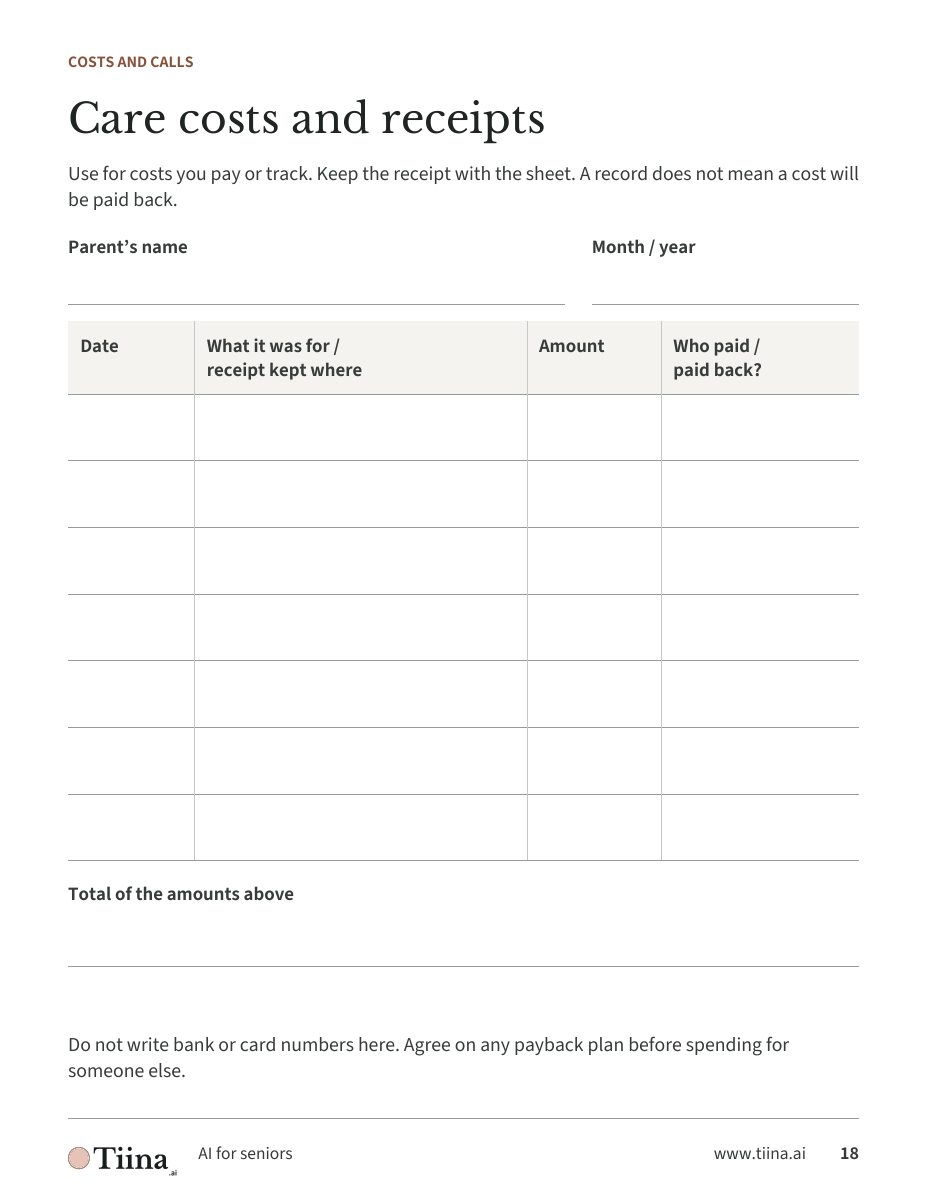
How to use it
- Start one page for this month’s care costs and keep the receipts with it.
- Write what each cost was for, the amount, who paid, and whether it gets paid back.
- Agree on any payback plan before you spend for someone else.
- Don’t write bank or card numbers on the page.
Keeping family care spending clear
When several people help, small costs add up fast: a copay, a ride, groceries, or a refill that was not covered. Writing each one down, with the receipt, keeps everyone clear on what was spent and who paid.
For each cost, note what it was for, the amount, who paid, and whether it gets paid back. Agree on any payback plan before you spend for someone else, and keep one-time costs, such as a ramp or a deposit, apart from the monthly ones.
Keep bank and card numbers off the page, and the receipts somewhere private. You do not have to promise money you cannot spare. The totals help when you fill in the monthly care budget.
More sheets you can print
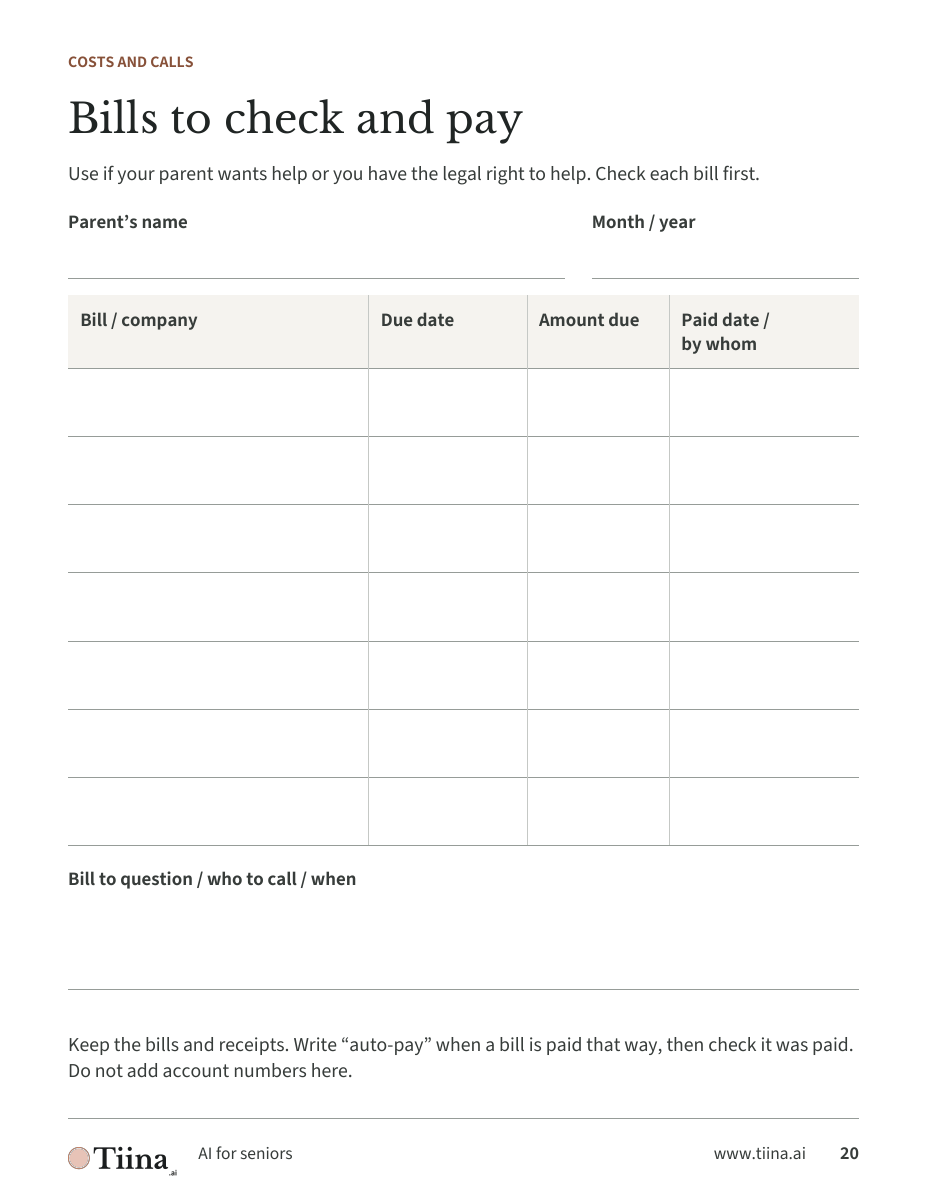
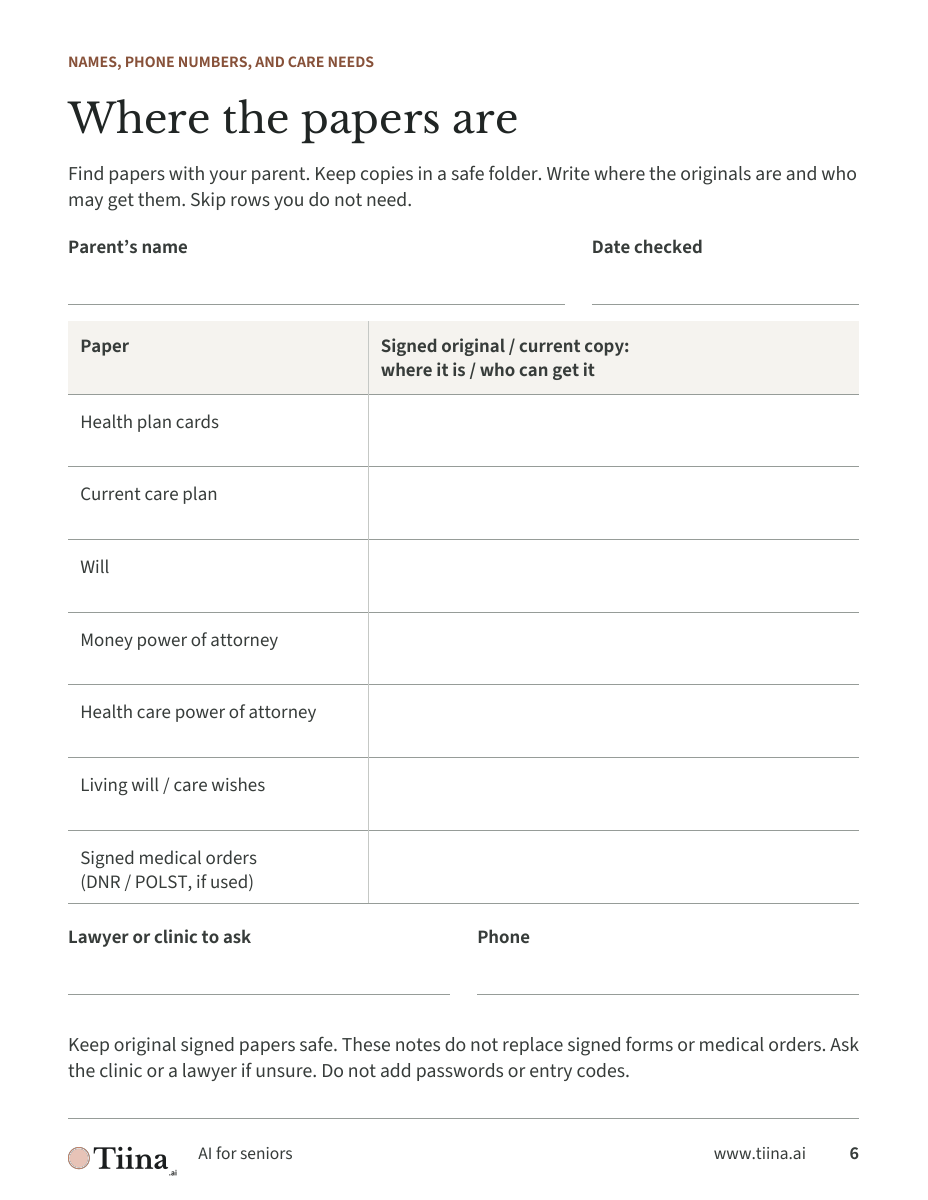
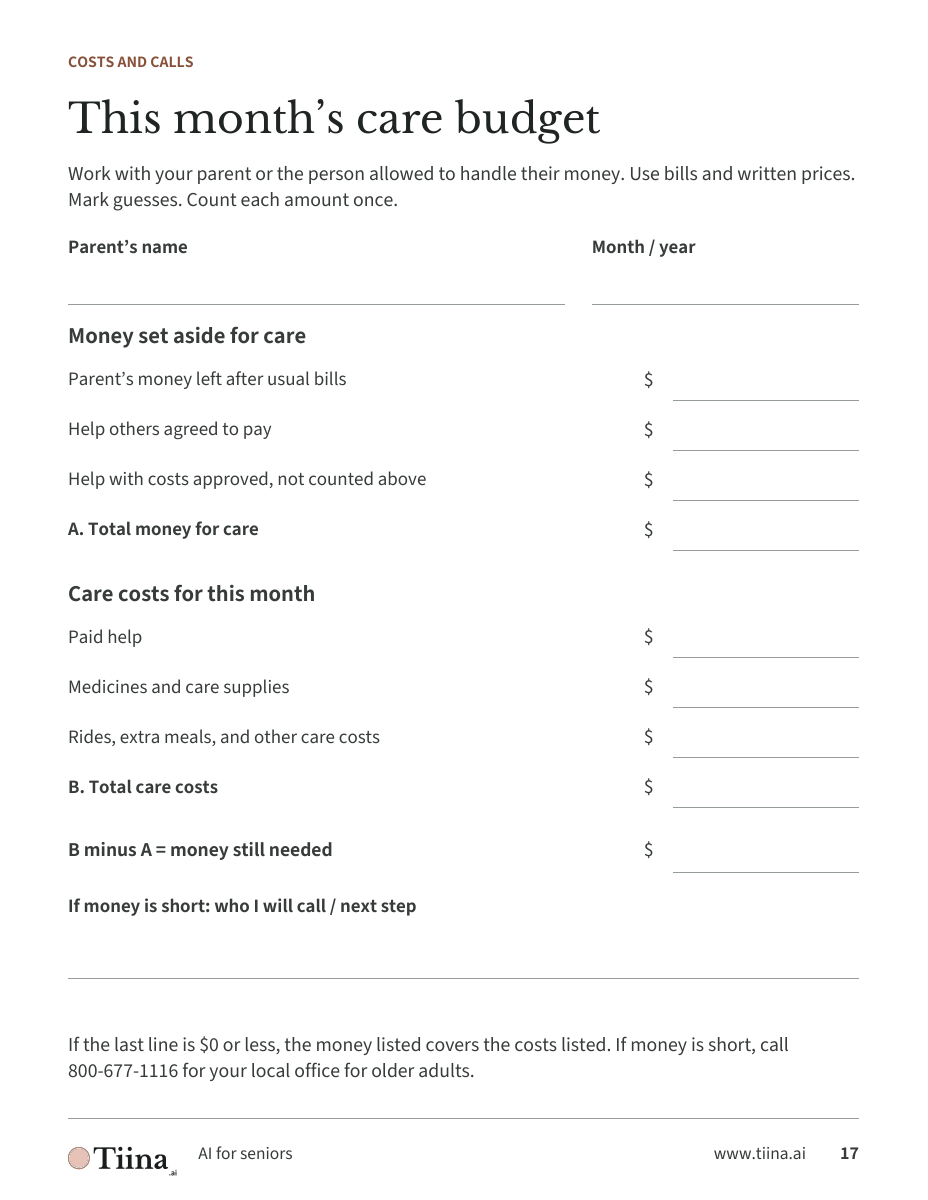
Bills to check and payIf your parent wants help with bills, or you have the legal right to help, one list makes it much harder for a bill to slip through.Where the papers areList where care papers are kept and who may get them.This month’s care budgetCare costs add up in small pieces: a copay here, a ride there, a refill that wasn’t covered.