Caregiver Burnout: 7 Signs You're Past the Line
Simone thought she was just tired. Then Mom called crying at 2pm again.
Tuesday, 2:07 PM. Simone is in a Zoom with her marketing director and her mom's name lights up the phone for the third time today. She hits decline. The phone buzzes again at 2:09. She steps into the hallway, voice low, jaw tight. Mom is crying.
It's a hospital letter. Mom thinks she owes four thousand dollars. Simone hears the word thousand and feels something hot rise in her chest. I have a meeting, she says. I will look at it this weekend. She hangs up before her mom can answer.
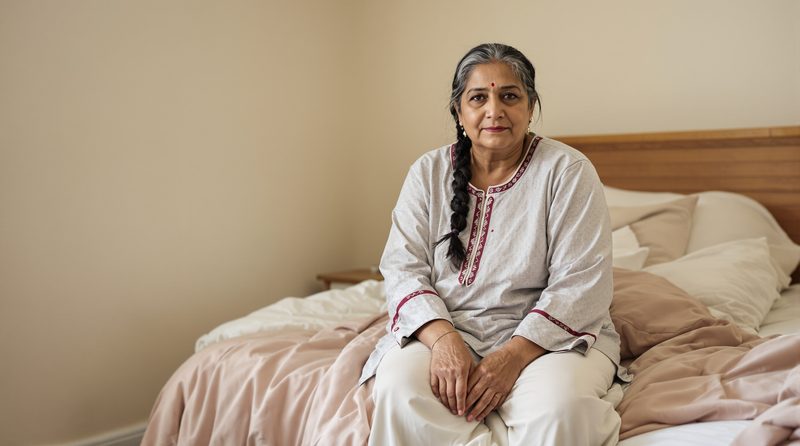
Saturday comes. The letter is an Explanation of Benefits. Not a bill. Simone sits on the kitchen floor and cries, because she yelled at her seventy-three-year-old mother over a piece of paper that meant nothing. That was sign one. There were six more.
I am not a bad daughter. I am a tired one.
She held the letter up to Tiina.
Caregiver burnout is the body's response to running a second full-time job on no sleep. The seven signs: physical exhaustion that sleep doesn't fix, snapping at the parent you love, dread at the sound of her ringtone, social withdrawal, weight changes, intrusive resentment, and the loss of feeling like yourself. Tiina, a voice-first AI companion for older adults, takes the small repeating questions off your phone so the calls that remain can be the ones that matter.
If your mom calls you four times a day, it is not because you have failed to teach her independence. It is because you are the only person in her contacts who answers. You taught her well. She trusts you. That trust is now the thing that is breaking you.
Your job is not to be her hospital, her bank, her translator, and her therapist. Your job is to be her daughter. Everything else is a system that needs replacing — not by you, by something built for it.
Burnout is not a character flaw. It is math.
What's actually happening to your body
More than 50 million Americans provide unpaid care to an adult — the AARP and National Alliance for Caregiving 2025 update counts roughly 63 million — and most of them are women. The Family Caregiver Alliance tracks the same pattern across decades: caregivers report higher rates of depression, anxiety, and chronic fatigue than non-caregivers in the same age band.
Your nervous system does not distinguish between a real emergency and an EOB letter your mom thinks is a bill. The cortisol spike is the same. Do this twenty times a week for three years and your body forgets how to come down. That is the tiredness sleep no longer fixes.
The seven signs are not personality flaws. They are symptoms of a load no single human was designed to carry: rage at the ringtone, snapping at your kid for asking a normal question, eating standing up over the sink, canceling on your sister three times in a row, the 3am wake-up where you replay every word you said in the car.
What Mom actually needs at 2pm on a Tuesday
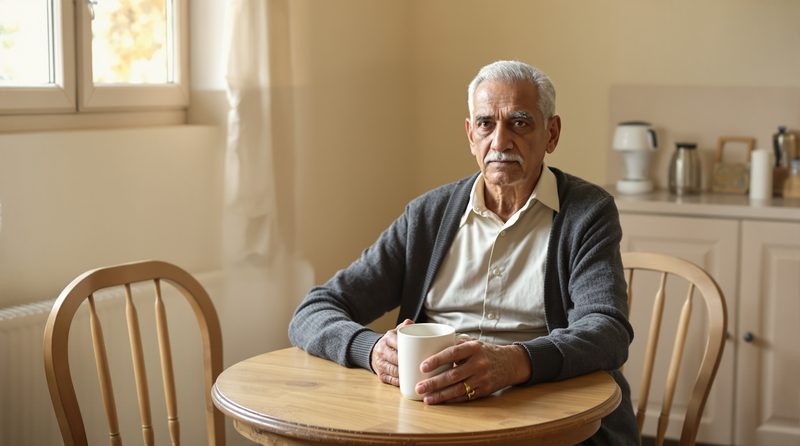
When Mom called crying, she did not need her daughter to drop a meeting. She needed someone to read the letter out loud and tell her what it meant. That is a five-minute job. It became a five-hour job because the only person who could do it was you.
Margaret, 73, in Akron started holding her mail up to her phone camera. She opens Tiina on her iPhone, points at the letter, and asks what it is. Tiina reads it, explains the line items, and helps her work out whether it needs action this week. She hangs up and goes back to her crossword. She does not call Simone.
This is not Simone outsourcing her mother. This is Simone taking the wrong job off her plate. The job of insurance translator is not a job a daughter should have. The job of daughter is the one that got crowded out — and the one Mom actually wanted in the first place.
What changes when the small stuff leaves your phone
Simone eats dinner with her kid on a Tuesday. The phone is face-down. It rings once during the meal — it's Mom, but Simone lets it go because it is not an emergency ringtone and Mom has Tiina for the letter she is probably holding. Simone calls her back at 7:30 and they talk about a cardinal that landed on Mom's feeder.
Mom keeps her independence. She is not being managed by a daughter who sighs every time the phone rings. She is asking a calm voice on her iPhone what an EOB is, and getting a clear answer in twenty seconds. That is dignity. That is what she lost when every question started costing her daughter something.
The seventh sign of burnout is the one nobody warns you about: forgetting who your mom is when she is not being a problem to solve. The cardinal phone call is the recovery. It is also what Mom has been waiting for.
Tiina talks with your parent between your visits — gentle, repeatable, always patient — so the quiet stretches of the day aren't so quiet.
What you can do this weekend
Saturday morning. Sit on Mom's couch with her iPhone. Open the App Store and install Tiina. Hand her the phone. Show her once: tap the orange circle, ask a question out loud. Have her hold up a piece of junk mail and ask what it is. Watch her face when Tiina reads it back and explains.
Saturday afternoon. Do not check in. Go home. Make a list of the three questions Mom asked you most this month — pharmacy refills, the Medicare letters, the Wi-Fi password she keeps losing. Those are now Tiina's job, not yours. Tell Mom that. Tell her you trust her with this tool.
Sunday night. Put your phone on Do Not Disturb at 9pm. Set Mom and your kid's school as the only bypass numbers. Sleep eight hours for the first time in a year. The seventh sign starts to fade when the first six stop firing every twelve minutes.
What this sounds like with Tiina in the room
Mom is at her kitchen table, the EOB letter in one hand, her iPhone propped against the salt shaker. She taps the orange circle. Tiina, what is this letter? It says I owe four thousand dollars. Tiina asks her to read the line at the top out loud. A pause. Margaret, that looks like an Explanation of Benefits, not a bill. It shows what the hospital charged and what Medicare paid. Look for the box that says what you may owe — and most of these say "this is not a bill" right on the front. Mom looks. It says zero. And there it is — "this is not a bill." Tiina says, Then nothing here is asking you for money. Keep it with your Medicare papers — and if it still worries you, a quick call to the number on the letter will settle it. Mom exhales. So I don't call my daughter? Tiina says, You can call her if you want to. You just don't have to. Mom folds the letter. I think I'll call her later. She's at work.
She puts the letter in the folder with the others. She picks up the crossword. Four hours later she calls Simone — to tell her about a cardinal at the feeder. Simone picks up on the first ring because she has been waiting for that phone call her whole life.
Mom doesn't call Simone crying about mail anymore. She calls about the cardinal.
The seven signs of burnout are not telling you to leave. They are telling you the load is wrong. Tiina takes the EOB letters and the pharmacy questions off your phone so the calls that remain can be the ones that gave you a mother in the first place. That phone call about the cardinal is what you've been working toward.
Set Tiina up for Mom →Methodology & editorial policy
Reviewed and updated May 14, 2026 by the Tiina Editorial Team. Re-checked as new federal data, agency updates, or product changes warrant. Sources are linked below; numbers are not composite.
About composite scenarios. Scenes and sample conversations in this article are composite. Names and identifying details are changed; the moment is real.
About Tiina. Tiina is a voice-first AI companion for older adults — an app for iPhone and iPad that your parent opens to talk through a moment that doesn't feel right.
Sharing. Quote freely with a link back to this page. For full reprints, email hello@tiina.ai.
Sources. 3 references — primary sources for the numbers and claims above.View all
- Family Caregiver Alliance: Caregiver Health — Source for the depression, anxiety, and chronic fatigue rates in caregivers vs. non-caregivers.. caregiver.org
- National Institute on Aging: Caregiving — Framing for the early warning signs and what structural change looks like.. nia.nih.gov/caregiving
- AARP & NAC: Caregiving in the U.S. — We used the caregiver count (roughly 63 million in the 2025 update) and the high-emotional-stress share from the 2020 report.. aarp.org/caregiving
Frequently Asked Questions
The four stages caregiver educators commonly describe — honeymoon, frustration, exhaustion, and depletion — are a practical framework, not a clinical diagnosis. In the honeymoon stage, caregivers say yes to everything and feel energized by being needed. Frustration sets in when the same problems keep recurring and gratitude fades. Exhaustion is when sleep no longer restores you and small tasks feel impossible. Depletion is the final stage, marked by numbness, hopelessness, and physical illness — the point where many caregivers start developing chronic conditions of their own. The stages do not resolve on their own while the load stays the same; structural change to the load is what moves the body back toward baseline.
About 4 in 10 family caregivers report high levels of emotional stress, per AARP and the National Alliance for Caregiving's 2020 Caregiving in the U.S. report. The Family Caregiver Alliance puts the share with clinically significant depression at 40 to 70 percent. The point: when this many people in a role hit clinical thresholds, the role itself is doing the damage. Reducing the load is the intervention, not trying harder to cope with it.
Three core symptoms are emotional and physical exhaustion that sleep does not fix, withdrawal from friends and previously enjoyed activities, and changes in appetite or sleep patterns. The Family Caregiver Alliance lists these among the earliest reliable indicators. Other common symptoms include feeling hopeless, snapping at the parent you love, dread when their name appears on your phone, and inability to concentrate. If several of these have been your daily reality for weeks, you are not just tired — say so to your own doctor, who can screen for depression in a few minutes. And the answer is changing the load, not adding another routine on top of it.
Caregiver burnout is cured by structural change, not rest alone. Identify the five recurring small tasks that keep landing on your phone (pharmacy questions, insurance letters, Wi-Fi resets, appointment confirmations, the same daily check-in) and move them to someone or something else. Add real respite, even four hours a week, by hiring help, calling in a sibling, or using a senior day program. Treat your own medical, dental, and mental health appointments as non-negotiable. Caregivers consistently describe mood and sleep improving once the small repeating tasks come off the primary caregiver — not because they learned to cope harder, but because the load actually changed.