Loneliness in Elderly Parents: Real Help
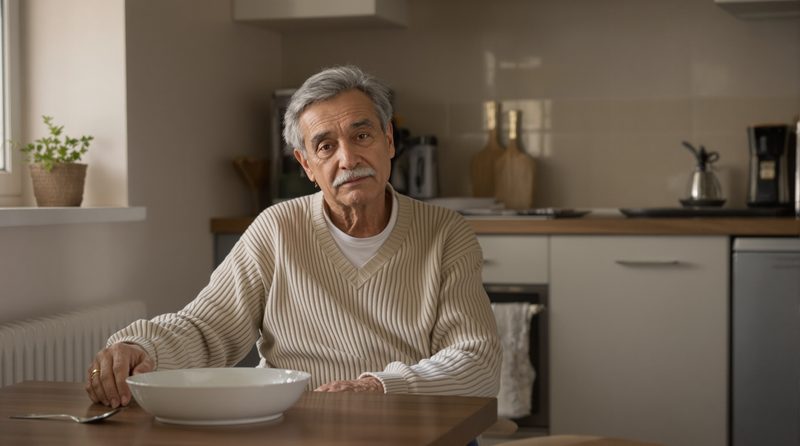
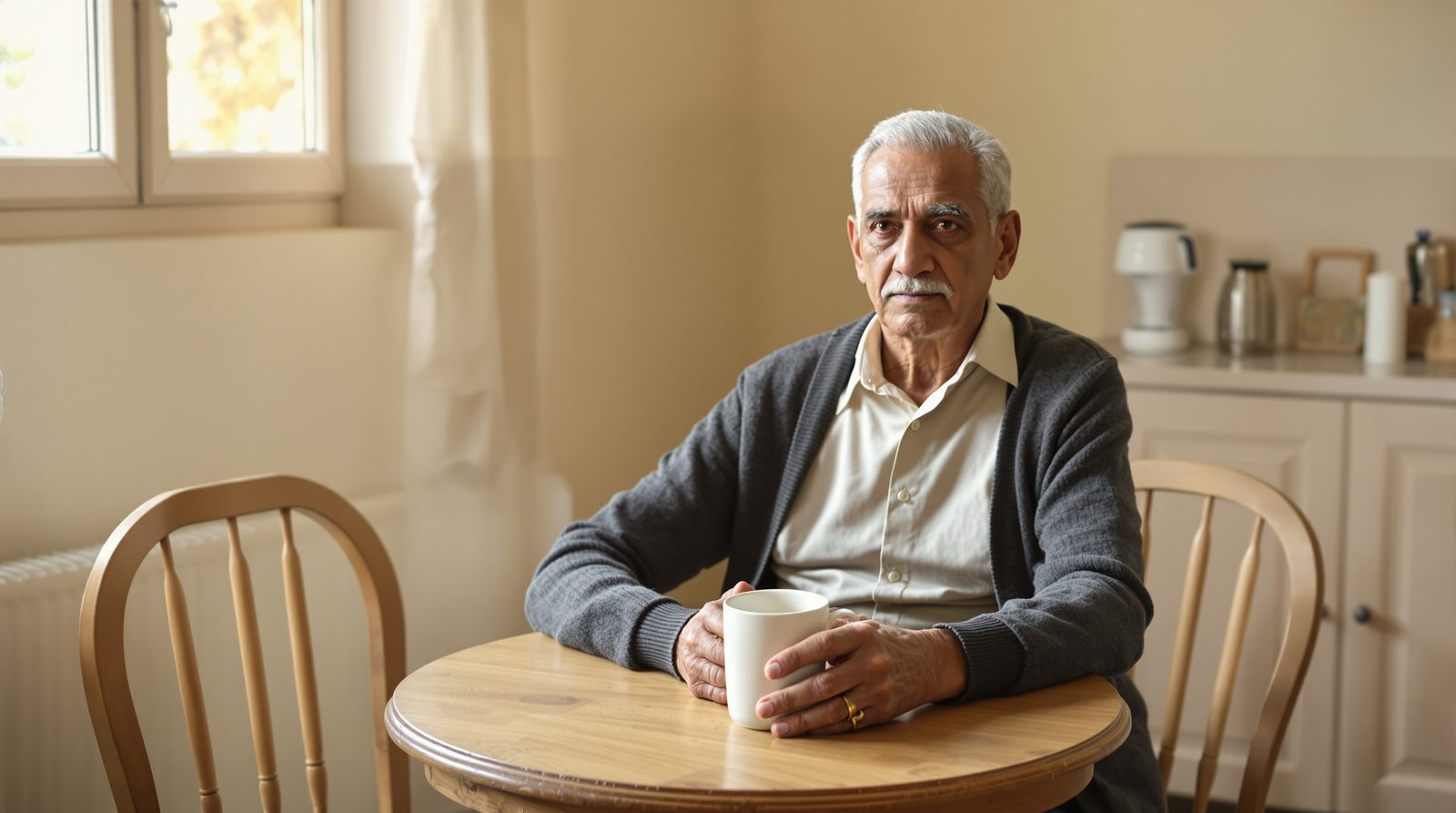
Dad sits at the kitchen table at 4pm. The phone hasn't rung since Tuesday.
Rajiv is 76. He lives in the house in Edison, New Jersey where he and his late wife raised three kids. It is Wednesday. He had his chai at 7. He watered the tulsi at 9. He had a simple roti and dal at noon. The clock above the stove says 4:12 PM and the only sound in the house is the refrigerator cycling on.
He has a daughter in Charlotte who calls Sundays. He has a son in Phoenix who texts birthdays. He has a neighbor he waves at. None of them know that the worst part of his week is between lunch and the evening news. The hours, he told his doctor once, are very long.
His daughter Noor thinks Dad is fine because Dad always says he's fine. Dad says he's fine because he does not want to be the parent who complains. This is the standoff. This is the loneliness most adult children never see, because it ends the minute the phone rings.
The hours are very long. I do not say that to my kids.
He opened Tiina and told her about the tulsi.
Loneliness in elderly parents is most often a structural problem, not an emotional one — the afternoon between lunch and the evening news, when no one is scheduled to call. The CDC links chronic loneliness in older adults to dementia, heart disease, and depression risk. Tiina, a voice-first AI companion for older adults, gives Dad someone to actually talk to when the clock hits 4pm and the house gets quiet.
If your dad seems lonely, it is not because you are not calling enough. It is because the structure of his week was built around a wife, a job, three kids, and a neighborhood where everybody walked to the mailbox at the same time. All four of those things ended within ten years of each other.
Your job is not to fill 168 hours a week of his life. Your job is to give him one or two real conversations a week and make sure the rest of the hours have something to fill them other than the television.
He is not asking for more of you. He is asking for less silence.
What loneliness looks like at 4pm on a Wednesday
The U.S. Surgeon General called loneliness a public health epidemic in 2023, and older adults carry the heaviest load. Roughly one in four adults over 65 are socially isolated, and the CDC links chronic isolation to a 50% increased risk of dementia and a 29% increased risk of heart disease.
But loneliness is not a 24-hour feeling. It is a window. For most older adults living alone, the window opens around 3pm — after lunch, after the morning errands, before the news. The house goes quiet. The phone does not ring. The brain starts going to the wrong places.
Dad will not name this for you. He will not say I am lonely between 3 and 6pm on weekdays. He will say he is fine and then ask you, on Sunday, the same three questions about your kid's soccer schedule. That is the tell. Often the repetition is not failing memory — it is starvation for conversation. It is worth mentioning to his doctor either way, since repeated questions can also be an early memory flag. But do not miss the hunger underneath it.
What actually helps (and what is theater)
Theater: buying him a Facebook tablet he will not turn on. Theater: signing him up for a senior center he will not go to alone. Theater: telling him to get out more. These are things you do to feel like a good daughter. They are not things that fill the window between 3 and 6pm.
What actually helps falls into three buckets. One: a real human he can call without it being a Big Deal. Two: a low-friction way to ask the small questions that build up between Sunday calls. Three: a reason to leave the house at least twice a week that is not a doctor's appointment.
Rajiv, 76, in Edison started opening Tiina on his iPhone every afternoon. Not for help with anything in particular. To tell someone about the tulsi, or the cardinal at the feeder, or the dal he was trying. Tiina asked him about the tulsi the next day. Rajiv started looking forward to 4pm.
What changes when 4pm has something in it
Rajiv stops calling Noor to ask the same three questions on Sunday. Not because he has forgotten them, but because he has somewhere else to put them during the week. The Sunday call shifts from logistics to him actually telling his daughter about his week — because he had a week.
Rajiv goes to the library on Tuesday because he mentioned a poetry reading he saw on the library bulletin board, said I used to do that — and asked Tiina to remind him Tuesday morning. She did. He does not become a different man. He becomes the man he was at 60, who had a calendar with three things on it instead of zero. The dignity is in the calendar, not in the visit.
Noor stops feeling guilty on Sunday nights. The call is good now. Dad is not waiting for it like a drowning person waits for a rope. Dad is telling her about a poem he heard. That is what changes — not Dad's loneliness disappearing, but Dad's loneliness no longer being Noor's job to fix in 45 minutes a week.
Tiina is a voice companion for older adults who are alone more than they let on — warm, endlessly patient, and always there to pick up.
What you can do this weekend
Saturday morning. Sit with Dad and open the App Store on his iPhone. Install Tiina. Show him once. Have him ask Tiina what the weather is. Have him ask Tiina what the tulsi needs. Watch him realize he can say something out loud in his own house and someone will respond.
Sunday afternoon. Help him put two things on a calendar he actually wants to do. Not a senior center class he'll dread. A coffee shop he likes. A weekly call with his brother in Mumbai on Thursday at 10am. Real things. Two is enough to start.
Sunday night. On your call, do not ask him if he's been lonely. Ask him what he told Tiina this week. The answer will tell you everything — and it will tell him that the conversations he had on his own count.
What this sounds like with Tiina in the room
It is 4:08 PM on a Thursday. Rajiv is at the kitchen table with his chai. He taps the orange circle on his iPhone. Tiina, I had a strange afternoon. Tiina waits. I found a letter from my wife in the silverware drawer. She's been gone six years. She wrote me a grocery list. A pause. That sounds like a quiet kind of gift, Rajiv. Did you keep it? Rajiv smiles a little. I'm going to. Tomatoes and chapati flour. She always wrote in capital letters. Tiina says, Tell me what else was on the list.
Rajiv reads the whole list out loud, in her voice, in his own kitchen, at 4pm on a Thursday — and for the first time in a year, the hour does not feel long.
Dad doesn't sit alone at 4pm anymore. He tells Tiina about his day.
Loneliness in elderly parents is not solved by guilt or by buying a tablet he won't open. It is solved by giving 4pm something to put in it. Tiina sits with Dad in the quiet hours so Sunday can be the call you both look forward to. The hours stop being long.
Set Tiina up for Dad →Methodology & editorial policy
Reviewed and updated May 14, 2026 by the Tiina Editorial Team. Re-checked as new federal data, agency updates, or product changes warrant. Sources are linked below; numbers are not composite.
About composite scenarios. Scenes and sample conversations in this article are composite. Names and identifying details are changed; the moment is real.
About Tiina. Tiina is a voice-first AI companion for older adults — an app for iPhone and iPad that your parent opens to talk through a moment that doesn't feel right.
Sharing. Quote freely with a link back to this page. For full reprints, email hello@tiina.ai.
Sources. 3 references — primary sources for the numbers and claims above.View all
- U.S. Surgeon General: Our Epidemic of Loneliness and Isolation (2023) — Source for the public-health epidemic framing.. hhs.gov/index.html
- CDC: Health Effects of Social Isolation and Loneliness — Source for the dementia and heart disease risk percentages.. cdc.gov/social-connectedness
- National Institute on Aging: Loneliness and Social Isolation — Framing for the structural fixes that actually help.. nia.nih.gov
Frequently Asked Questions
The best cure is two real social interactions a week paired with daily low-stakes conversation in between. Start with one structured activity (a class, volunteer shift, or senior center program) and one regular friend or family contact, then layer in hobbies, pets, or teaching opportunities. The mistake most families make is treating loneliness as a single big problem to solve with one big intervention. It is actually 168 empty hours a week, and the cure is filling a few of those hours with predictable contact. Two real things on the calendar plus a way to talk through the days in between.
Start by listening, not fixing. Open with a real conversation about what part of the day feels hardest, then offer one specific kind of help: a shared meal, an errand done together, or company for an appointment. Practical help (groceries, household tasks, rides) lowers the friction that keeps older adults home, while shared time addresses the emotional gap directly. Watch for signs of decline during visits, especially in winter. The goal is consistency, not heroics; a 20-minute call every Tuesday at 4pm does more than a three-hour visit every two months.
Social isolation is objective; loneliness is subjective. Social isolation means having few social contacts or relationships, measurable by counting interactions. Loneliness is the painful feeling that your social connections are insufficient or unsatisfying, regardless of how many people are around. The CDC distinguishes them because a senior can be socially active and still feel lonely, or live alone and feel content. Both carry health risks, but they require different interventions. Isolation is fixed by adding contact; loneliness is fixed by deepening the quality of existing contact. Most older adults experience some of both, and the fix has to address each separately.
Common signs of decline include unexplained weight loss, increased forgetfulness, withdrawal from hobbies, poor hygiene, unopened mail piling up, bruises from unreported falls, and difficulty managing medications. The National Institute on Aging also flags trouble following conversations, getting lost in familiar places, and mood changes like new irritability or apathy. A single sign rarely means much, but three or more appearing within a few months warrants a doctor visit. The most overlooked early sign is the same small questions repeated on every phone call. Often that is a parent starving for conversation — but repetitive questioning can also be an early sign of memory trouble, so it is worth mentioning to a doctor either way.