How to Help an Elderly Parent Declutter Without a Fight
To your parent, it isn't clutter. It's a life. How to make the house safer and lighter without turning it into a fight.
Some links below are affiliate links: if you buy through them, Tiina may earn a small commission at no extra cost to you. As an Amazon Associate I earn from qualifying purchases.
Start with safety and one small space your parent chooses, not the whole house. Let them decide what stays; your job is to ask good questions and carry boxes. Clear walkways, stairs and the path to the bathroom first. Keep the important papers, shred anything with account numbers, and give everything else a destination: family, donation, sale or trash. For a big move or decades of belongings, a senior move manager can help.
The guest room hasn't had a guest in ten years. It holds magazines from the 1980s, three broken lamps your dad swears he'll fix, and a path to the closet just wide enough for one person. You've tried. You brought trash bags last Thanksgiving and he got so upset you put them away. Here's what that moment taught you: to him, this isn't clutter. It's his life, and it felt like you were throwing it out. Helping a parent declutter works when you start from there and move at their pace.
Why letting go is so hard for your parent
For many older adults, things are memory you can hold. The serving dish is every Thanksgiving. The tools are the years of fixing things for the family. Letting them go can feel like letting that part of life go too.
There are other reasons under the surface. Parents who grew up with very little may feel safer keeping things "just in case." A parent who has lost a spouse may not be ready to touch their things yet; if that's your situation, these thoughts on how to comfort a grieving parent come first. And sorting is tiring work. Bending, lifting and making a hundred small decisions wears out anyone, and more so at 85.
None of this means your parent is being stubborn. It means the job has to be smaller, slower and more theirs than you'd like.
Start with safety, not tidiness
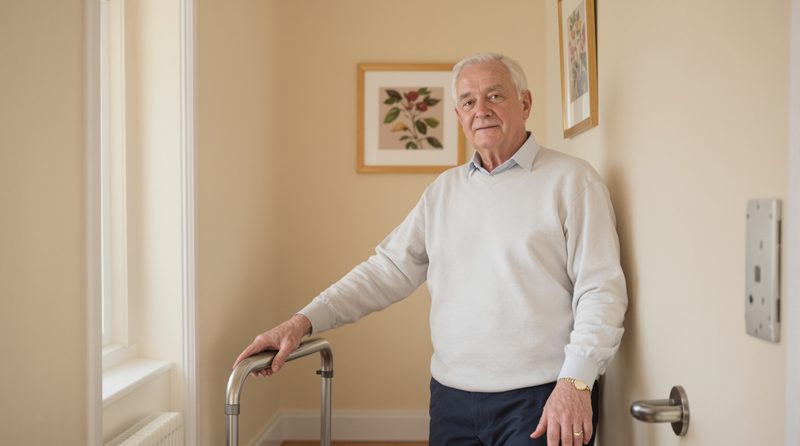
The best reason to declutter is the one your parent can't really argue with: not falling. More than one in four people 65 and older fall each year, according to the CDC, and clutter on floors and stairs is a trip hazard you can fix this weekend.
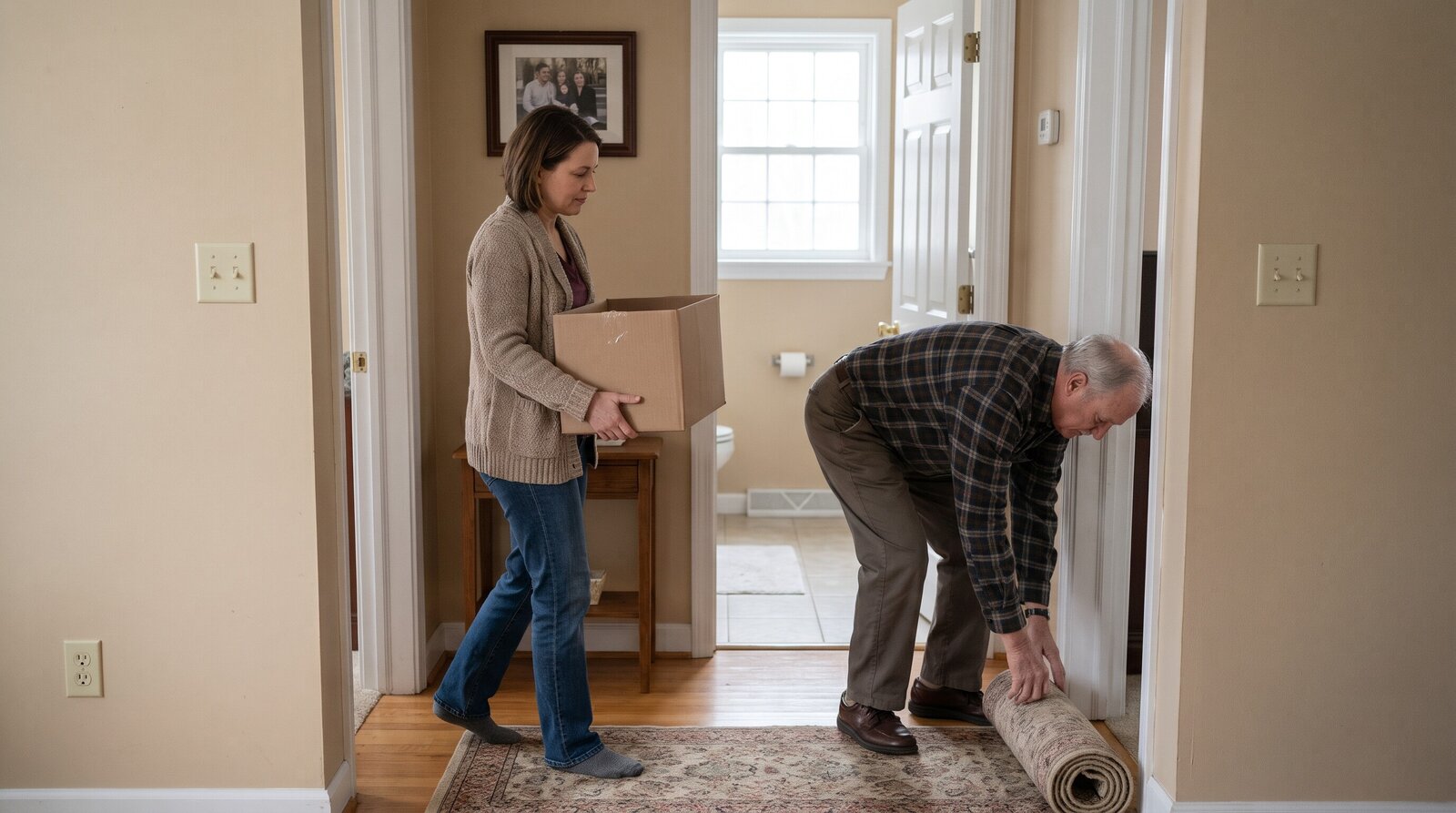
Make the first round only about the paths your parent walks every day:
- The route from the bed to the bathroom, which your parent walks half-asleep at night.
- Stairs, landings and the front and back steps.
- Hallways, doorways and the space around their favorite chair.
- Cords, loose rugs and stacks of anything on the floor.
- Everyday items stored up high or down low. Move them to between waist and shoulder height so there's no reaching or climbing.
How to start: one drawer, their rules
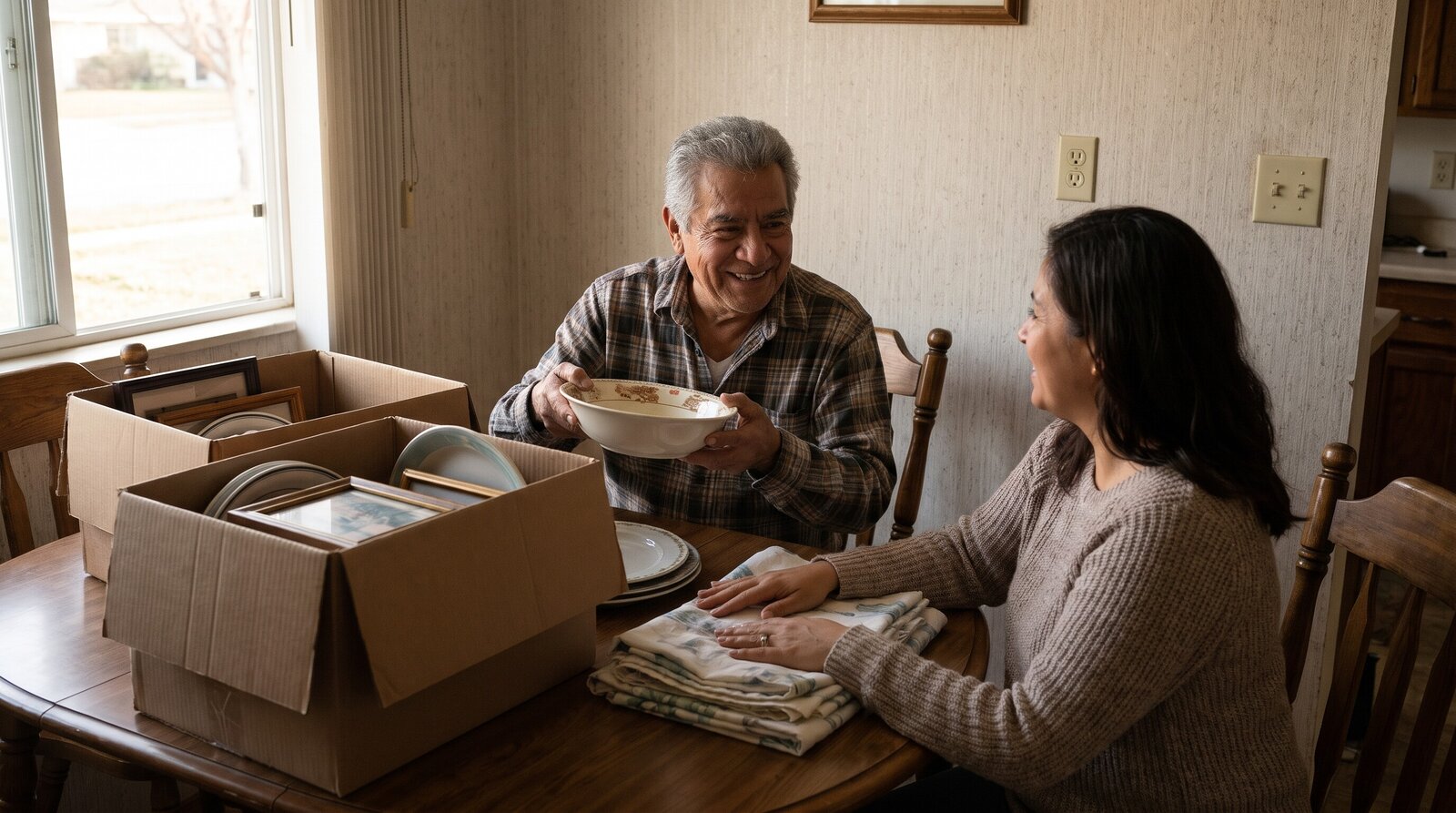
Let your parent choose the first spot, and make it small: one kitchen drawer, one shelf, one box from the closet. Work for an hour, then stop while it still feels good. Finishing a drawer builds more momentum than abandoning a room.
Treat photos, letters and children's artwork as their own project, not something to sort in passing. Keep them together in one box, and offer to scan the favorites so every grandchild can have a copy. Sorting those with your parent is less a chore than an afternoon of stories, so plan for it to take a while and let it.
Set out four boxes: keep, give to family, donate or sell, and trash. Add a fifth, "decide later," so hard choices don't stall everything. Then ask questions instead of making declarations:
- "When did you last use this?"
- "Who would you like to have it?"
- "If this broke tomorrow, would you buy another one?"
- "Would a photo of it be enough to remember it by?"
- "What's the story behind this?" Then listen. The story is often what your parent really wants to keep.

While you carry boxes, your parent can tap Call Tiina and tell her what the serving dish and the workshop tools meant, at their own pace. She never rushes them, and she remembers only what they choose to share.
What papers to keep, shred or toss
Papers cause the most worry, for good reason. Go slowly and never toss a folder you haven't looked through. Set these aside in one safe place: wills, powers of attorney and health care directives, deeds and car titles, insurance policies, birth, marriage and death certificates, military records, Social Security and Medicare information, and recent bank and investment statements. The National Institute on Aging's checklist is a good master list, and the Caregiver's Survival Guide's paper-locations sheet gives you one page to record where each one ends up.
For old tax papers, the IRS generally says to keep records supporting a tax return for 3 years, longer in some situations, and to keep records about property, like the house, until the period of limitations runs out for the tax year it's sold. Shred anything else with a Social Security number or account number on it rather than putting it in the trash.
Ask your parent's pharmacy how to get rid of expired or unused medicines safely instead of throwing them out with the trash.
Where everything goes
Things leave a house more easily when they have somewhere good to go. Give every box a real destination, and move it out the same week so it doesn't creep back.
- Family first. Ask relatives to name the few things they'd love to have, and set a date. Your parent will enjoy knowing where the china went.
- Donation. Habitat for Humanity ReStores take gently used furniture, appliances and household goods, and many offer free pickup of large items. Call your local store to schedule.
- Selling. For a full house, an estate sale company can price and run the sale for you; ask how it charges before you sign. For a few nice pieces, a local consignment shop is simpler.
- Trash and recycling. Check whether your parent's town has bulk trash pickup days for the broken lamps and the old mattress.

When the job is too big for one family
If your parent is moving to a smaller place, or the house holds fifty years of belongings, think about hiring help. Senior move managers help older adults and their families organize, declutter, downsize and relocate. You can find one through the National Association of Specialty & Senior Move Managers directory. If a move is in the cards, this guide on when to talk to your parent about assisted living can help you start that conversation.
Sometimes the problem is more than clutter. If rooms can't be used for what they're for, exits are blocked, or getting rid of anything causes intense distress, your parent may have hoarding disorder, which affects 2 to 4% of people worldwide. That calls for a therapist, not a weekend with a dumpster. The International OCD Foundation's hoarding center has a directory of therapists, clinics, support groups and local hoarding task forces. And if your parent is refusing help across the board, these strategies for a parent who refuses help are a good next read.
- Walk the path from bed to bathroom and clear the floor.
- Let your parent pick one drawer, shelf or box.
- Set out five boxes: keep, family, donate or sell, trash, decide later.
- Work for one hour, then stop.
- Put important papers in one folder without discarding anything.
- Load the donate box into your car before you leave.
Dad lets the clutter go, and keeps the stories.
The china goes to your niece and the broken lamps go to the curb. The wedding the china came from stays with Dad, and he can tell Tiina about it any afternoon, as many times as he likes.
Try Tiina with Dad →Frequently Asked Questions
Methodology & editorial policy
Reviewed and updated October 31, 2026 by the Tiina Editorial Team. Facts, programs and prices in this guide come from the sources listed below.
About composite scenarios. The opening scene is a composite drawn from common caregiver experiences, not one family's story.
About Tiina. Tiina is a voice-first AI companion for older adults: an app for iPhone and iPad that your parent opens whenever they want someone to talk to, day or night.
Sharing. Quote freely with a link back to this page. For full reprints, email hello@tiina.ai.
Sources. 6 references: CDC, National Institute on Aging, IRS, Habitat for Humanity, National Association of Specialty & Senior Move Managers, International OCD Foundation.View all
- CDC. Older Adult Falls Data. cdc.gov
- National Institute on Aging. Getting Your Affairs in Order Checklist. nia.nih.gov
- IRS. How long should I keep records?. irs.gov
- Habitat for Humanity. Donate to Habitat ReStore. habitat.org
- National Association of Specialty & Senior Move Managers. Find a Move Manager. nasmm.org
- International OCD Foundation. Hoarding Center. hoarding.iocdf.org