
Signs Your Elderly Parent Can't Live Alone, and What to Do Next
What to look for on your next visit, which signs mean act now, and the options between doing nothing and moving out.
Some links below are affiliate links: if you buy through them, Tiina may earn a small commission at no extra cost to you. As an Amazon Associate I earn from qualifying purchases.
Watch for falls, missed medicines, spoiled food or weight loss, unpaid bills, poor hygiene, getting lost, a stove left on, or pulling away from people. One sign usually calls for more help at home, not a move. Several together, or any real safety scare, mean it's time for a doctor's visit, a care assessment and a family conversation about where your parent lives.
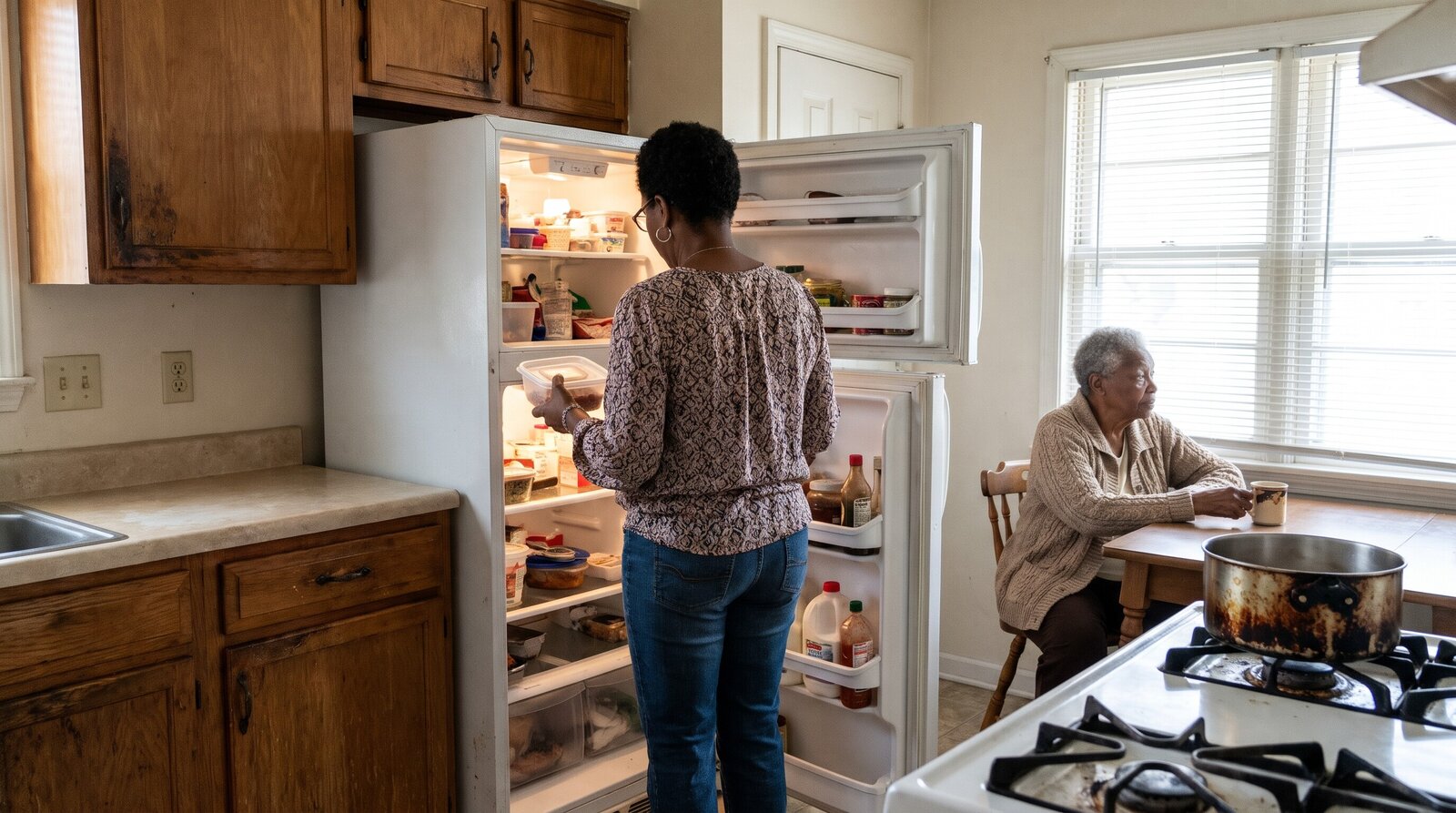
You notice it on a holiday visit. The mail is stacked on the counter, some of it unopened for weeks. There's a scorch mark on a pot. Your mom says she's fine, and on the phone she always sounds fine. But the bruise on her arm doesn't match the story about the cabinet door. Phone calls hide a lot, which is why so many families only see the full picture after a few days in the house. If you're asking whether your parent can still live alone, you've probably already seen something. Here's how to sort out what you saw.
What to look for around the house
The National Institute on Aging suggests looking for trouble spots when you spend time in your parent's home, because the house tells you what a phone call won't. Take a slow walk through it:
- Kitchen: spoiled or expired food, an empty fridge, burned pots, or a stove your parent struggles to use safely.
- Medicines: pill bottles that are too full or empty too soon, missed doses, or prescriptions that were never picked up.
- Mail: unopened bills, late notices, collection letters or a pile of sweepstakes and donation requests.
- Housekeeping: clutter on the floors, laundry piling up, a home that used to be tidy and isn't.
- Personal care: skipped baths, the same clothes for days, or clothes that don't suit the weather.
- The car: new dents and scrapes, or a parent who suddenly avoids driving.
- Pets and plants: a dog that hasn't been fed on time or houseplants left to die.
Health, memory and mood
The NIA lists health changes that should raise concern: significant weight loss or gain, poor hygiene, confusion, falls, trouble walking or getting around, and loneliness or isolation. Mood matters, too. An older person with depression may brighten up for a short call or visit, but it's harder to hide during a longer stay. If your parent says they feel hopeless or don't want to live, call or text the 988 Suicide & Crisis Lifeline right away.
Occasional forgetfulness is part of aging. Getting lost on a familiar route, repeating the same question within minutes, falling for scams, or poor decisions about money are different, and they need a doctor's attention. These early signs of dementia can help you describe what you're seeing, and so can these signs of depression in an elderly parent.
Signs that mean act now
Most signs give you time to plan. These don't. If you see any of them, don't wait for the next holiday:
- Wandering, or getting lost and not knowing how to get home
- Fires, scorched pans or burners left on
- Repeated falls, or a fall where your parent couldn't get up
- Missing critical medicines like heart, blood thinner or diabetes medicines
- Not eating, or visible weight loss
- Being scammed or exploited, or strangers suddenly involved in their money
- Unsafe driving
- No heat, no working phone, or no food in the house

Your parent can read a letter from the pile to Tiina, or share a photo of it, and hear what it says in plain words. Between your visits she's also someone to talk to, so the days alone feel less quiet.
Options between "fine" and moving out
One warning sign rarely means your parent has to move. Usually it means they need more help where they are. The NIA describes the help available at home: personal care like bathing and dressing, housekeeping, meals, money management, health care, transportation and safety features. Adult day programs offer company, meals and activities during the day, and respite services give a regular caregiver a break.
To find local services, call the Eldercare Locator at 1-800-677-1116 and ask for your parent's Area Agency on Aging. Ask about home-delivered meals, rides, in-home help, adult day programs and help paying for any of it. A geriatric care manager can assess your parent and build a plan, which is especially useful if you live far away. Here's when hiring one makes sense.
Before you decide, look at the real numbers. Home care can cost less than a residential facility, or more, depending on how many hours your parent needs. What aging in place actually costs walks through the math. And know this going in: Medicare doesn't pay for long-term personal care like help with bathing and dressing, according to the Medicare & You 2027 handbook.
When it's time for a move
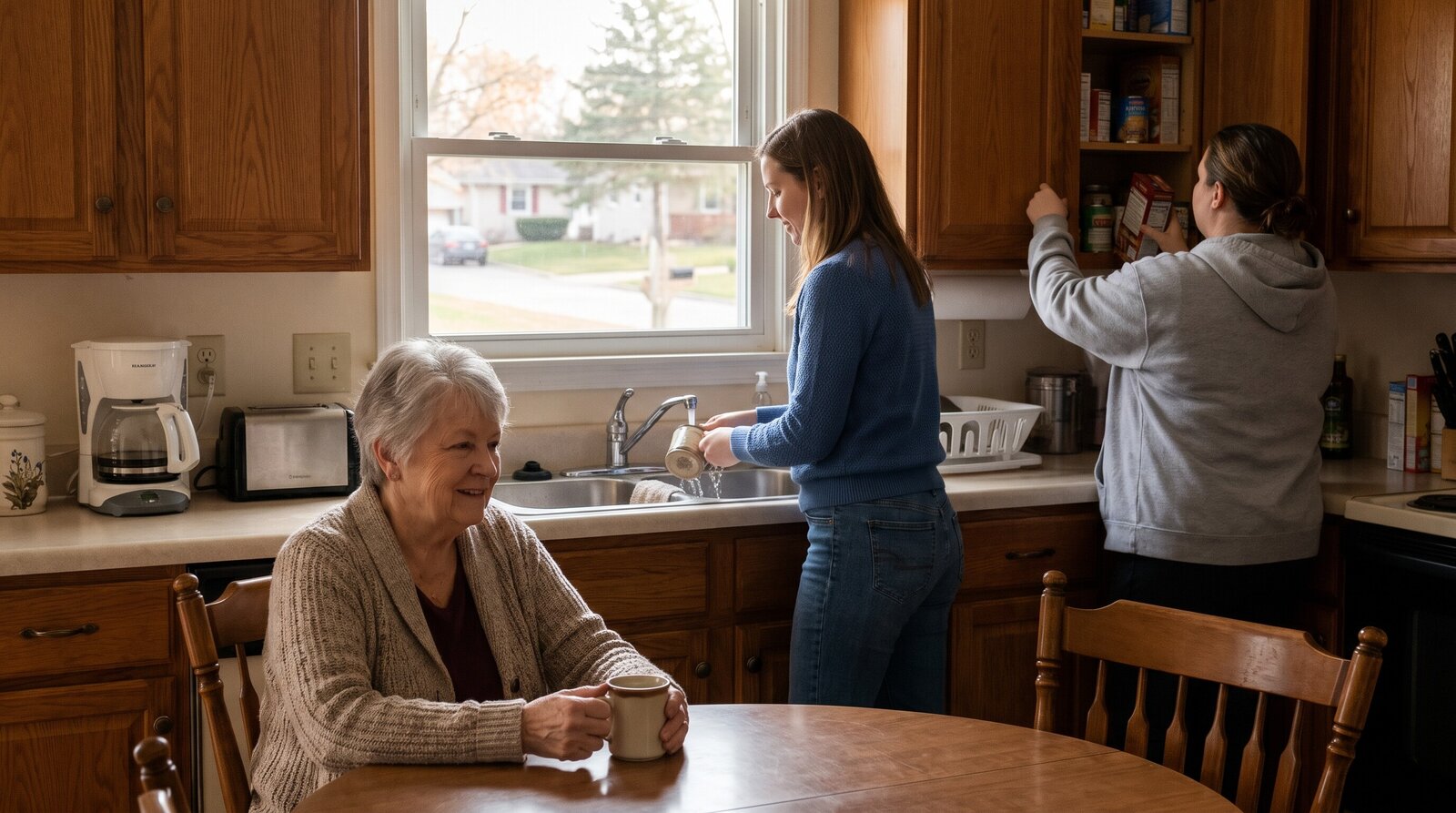
If your parent needs help around the clock, keeps having emergencies despite more help, or can no longer handle daily activities like bathing, eating and using the toilet, staying alone may not be safe. The options then are living with family, assisted living, or a nursing home for people who need skilled care every day. The right choice depends on your parent's health, what they can do on their own, money and what they want.
Visit places together, and take your time if you can. These steps for talking to your parent about assisted living help the conversation start well. If your parent would move in with you, think through the space, the money and the effect on your own household before you offer.
How to start the conversation
The NIA's advice is to name your concern without sounding critical, using something specific. "Mom, there isn't much food in the house. Is it hard to get to the store?" works better than "You can't take care of yourself anymore." Then try to meet their wishes as far as you can: "Would you like me to set up grocery delivery every week?" Practical offers land better than warnings.
If you're worried about health or memory, suggest a doctor's visit and offer to drive and go in with them. And start planning before a crisis forces the decision, while your parent can still make choices about where they live and what care they want.
Remember that a parent who understands the risks has the right to make choices you wouldn't make. Your job is to make the safer choice easier, not to take over. If your parent is in real danger and refuses all help, Adult Protective Services handles self-neglect as well as abuse and exploitation. Every state has one. Find your parent's through the National Adult Protective Services Association's state directory, or call the Eldercare Locator at 1-800-677-1116 and ask for Adult Protective Services.
- Open the fridge and check dates.
- Count pills in two or three bottles against the refill date.
- Look through the mail for late notices and scam letters.
- Check the stove, pots and smoke alarms.
- Walk the house for clutter, rugs and poor lighting.
- Look at the car for new dents.
- Notice hygiene, weight and how your parent moves.
- Ask who they've seen this week besides you.
Mom can live alone a while longer, with more help and more company.
If staying home is the right call for now, Tiina is one tap away for conversation, reminders with notifications on, and help understanding the mail. What they talk about stays private, with no reports to you.
Try Tiina with your parent →Frequently Asked Questions
Methodology & editorial policy
Reviewed and updated October 31, 2026 by the Tiina Editorial Team. Facts, programs and prices in this guide come from the sources listed below.
About composite scenarios. The opening scene is a composite.
About Tiina. Tiina is a voice-first AI companion for older adults: an app for iPhone and iPad that your parent opens whenever they want someone to talk to, day or night.
Sharing. Quote freely with a link back to this page. For full reprints, email hello@tiina.ai.
Sources. 7 references: National Institute on Aging, 988 Suicide & Crisis Lifeline, Administration for Community Living, Medicare.gov, National Adult Protective Services Association.View all
- National Institute on Aging. Does an Older Adult in Your Life Need Help?. nia.nih.gov
- National Institute on Aging. Aging in Place: Growing Older at Home. nia.nih.gov
- 988 Suicide & Crisis Lifeline. 988 Lifeline. 988lifeline.org
- Administration for Community Living. Eldercare Locator. eldercare.acl.gov
- Administration for Community Living. Area Agencies on Aging. acl.gov
- Medicare.gov. Medicare & You 2027. medicare.gov
- National Adult Protective Services Association. Help in Your Area. napsa-now.org