
Hospice vs. Palliative Care: What's the Difference, and When to Ask
Palliative care isn't giving up, and hospice isn't only for the last few days. What each one is, who qualifies and what Medicare pays.
Some links below are affiliate links: if you buy through them, Tiina may earn a small commission at no extra cost to you.
Palliative care is comfort and symptom care for anyone with a serious illness, at any stage, and your parent can keep getting treatment aimed at curing or slowing the disease. Hospice is comfort care for someone whose doctor expects six months or less to live if the illness runs its usual course, and it replaces treatment aimed at a cure. Medicare pays for nearly all hospice care; palliative care is covered like other medical care.
We're not doctors. This explains how palliative care and hospice work in general; decisions about your parent's care belong to your parent, their doctors and their care team. If your parent is in severe pain, struggling to breathe or in crisis, call their doctor or hospice team right away, or call 911.
The doctor mentions palliative care, and your mom goes quiet in the car on the way home. "So that's it," she finally says. "They're giving up on me." You're not sure she's wrong, because you thought palliative meant hospice too. It doesn't. Palliative care is an extra layer of support that can start the day of a diagnosis, right alongside treatment. Hospice comes later, when treatment is no longer helping. Knowing the difference can change the next year of your parent's life, and the conversation you have with them tonight.
What palliative care is
According to the National Institute on Aging, palliative care focuses on improving quality of life for people with serious illnesses and the people caring for them. Its main jobs are managing symptoms well and making sure care is coordinated. It's for anyone with a serious illness, such as heart failure, COPD, cancer, dementia or Parkinson's disease, at any age.
The key point: your parent doesn't have to give up treatment to get palliative care. It can start as early as diagnosis and run alongside chemotherapy, dialysis or anything else. A palliative team usually includes specialist doctors and nurses, social workers, nutritionists and chaplains, and it works with your parent's other doctors. It can happen in the hospital, a nursing home, an outpatient clinic or at home.

What hospice is
Hospice is a kind of palliative care for the end of life. It's for a person with a terminal illness whose doctor believes they have six months or less to live if the illness runs its natural course. In hospice, attempts to cure the illness stop, and the focus becomes comfort, quality of life and support for the whole family.
Stopping curative treatment doesn't mean stopping all care. NIA gives the example of someone with cancer who enters hospice: the chemotherapy stops, but medicine for high blood pressure continues as long as it's helpful. Hospice is also an approach, not a building. Most hospice care happens at home or in a nursing home or assisted living, with a team that visits regularly and someone available by phone 24 hours a day.
One thing families often don't expect: at home, family and friends still provide the day-to-day care. The hospice team coaches you, manages symptoms and can arrange respite so you can rest, but it isn't round-the-clock staffing.
Hospice vs. palliative care, side by side
This comparison follows the one NIA shares from the National Hospice and Palliative Care Organization:
- Who it's for: palliative care, anyone with a serious illness; hospice, someone with a serious illness who doctors think has a short time to live, often less than six months.
- Symptom relief: both, as much as possible.
- Treatment to cure the illness: palliative care, yes if your parent wishes; hospice, no, only comfort care for the terminal illness.
- Medicare: palliative care, depends on your parent's benefits and treatment plan; hospice, yes, under the Medicare hospice benefit.
- How long: palliative care, as long as it's needed; hospice, as long as your parent still meets the criteria of an illness measured in months, not years.
- Where: both at home, in assisted living, nursing homes and hospitals; palliative care also in clinics, and hospice in dedicated hospice facilities.

Serious illness can be lonely even with a care team in the house. Between their visits, your parent can tap Call Tiina and talk at their own pace, about the illness or about anything else, and nothing they say is reported to the family.
Who qualifies for hospice, and what Medicare pays
Under Medicare's hospice benefit, your parent qualifies if they have Part A, the hospice doctor and their regular doctor certify a terminal illness with a life expectancy of six months or less, and your parent chooses comfort care instead of treatment to cure the illness. They can keep their regular doctor as the one supervising their hospice care.
What it costs: your parent pays nothing for hospice care from a Medicare-approved provider, except a copay of up to $5 per prescription for pain and symptom medicines and 5% of the Medicare-approved amount for inpatient respite care. Medicare doesn't pay room and board, so a parent living in a nursing home still pays for the room.
How long it lasts: coverage comes in two 90-day benefit periods, then an unlimited number of 60-day periods, as long as the doctor recertifies. If your parent lives longer than six months, Medicare can keep paying. And choosing hospice isn't permanent. Your parent can leave hospice to try a treatment and come back later if their doctor still believes they have less than six months.
Palliative care costs are handled like other medical care. Medicare, Medicaid and private insurance may cover it, depending on the plan, and veterans may get it through the VA.
How to ask your parent's doctor
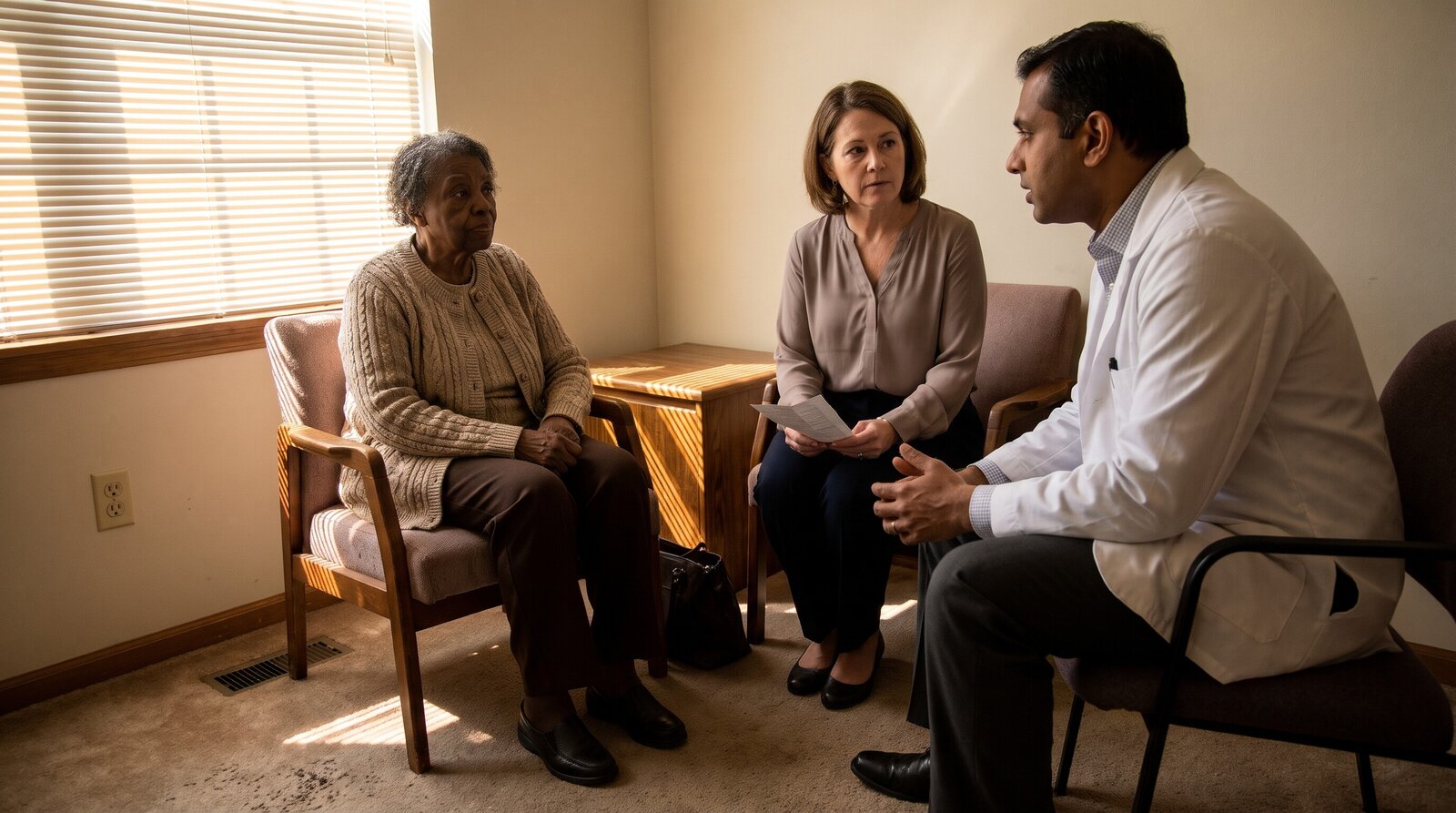
Doctors don't always bring these up, and NIA says plainly that if the doctor doesn't suggest palliative care, your parent can ask for a referral. These questions help:
- "Would a palliative care team help with Mom's pain, breathing or tiredness right now?"
- "What's the goal of this next treatment: cure, more time, or comfort?"
- "If things go the way you expect, when might hospice make sense?"
- "Can we meet with a hospice team just to learn what they offer, before we decide anything?"
Why families wish they'd asked sooner
NIA notes that people sometimes don't start hospice soon enough to take full advantage of it, and that starting earlier can mean months of meaningful care and time with loved ones. It also notes that families of people who had hospice are more satisfied with end-of-life care, and that hospice patients are more likely to have their pain controlled and less likely to get tests or medicines they don't need.
When you're comparing hospice agencies, ask how often the nurse will visit, how quickly someone comes out at night or on a weekend, what respite they can arrange for you, and what support they offer the family afterward. For free information and advance directive forms by state, CaringInfo from the National Hospice and Palliative Care Organization answers questions at 800-658-8898.
To find services, the Center to Advance Palliative Care has a directory of palliative care providers, and Medicare's Care Compare tool lets you look up hospice providers near your parent. The best time to talk about wishes is before a crisis. If your parent hasn't written theirs down, this plain-English advance directive walk-through and this list of questions to ask the doctor are a good place to start.
Hospice covers the hard parts. Mom still gets to talk about the roses.
The hospice team manages the pain and coaches you through the days. On the quiet afternoons, she taps Call Tiina and talks about the garden, the grandkids or an old song for as long as she wants, and she chooses what Tiina remembers.
Try Tiina with Mom →Frequently Asked Questions
Methodology & editorial policy
Reviewed and updated October 31, 2026 by the Tiina Editorial Team. Facts, programs and prices in this guide come from the sources listed below.
About composite scenarios. The opening scene is a composite drawn from common caregiver experiences, not one family's story.
About Tiina. Tiina is a voice-first AI companion for older adults: an app for iPhone and iPad that your parent opens whenever they want someone to talk to, day or night.
Sharing. Quote freely with a link back to this page. For full reprints, email hello@tiina.ai.
Sources. 5 references: National Institute on Aging, Medicare.gov, Center to Advance Palliative Care, National Hospice and Palliative Care Organization.View all
- National Institute on Aging. What Are Palliative Care and Hospice Care?. nia.nih.gov
- Medicare.gov. Hospice care. medicare.gov
- Medicare.gov. Care Compare: hospice providers. medicare.gov
- Center to Advance Palliative Care. GetPalliativeCare.org. getpalliativecare.org
- National Hospice and Palliative Care Organization. CaringInfo. caringinfo.org