Jar Openers for Seniors: The Best Types for Arthritis and Weak Hands
Handheld, under-cabinet or electric: which jar opener fits your parent's hands, three that work, and the free tricks to try first.
Some links below are affiliate links: if you buy through them, Tiina may earn a small commission at no extra cost to you. As an Amazon Associate I earn from qualifying purchases.
For most seniors, a twisting opener with a non-slip base pad, like the OXO Good Grips, is the easiest place to start. If your parent's grip is very weak, mount a V-shaped opener under a cabinet so they turn the jar with both hands. If any twisting hurts, an electric opener does the work at the press of a button.
Three jar openers worth buying
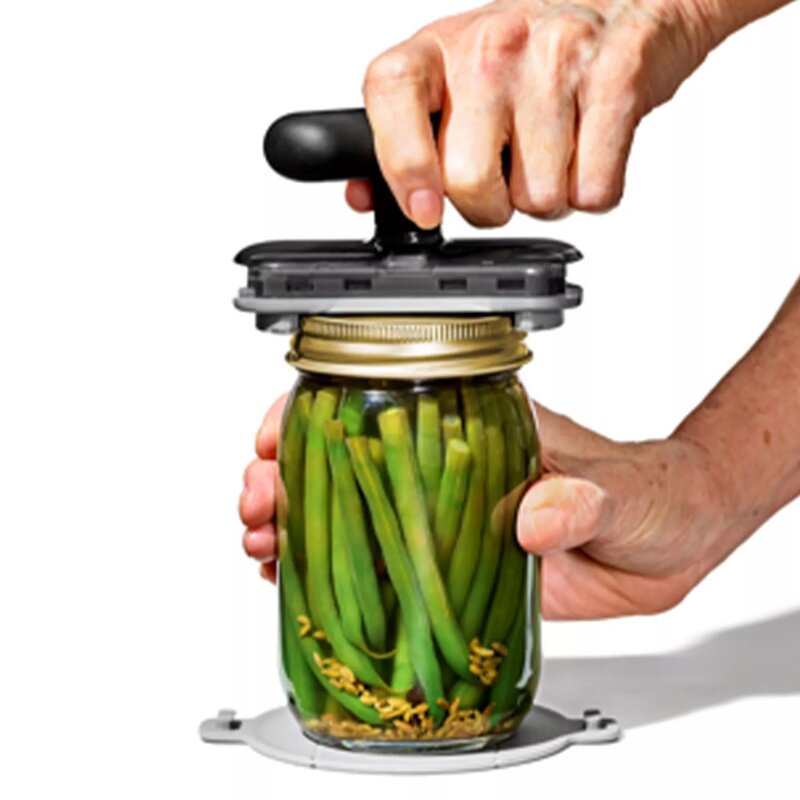
OXO Good Grips Twisting Jar Opener with Basepad
The twisting head adjusts to fit lids from small bottles to large jars, the large handle is easy on arthritic hands, and the non-slip base pad holds the jar steady so your parent doesn't have to squeeze it. The pad clips onto the opener for storage.
Watch for: Your parent still has to turn the handle with one hand, so it's not enough for severe arthritis or tremor.
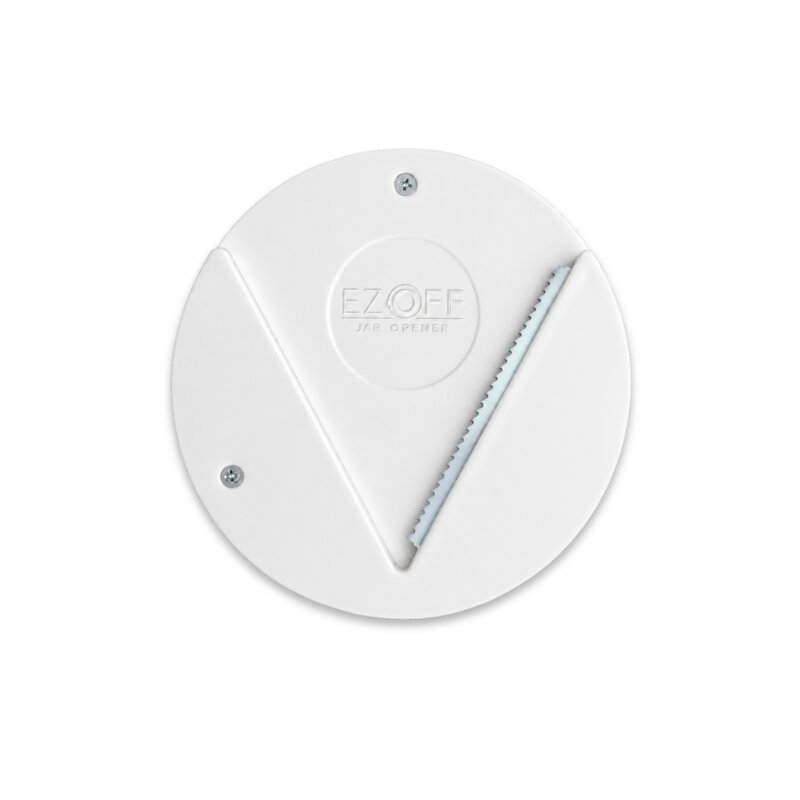
EZ Off Under Cabinet Jar Opener
Mounts under a cabinet with the included adhesive and screws. Your parent pushes the lid up into the V, where stainless steel and zinc teeth hold it, and turns the jar with one hand or both. There are no moving parts and nothing to charge.
Watch for: Your parent has to lift the jar up to the cabinet, which is hard with shoulder pain. Once it's screwed in, it stays put, so pick the spot together before you mount it.
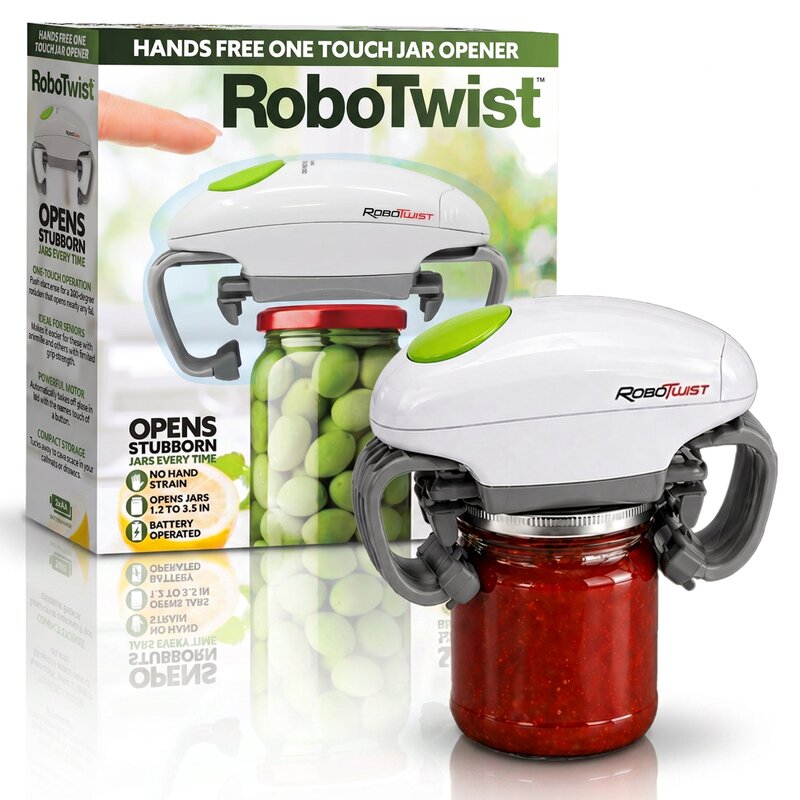
RoboTwist Deluxe Automatic Jar Opener
Set it on top of the jar and press the button. Its grips hold the jar and turn the lid off by themselves. It fits lids from 1.2 to 3.5 inches across, like a jar of pasta sauce, and one more press pulls the arms back in so it stores in a drawer.
Watch for: It's battery operated, so keep spare batteries and a handheld opener in the drawer for when they run out. Very small bottle caps and wide jars won't fit.
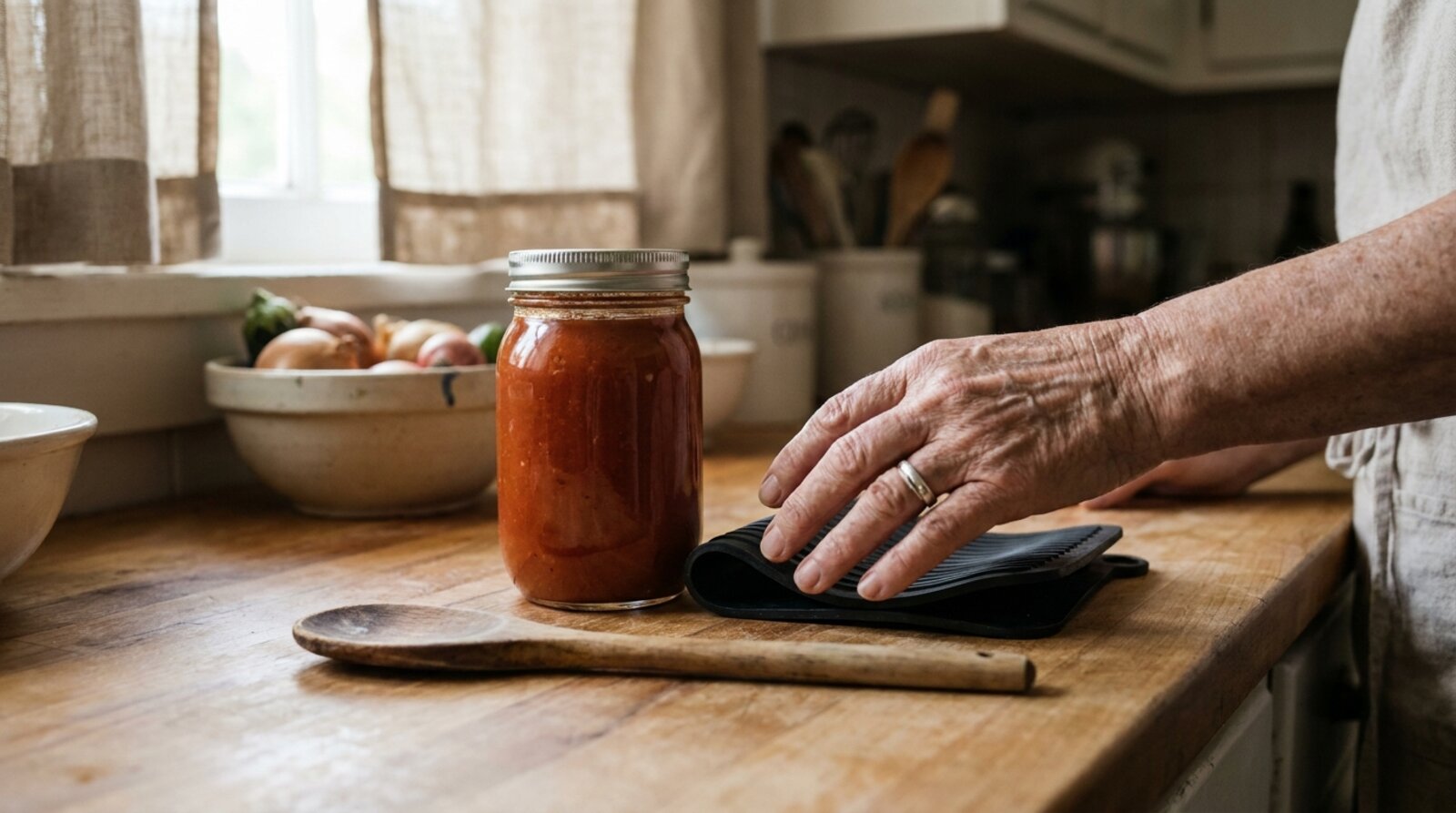
You open the fridge at your dad's place and find three jars of pickles, all unopened. Or your mom quietly stops making the sauce she's made for forty years and switches to frozen dinners. Ask why and you get a shrug. A stuck lid sounds like nothing, but for a parent with arthritis or weaker hands, it can decide what they eat and whether they cook at all. People rarely complain about it. They just stop. The right jar opener doesn't cost much and gives a lot of that back. Here's how to match one to your parent's hands.
Why jars get so hard to open
Opening a jar asks a lot of a hand at once: a tight grip on the lid, a firm hold on the jar with the other hand, and a hard twist against the vacuum seal. Arthritis makes the grip painful, and weaker hands can't produce the twist. The Arthritis Foundation recommends self-help devices like jar openers for exactly this reason: they give leverage and keep joints in a better position, so the job takes less force.
It's worth a few dollars because the kitchen is where small struggles turn into bigger ones. A parent who can't open jars cooks less, eats more packaged food and starts to feel the house is working against them. Fixing the lid is one of the easiest wins in keeping a parent safe and independent at home.
Free tricks to try first
Before buying anything, try these. One of them may be enough for the jars your parent opens most.
- Add grip. A rubber jar pad or a rubber dish glove gives fingers far more traction on a smooth lid.
- Break the seal. Gently tap the edge of the lid on the counter, or slide the tip of a spoon under the lid's edge until you hear the hiss of air. Once the vacuum is gone, the lid turns easily.
- Warm the lid. Run hot tap water over the lid for half a minute. Metal expands a little, and sticky residue softens.
- Leave it loose. After a jar is opened once, put the lid back on just snug enough to seal, not cranked tight.
- Ask for help at the store. Many grocery clerks will crack a jar's seal at checkout if asked.
The three kinds of jar opener
Handheld twisting openers clamp over the lid and give your parent a long handle to turn instead of a small round lid. The good ones come with a non-slip pad that holds the jar still on the counter, so your parent doesn't have to grip the jar hard with the other hand. They suit most people with mild to moderate arthritis.
Under-cabinet openers are a V-shaped plate with teeth that mounts under a cabinet or shelf. Your parent pushes the lid up into the V and turns the jar with both hands. An occupational therapist on the Arthritis Foundation's podcast explained why this works: holding the jar with two hands spreads the force across more joints and lets bigger muscles do the turning. They suit a weak grip, but your parent needs to be able to lift the jar to shoulder height.
Electric openers sit on top of the jar, clamp the lid and turn it at the press of a button. Your parent only needs to set it on the jar and press. They suit severe arthritis, tremor or anyone who finds twisting painful. They cost more and run on batteries.


When a stuck lid stops deciding what's for dinner, your parent can ask Tiina for a recipe idea that uses what's already in the fridge, and hear the steps as many times as they need while the pot is on.
How to choose for your parent's hands
Watch your parent try to open a jar, or ask them to show you which part is hard. Their answer points to the right type:
- The lid slips in their fingers: start with a rubber grip, then a handheld twisting opener.
- They can't hold the jar still while they twist: pick a handheld opener with a base pad or an under-cabinet opener.
- Twisting itself hurts their wrist or knuckles: go electric.
- They have shoulder pain or can't lift a full jar: skip the under-cabinet type.
- They have a tremor or very little strength: go electric, and keep a handheld one as a backup for when the batteries die.
Pill bottles, cans and the rest of the packaging
Jars are rarely the only problem. If your parent fights with childproof pill bottles, they can ask the pharmacy for easy-open caps. Federal law lets prescription medicine be dispensed in regular, non-child-resistant packaging when the purchaser asks for it. Most pharmacies will note the request on your parent's profile so it sticks for every refill. Skip this if grandchildren visit often, and keep the bottles up high when they do.
For cans, an electric can opener takes out the squeezing and cranking. For milk jugs, cereal bags and plastic clamshells, a pair of good kitchen scissors kept in one spot does more than any gadget. And when you shop for your parent, pick the versions with flip-top or pull-tab lids when there's a choice.
Make the whole kitchen easier
A jar opener is usually the first sign the kitchen needs a few more changes. The Arthritis Foundation suggests pots and pans with two handles to spread the weight across both hands, built-up handles on utensils for an easier grip, and electric can openers. Move the things your parent uses every day to the shelves between waist and shoulder height so they aren't reaching or bending.
If your parent is struggling with several kitchen tasks, ask their doctor about an occupational therapy referral. Medicare Part B covers occupational therapy for help with daily activities when a doctor certifies the need. A therapist will watch your parent cook, spot what's hard and recommend the exact tools that fit their hands. The same small-tool thinking helps in the bedroom, too, with sock aids and button hooks for getting dressed.
Some parents wave off gadgets as unnecessary. Don't argue about the opener. Open a jar with it together, leave it on the counter and let it prove itself. If the resistance runs deeper, these ideas for when a parent refuses help can help.
The jars open again, and Mom's sauce is back on the stove.
A simple jar opener gave her the kitchen back. Tiina keeps her company in it: a new recipe to try, an old one to talk through, or a conversation while the sauce simmers, in her own words and at her own pace.
Try Tiina with Mom →Frequently Asked Questions
Methodology & editorial policy
Reviewed and updated October 31, 2026 by the Tiina Editorial Team. Facts, programs and prices in this guide come from the sources listed below.
About composite scenarios. The opening scene is a composite.
About Tiina. Tiina is a voice-first AI companion for older adults: an app for iPhone and iPad that your parent opens whenever they want someone to talk to, day or night.
Sharing. Quote freely with a link back to this page. For full reprints, email hello@tiina.ai.
Sources. 8 references: Arthritis Foundation, Medicare.gov, Sur La Table, Zulay Kitchen, Granitestone, Legal Information Institute, Cornell Law School.View all
- Arthritis Foundation. Self-Help Arthritis Devices. arthritis.org
- Arthritis Foundation. Live Yes! With Arthritis podcast, Ep. 127: Life Hacks for Arthritis. arthritis.org
- Arthritis Foundation. Arthritis-Friendly Kitchen Tools. arthritis.org
- Medicare.gov. Occupational therapy services. medicare.gov
- Sur La Table. OXO Good Grips Twisting Jar Opener with Basepad. amazon.com
- Zulay Kitchen. EZ Off Under Cabinet Jar Opener. amazon.com
- Granitestone. RoboTwist Automatic Jar Opener. amazon.com
- Legal Information Institute, Cornell Law School. 15 U.S. Code 1473: Special packaging of household substances. law.cornell.edu