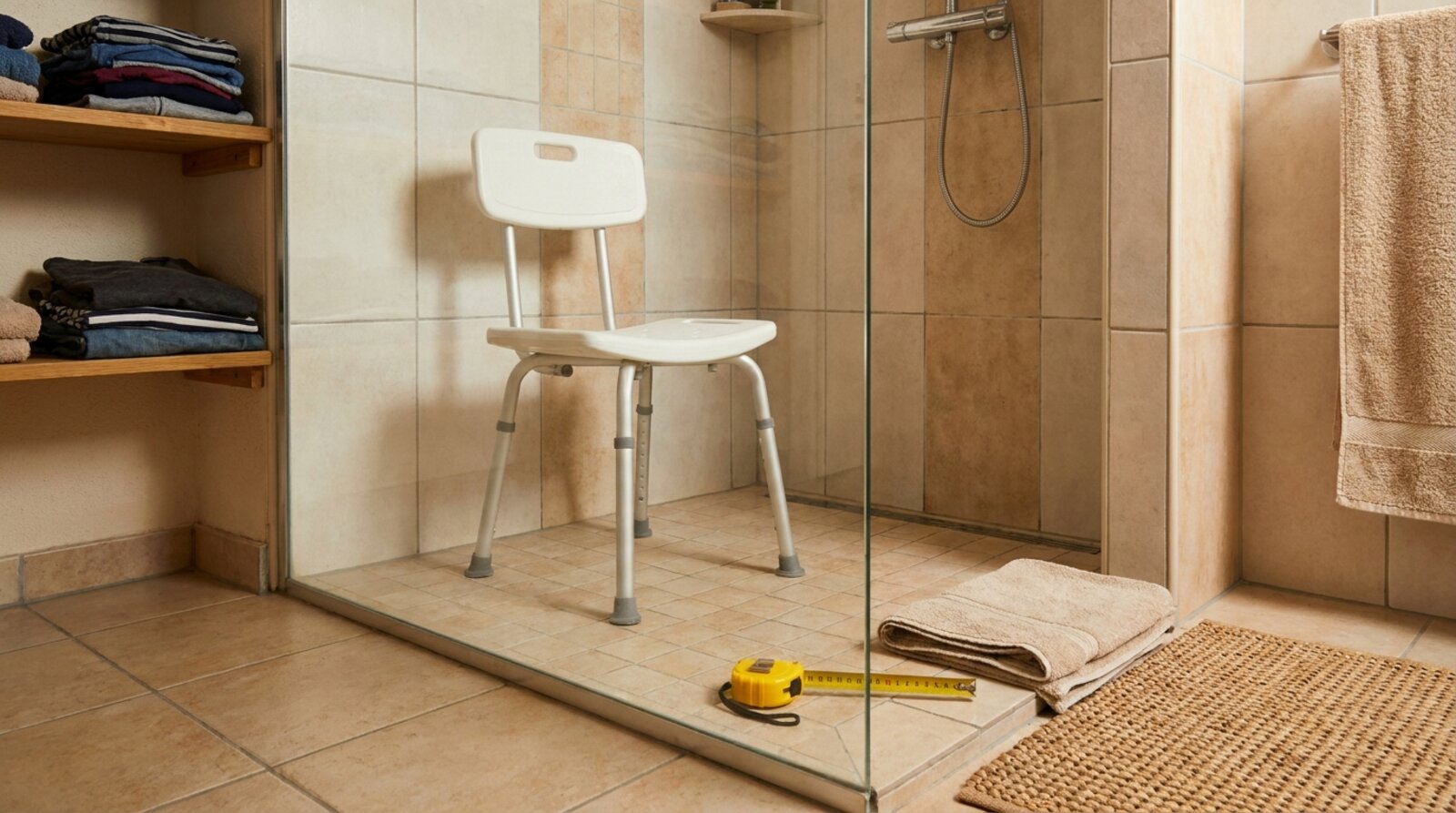
Shower Chair for Elderly Parents: Who Needs One and How to Choose
The signs it's time, the three types, how to pick one that fits your parent and their shower, and who pays for it.
Some links below are affiliate links: if you buy through them, Tiina may earn a small commission at no extra cost to you. As an Amazon Associate I earn from qualifying purchases. Tiina is a Moen affiliate through Fortune Brands Innovation.
If your parent grabs the towel bar to steady themselves, rushes through showers or has started skipping them, a shower chair makes bathing safer and less tiring. Most parents do well with a chair that has a back and arms, about $70 (October 2026). If they step over a tub wall, get a transfer bench instead. Original Medicare doesn't pay for bath seats.
The shower chairs worth buying
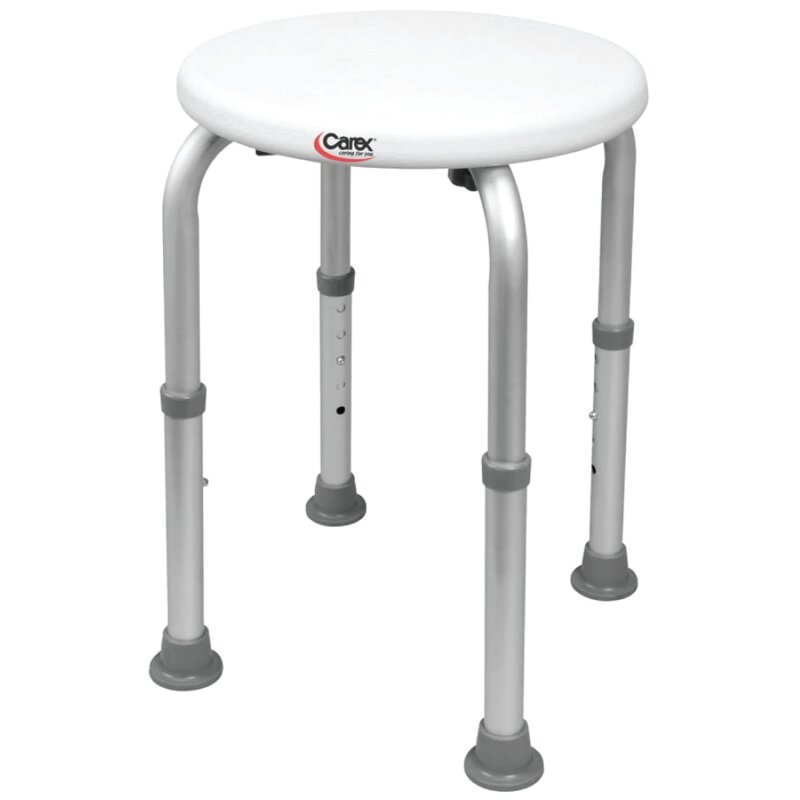
Carex Compact Round Shower Stool
A 13-by-13-inch seat that fits narrow stalls and tubs. The aluminum legs adjust from 16 to 21 inches, snap together without tools and end in slip-resistant tips. Holds up to 250 pounds.
Watch for: No back and no arms, so it's for a parent who sits steadily and can stand up without something to push on.
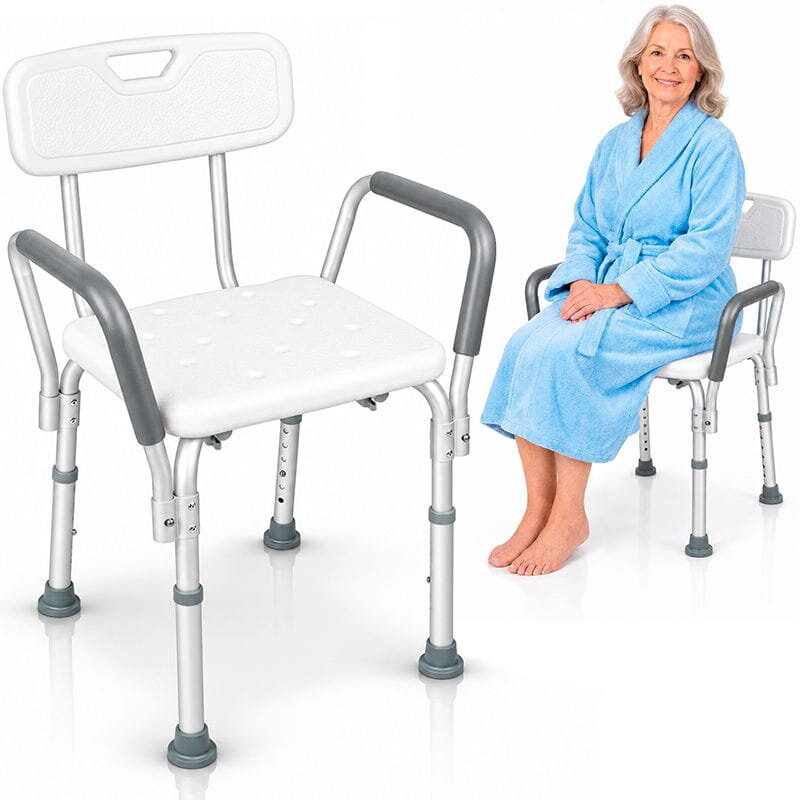
Vive Shower Chair with Removable Back
A contoured 15.75-by-13-inch seat with a backrest and foam-padded handles to push on when standing. Legs adjust from 16 to 21 inches, the base is 17.75 by 17 inches, and the aluminum frame holds 300 pounds.
Watch for: Measure the shower floor first. The base is wider than the seat, which matters in a small stall.
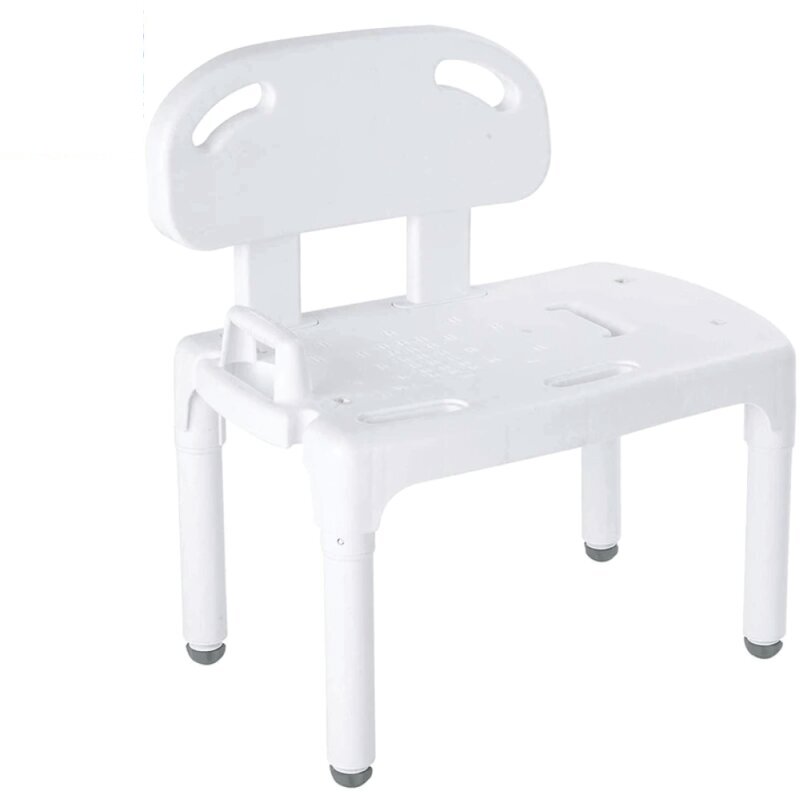
Carex Universal Transfer Bench
Your parent sits down outside the tub and slides across, so they never step over the edge. The backrest switches sides for left or right entry, the legs adjust from 17.5 to 22.5 inches, and it holds 400 pounds with no metal to rust.
Watch for: It takes up the whole tub and part of the bathroom floor, and the shower curtain has to tuck around it.
Your dad used to take long showers. Now he's in and out in three minutes, and you've noticed he grabs the towel bar on the way in. Or your mom has started skipping showers and says she just doesn't feel like it. Often that isn't stubbornness. Standing on a wet floor with your eyes closed while you rinse your hair is hard on tired legs and shaky balance, and people quietly avoid what scares them. A shower chair is one of the cheapest ways to make bathing feel safe again. Here's how to tell if your parent needs one and how to pick the right kind.
Signs your parent needs a shower chair
You don't need a doctor's order to buy one, and you don't need to wait for a fall. Any one of these is reason enough:
- They hold onto the towel bar, the soap dish or the shower door to keep their balance.
- They get tired or out of breath standing for a whole shower.
- They shower less often than they used to, or rush to get it over with.
- They've slipped, nearly slipped or felt dizzy in a hot shower.
- They can't easily lift a foot to wash it.
- They're recovering from surgery or an illness, or have arthritis, Parkinson's or weak legs.
The three types, and which one fits your parent
A shower stool is a small round or square seat with no back. It fits tight stalls and suits a parent who has decent balance sitting down and just needs a break from standing. It's the least support of the three.
A shower chair with a back and arms is the right choice for most older adults. The back keeps them from tipping backward while they wash their hair, and the arms give them something solid to push on when they stand up. If you're not sure, buy this one.
A tub transfer bench is a long seat that straddles the side of the tub. Two legs stand outside, two inside. Your parent sits down outside the tub, slides across and swings their legs over, so they never have to step over the tub wall. If the tub edge is the scary part, this is the one.
If your parent can't walk to the shower at all, ask the doctor about a rolling shower commode chair. That's a bigger decision, and an occupational therapist can help you get it right.

If your parent would rather decide this herself than be handed a chair, she can ask Tiina to compare the three types in plain words and talk through which one fits her tub. She decides, and the conversation stays private.
How to choose: five things to check
Size comes after type. Once you know which kind your parent needs, check these before you buy:
- Seat height. When your parent sits, their feet should rest flat on the floor with knees about level with hips. Most chairs adjust from about 16 to 21 inches, and transfer benches run a little higher to clear the tub wall.
- Footprint. Measure the floor of the stall, or the inside of the tub, and compare it with the chair's base. A chair can have a small seat and still have wide-set legs.
- Weight capacity. Common limits are 250 pounds for stools, 300 for chairs and 400 for benches. Pick one with room to spare.
- Feet and frame. Look for rubber tips that grip, a rust-proof aluminum or plastic frame, and drainage holes in the seat.
- Where the water is. A chair only helps if your parent can reach the faucet and the water reaches them. A handheld shower head makes seated showers practical.

Set it up so it actually gets used
Put the chair where your parent can reach the controls, the soap and the handheld shower without twisting. Check that all four legs sit level and tighten any adjustment buttons before every use for the first week. A nonskid mat or strips on the shower floor and a mat on the bathroom floor help with the walk in and out, and the National Institute on Aging recommends grab bars both inside and outside the tub or shower. Towel bars and soap dishes are not grab bars. They can pull right out of the wall.
Some parents push back on a shower chair because it feels like a sign of decline. It helps to call it what it is: a way to keep showering alone. If the conversation stalls, these approaches for when a parent refuses help work well for bathing, too. For the rest of the house, start with these nine fall-prevention fixes, and don't forget the night lights on the way to the bathroom.
For the first shower, be in the house but not in the room. Run the water warm before your parent sits, lay a towel within reach of the chair, and agree on a word they can call out if they want a hand. A towel over the lap keeps things dignified if they do need help. After a week or two, ask what's awkward. Usually it's something small, like the soap being out of reach or the chair sitting an inch too low, and it's easy to fix.
If your parent has had a fall or has trouble getting in and out of the tub, ask the doctor for an occupational therapy referral. Medicare Part B covers occupational therapy to help with daily activities like bathing when a doctor certifies the need, and many therapists will recommend the exact equipment and show your parent how to use it.
Does Medicare pay for a shower chair?
Usually not. Medicare's national list of durable medical equipment classes bathtub seats as comfort or convenience items and denies them. The same list covers commode chairs, but only when a person is confined to their bed or room.
Medicare Advantage plans are different. The official Medicare & You 2027 handbook says plans may cover some extras that Original Medicare doesn't, so call the number on your parent's plan card and ask whether a bath seat or an over-the-counter allowance can pay for one. If your parent has Medicaid, ask the state Medicaid office, since coverage varies by state.
For other help, call the Eldercare Locator at 1-800-677-1116 to reach your parent's local Area Agency on Aging. Some state and local programs help older adults pay for home safety changes, and the agency will know what exists near your parent.
- Tub or walk-in shower? A tub usually means a transfer bench.
- Measure the shower floor, or the inside of the tub, side to side and front to back.
- Measure from the floor to the back of your parent's knee while they sit in a kitchen chair. That's roughly the seat height they need.
- Check the weight limit against your parent's weight, with room to spare.
- Plan for a handheld shower head if there isn't one.
- Check that grab bars are where your parent will stand up and sit down.
Mom showers on her own again, and on her own schedule.
The chair takes the standing out of it. Tiina takes some of the quiet out of the rest of the day: someone patient to talk to about the news, a recipe, or the Medicare Advantage letter she can share a photo of and have explained in plain words.
Try Tiina with Mom →Frequently Asked Questions
Methodology & editorial policy
Reviewed and updated October 31, 2026 by the Tiina Editorial Team. Facts, programs and prices in this guide come from the sources listed below.
About composite scenarios. The opening scene is a composite.
About Tiina. Tiina is a voice-first AI companion for older adults: an app for iPhone and iPad that your parent opens whenever they want someone to talk to, day or night.
Sharing. Quote freely with a link back to this page. For full reprints, email hello@tiina.ai.
Sources. 8 references: Centers for Medicare & Medicaid Services, Medicare.gov, National Institute on Aging, Carex, Vive Health, Administration for Community Living.View all
- Centers for Medicare & Medicaid Services. National Coverage Determination 280.1: Durable Medical Equipment Reference List. cms.gov
- Medicare.gov. Medicare & You 2027. medicare.gov
- Medicare.gov. Occupational therapy services. medicare.gov
- National Institute on Aging. Preventing Falls at Home: Room by Room. nia.nih.gov
- Carex. Carex Compact Round Shower Stool. amazon.com
- Vive Health. Shower Chair. vivehealth.com
- Carex. Carex Universal Transfer Bench. amazon.com
- Administration for Community Living. Area Agencies on Aging. acl.gov