Night Lights for Elderly Parents: Light the Path From Bed to Bathroom
Where the lights go, which ones to buy, and the other small fixes that make a 3 a.m. bathroom trip safer.
Some links below are affiliate links: if you buy through them, Tiina may earn a small commission at no extra cost to you. As an Amazon Associate I earn from qualifying purchases.
Give your parent a light they can switch on without getting up, motion-sensor night lights along the floor from the bed to the toilet, and a bathroom light that stays on all night. Clear rugs and cords off the route. Good plug-in motion lights are one of the cheapest safety fixes there is. If bathroom trips at night are new or getting more frequent, tell the doctor.
Three night lights worth buying
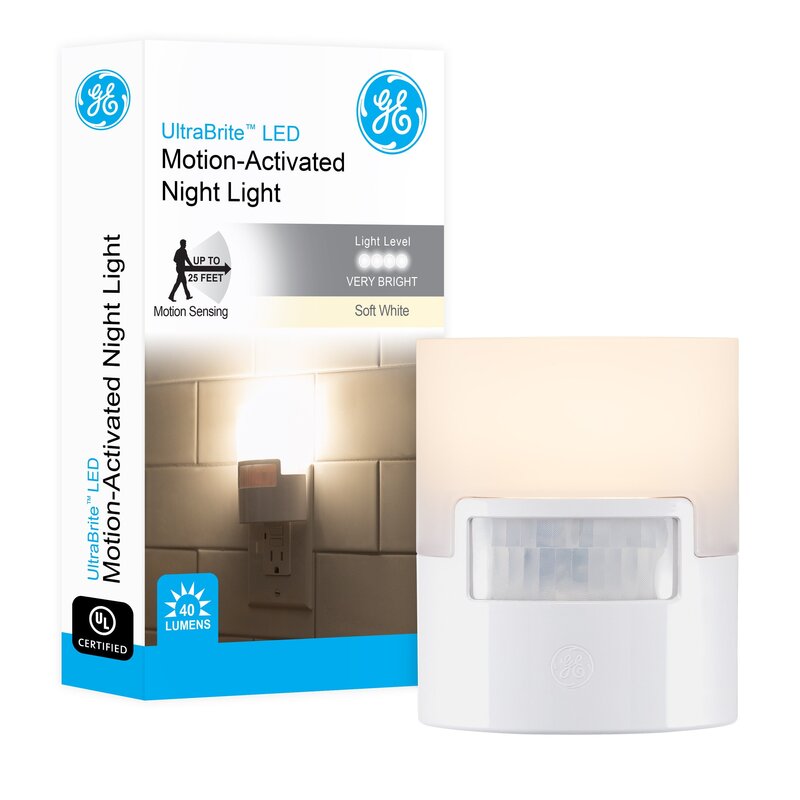
GE Enbrighten UltraBrite Motion-Activated LED Night Light
Plugs into any outlet, turns on when it senses movement up to 25 feet away in the dark and switches off after 90 seconds. At 40 lumens it lights the floor without lighting up the whole house. A 2-pack is also sold.
Watch for: It works only in low light and sits at outlet height, so a long hallway may need two or three.
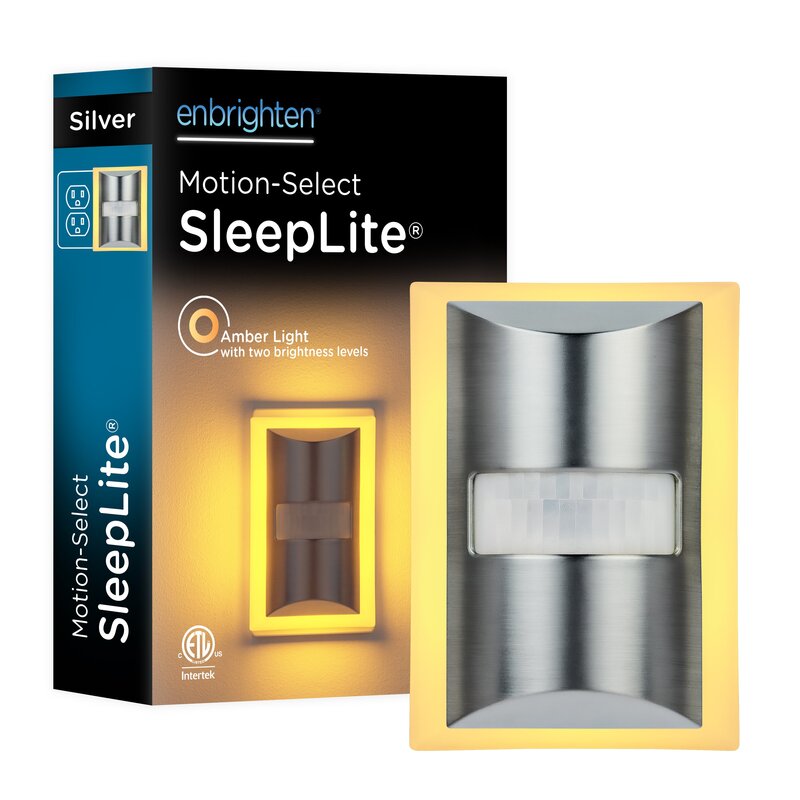
Enbrighten SleepLite Motion-Select Night Light
Warm amber light with two modes. In Motion Boost it glows softly all night and brightens when someone moves within 20 feet, so your parent never steps into total darkness. In Motion Activated mode it stays off until it senses movement in the dark.
Watch for: Amber light is softer than white. For a parent with weak eyesight, keep this one by the bed and use white lights in the hallway.
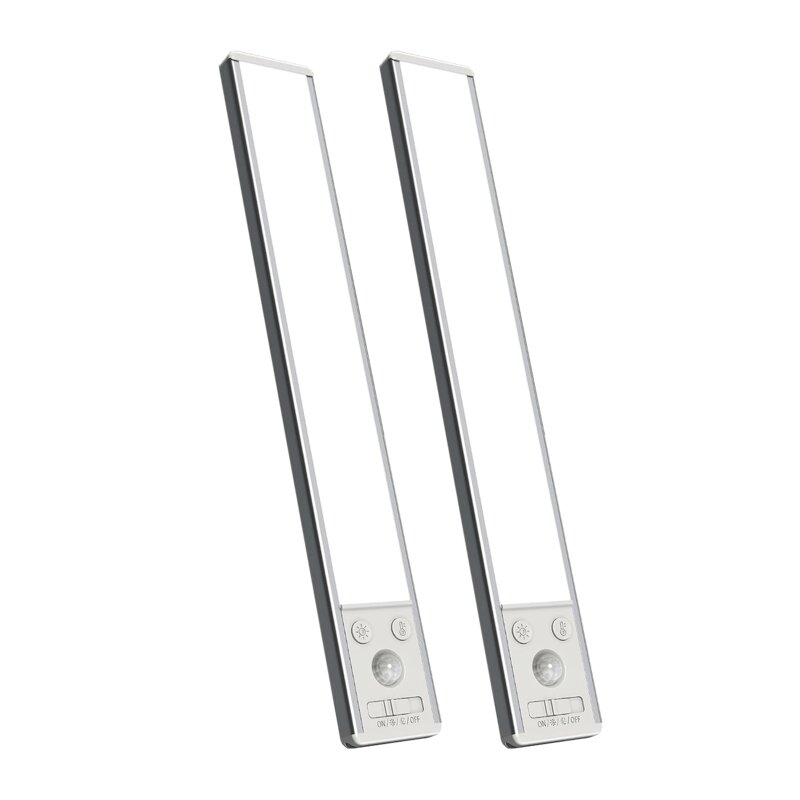
EZVALO Motion Sensor Light Bars, 2 Pack
Rechargeable and magnetic, so they go where a plug-in can't: under the bed frame, inside a closet or beside the toilet. Each bar turns on when it senses movement within 10 feet, and Night mode keeps it off in daylight. You can choose warm, natural or cool white light and one of five brightness levels, and a charge lasts 15 to 40 days on motion mode.
Watch for: Each bar switches off 20 seconds after movement stops, so use them for short stretches, not the whole route. Recharge them with the included USB-C cables every few weeks.
It's 2:40 in the morning. Your mom wakes up needing the bathroom. She doesn't want to disturb anyone, so she skips the overhead light. She sits up a little too fast, reaches for the wall, and shuffles past the dresser in her socks. The rug at the bathroom door is where it usually goes wrong. If you've pictured some version of this, you're not being dramatic. The fix is cheap, and you can do most of it in one visit: light the path, clear the floor, and make that first step out of bed a slow one.
Why the trip to the bathroom at night is the risky one
More than one in four people 65 and older fall each year, according to the National Institute on Aging. Falls cause about 4.5 million emergency room visits by older adults every year, and one fall roughly doubles the chance of another, the CDC reports.
The nighttime bathroom trip stacks several of the known risk factors into one minute. Your parent is half asleep and walking in the dark. They stand up fast, and blood pressure can drop when you get up from lying down, which makes people wobbly. They may be hurrying because they really need to go. Sleep medicines and some blood pressure pills can add dizziness on top. None of that is your parent being careless. It's just the worst time of day to be on your feet.
Where to put the lights, from the bed to the toilet
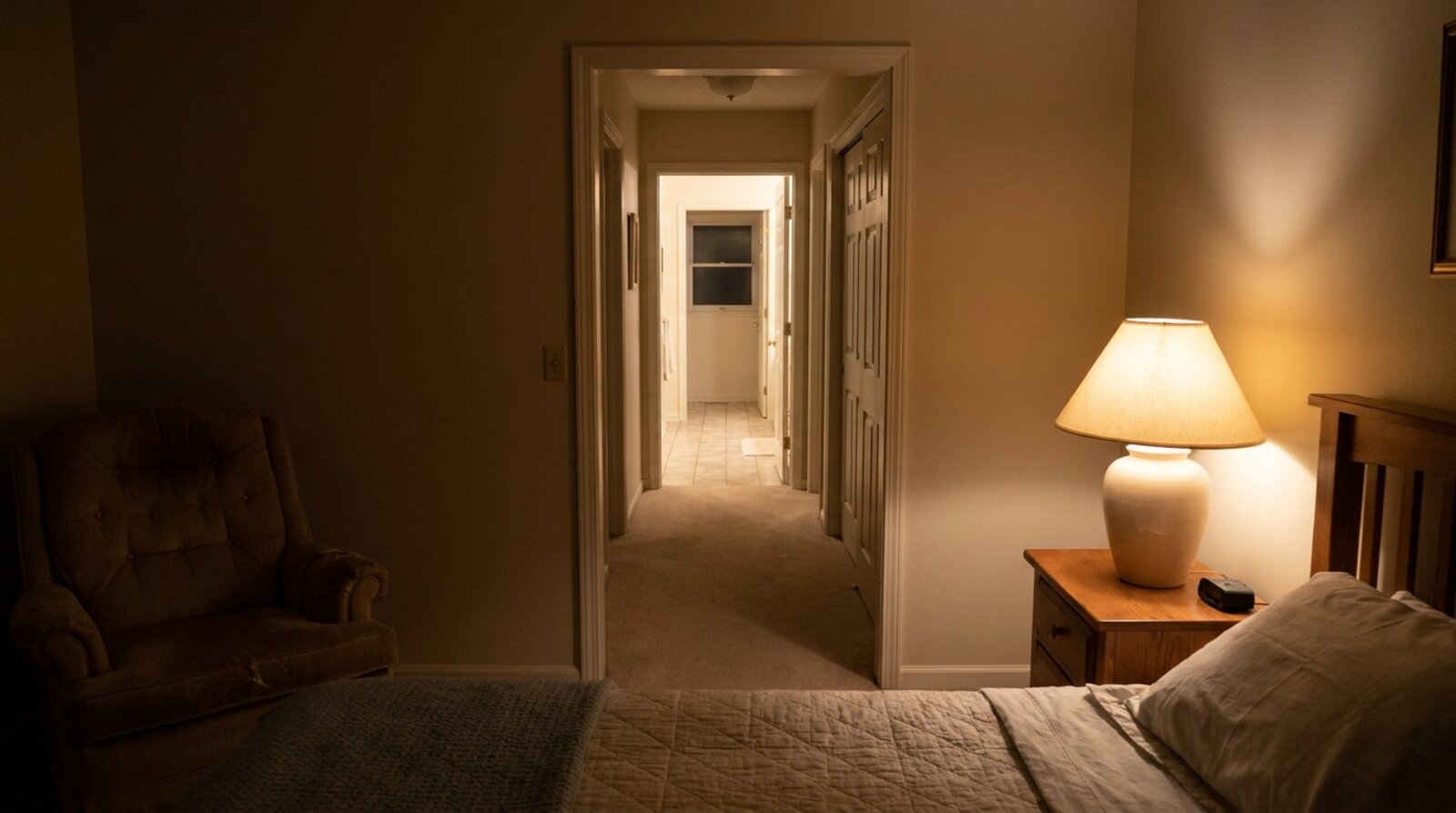
Think of it as a runway. Your parent should never step into a dark patch. The National Institute on Aging's room-by-room fall checklist recommends night lights and a light switch close to the bed, motion-activated plug-in lights along hallways, and a bathroom light that's left on or turns on by itself in the dark. Here's how that looks in a real house:
- At the bed: a lamp, touch light or low glow light your parent can reach while still lying down. Keep a flashlight in the nightstand drawer in case the power goes out.
- On the floor beside the bed: a motion light aimed where their feet land, so the floor lights up before they stand.
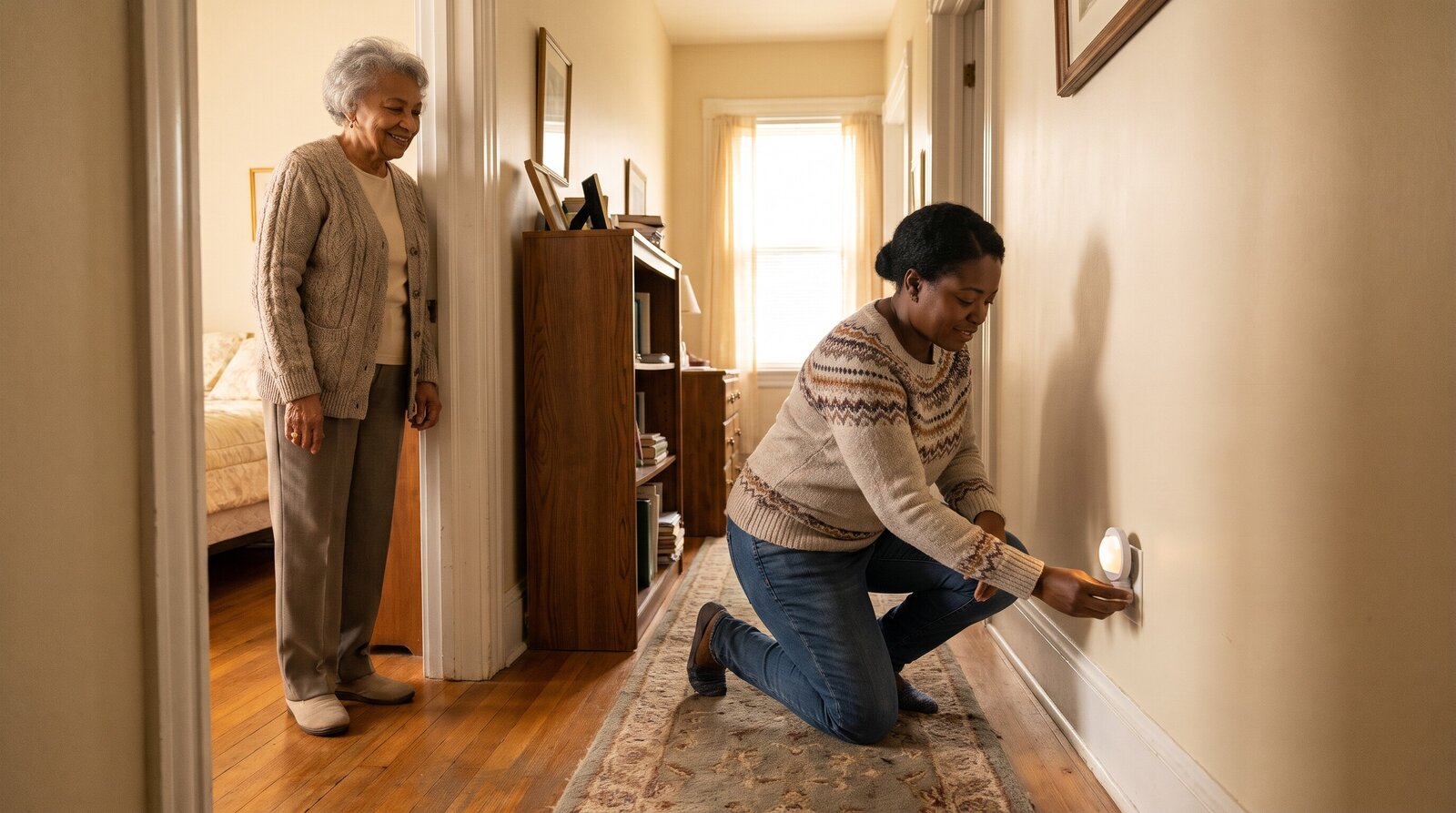
- Down the hallway: plug-in motion lights in every outlet along the way. On a long hall, that may mean two or three.
- At the bathroom door: a light that shows the doorway and the threshold, which is where rugs and raised edges catch toes.
- Inside the bathroom: a night light that stays on all night, so your parent can see the toilet and the grab bar without hunting for a switch.
Which kind of night light to buy
There are three kinds worth knowing. Motion-sensing plug-in lights turn on only when someone moves in the dark and switch off a minute or two later. They're the workhorse for hallways. Dusk-to-dawn lights glow all night with no motion needed, which is good for the bathroom and for a parent who gets confused when a room goes dark. Battery or rechargeable stick-on lights go where there's no outlet, like under a bed frame or beside the toilet.
Brightness matters more than looks. A 40-lumen light is enough to see the floor in a hallway without lighting up the whole house. Warm or amber light is gentler right next to the bed. If your parent's eyesight is poor, choose white light for the hallway and the bathroom. Our three picks are near the top of this page.
One test beats any review: after you plug everything in, go to your parent's side of the bed at night, turn every light off, and walk the route yourself at their pace. Any spot where you can't see your feet needs another light.

The night lights make the trip itself the safe part; the lying awake afterward is the long part. Your parent can tap Call Tiina for a quiet, patient conversation until they're sleepy again, and it stays private, with no reports to the family.
Clear the floor and slow down the first step
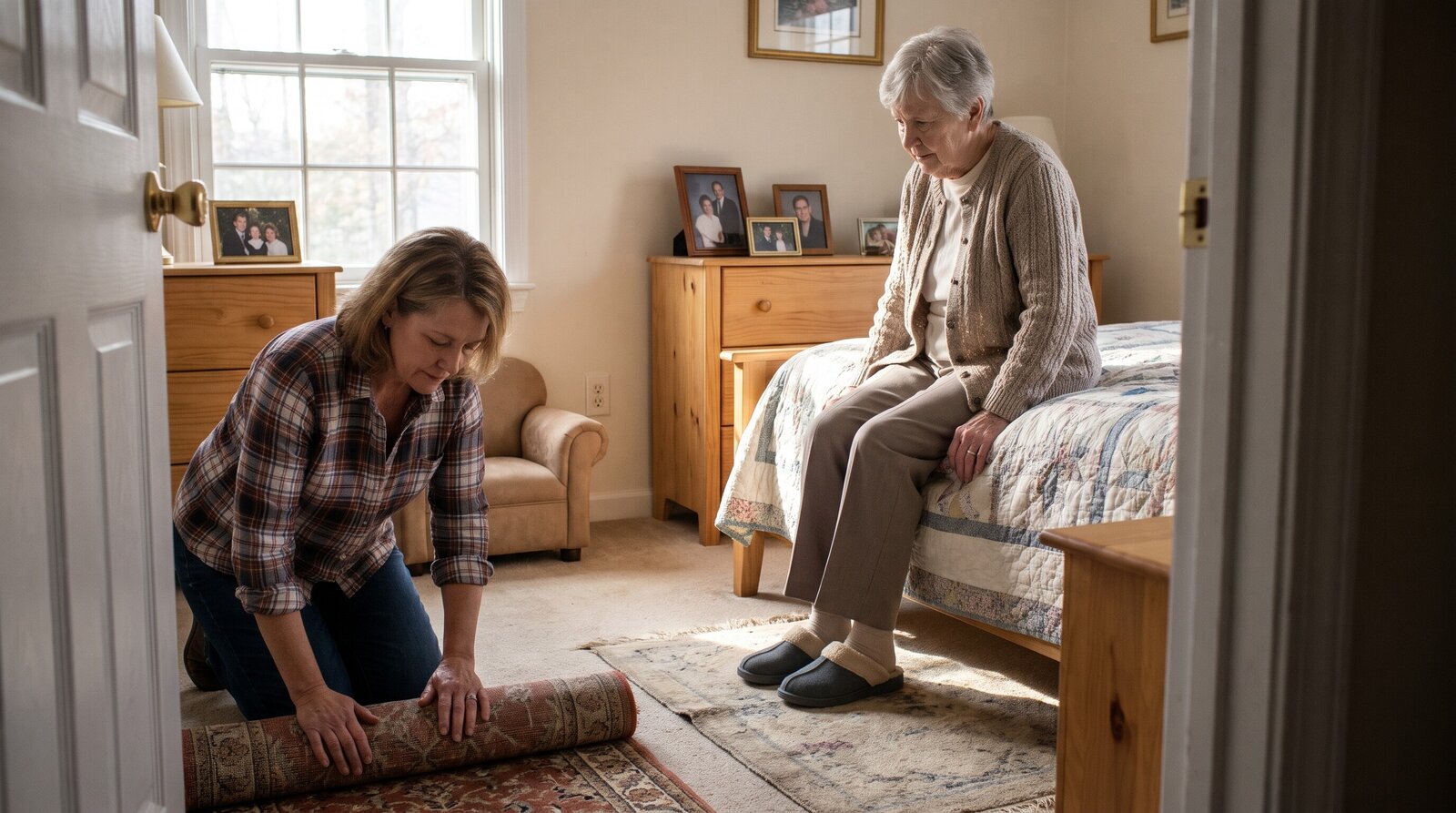
Lights only help if the path is clear. Pull up throw rugs, tape or move cords against the wall, and move the laundry basket that lives in the hallway. Socks on a wood floor are slippery, so leave nonskid slippers or rubber-soled shoes where your parent's feet land. These nine home fixes for fall prevention cover the rest of the house.
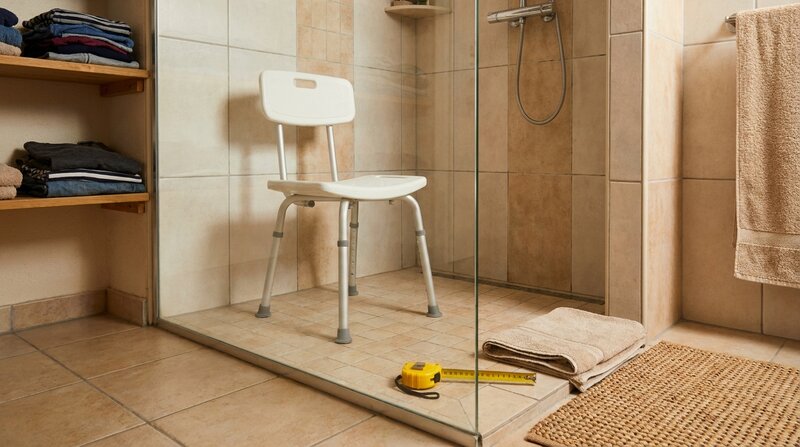
Then slow down the first step. Ask your parent to sit on the edge of the bed for a few breaths before standing, with both feet flat on the floor. It gives their blood pressure a moment to catch up. A grab bar beside the toilet helps with the other half of the trip. If the shower is the next worry on your list, here's how to choose a shower chair.
Why is your parent up so often at night?
Getting up once a night is common. Getting up three or four times is worth a conversation with the doctor, because the fewer trips your parent makes in the dark, the fewer chances to fall. MedlinePlus lists common causes, including drinking a lot in the evening, caffeine or alcohol with dinner, a bladder infection, an enlarged prostate, diabetes, heart failure, water pills and sleep apnea. Several of those are treatable.
Call the doctor if the extra trips go on for several days, if your parent has burning or pain when they pee, or if there's blood in the urine. At the visit, ask the doctor or pharmacist to go through every medicine for side effects like dizziness or sleepiness, and ask for a blood pressure check lying down and standing up.
If they fall anyway
Make sure a charged phone sits on the nightstand every night, not in the kitchen. If your parent falls, the NIA's advice is to stay still for a moment, check for pain, and only then roll onto one side, get onto hands and knees and crawl to a sturdy chair to sit up. If they're hurt or can't get up, they should call 911 and wait.
Ask your parent to tell you and the doctor about every fall, even one that didn't hurt. A fall can be the first sign of a medicine problem or a change in eyesight. If they live alone, compare fall detection on an Apple Watch with a medical alert button.
- Sit on your parent's side of the bed. Can you reach a light without standing?
- Turn off every light in the house, including the TV.
- Walk to the toilet at your parent's pace. Note every spot where you can't see the floor.
- Check the doorways for rugs, raised edges and cords.
- Check that a light stays on in the bathroom.
- Look for a grab bar or sturdy support beside the toilet.
- Put a charged phone and a flashlight on the nightstand.
- Walk the route once more after the new lights are in.
The night lights come on by themselves. Mom isn't alone at 3 a.m.
She makes the bathroom trip on a lit floor, gets back into bed, and taps Call Tiina instead of lying there staring at the ceiling. A patient voice, in her own words, with nothing reported back to the family.
Try Tiina with your parent →Frequently Asked Questions
Methodology & editorial policy
Reviewed and updated October 31, 2026 by the Tiina Editorial Team. Facts, programs and prices in this guide come from the sources listed below.
About composite scenarios. The opening scene is a composite.
About Tiina. Tiina is a voice-first AI companion for older adults: an app for iPhone and iPad that your parent opens whenever they want someone to talk to, day or night.
Sharing. Quote freely with a link back to this page. For full reprints, email hello@tiina.ai.
Sources. 7 references: National Institute on Aging, CDC, MedlinePlus, Jasco, EZVALO.View all
- National Institute on Aging. Preventing Falls at Home: Room by Room. nia.nih.gov
- National Institute on Aging. Falls and Fractures in Older Adults: Causes and Prevention. nia.nih.gov
- CDC. Older Adult Falls Data. cdc.gov
- MedlinePlus. Urination - excessive amount at night. medlineplus.gov
- Jasco. GE Enbrighten UltraBrite Motion Activated LED Night Light. amazon.com
- Jasco. Enbrighten SleepLite Night Light, Motion Select. amazon.com
- EZVALO. EZVALO EZL27 Under Cabinet Lighting. amazon.com