Social Security Scam Calls: How to Spot Them
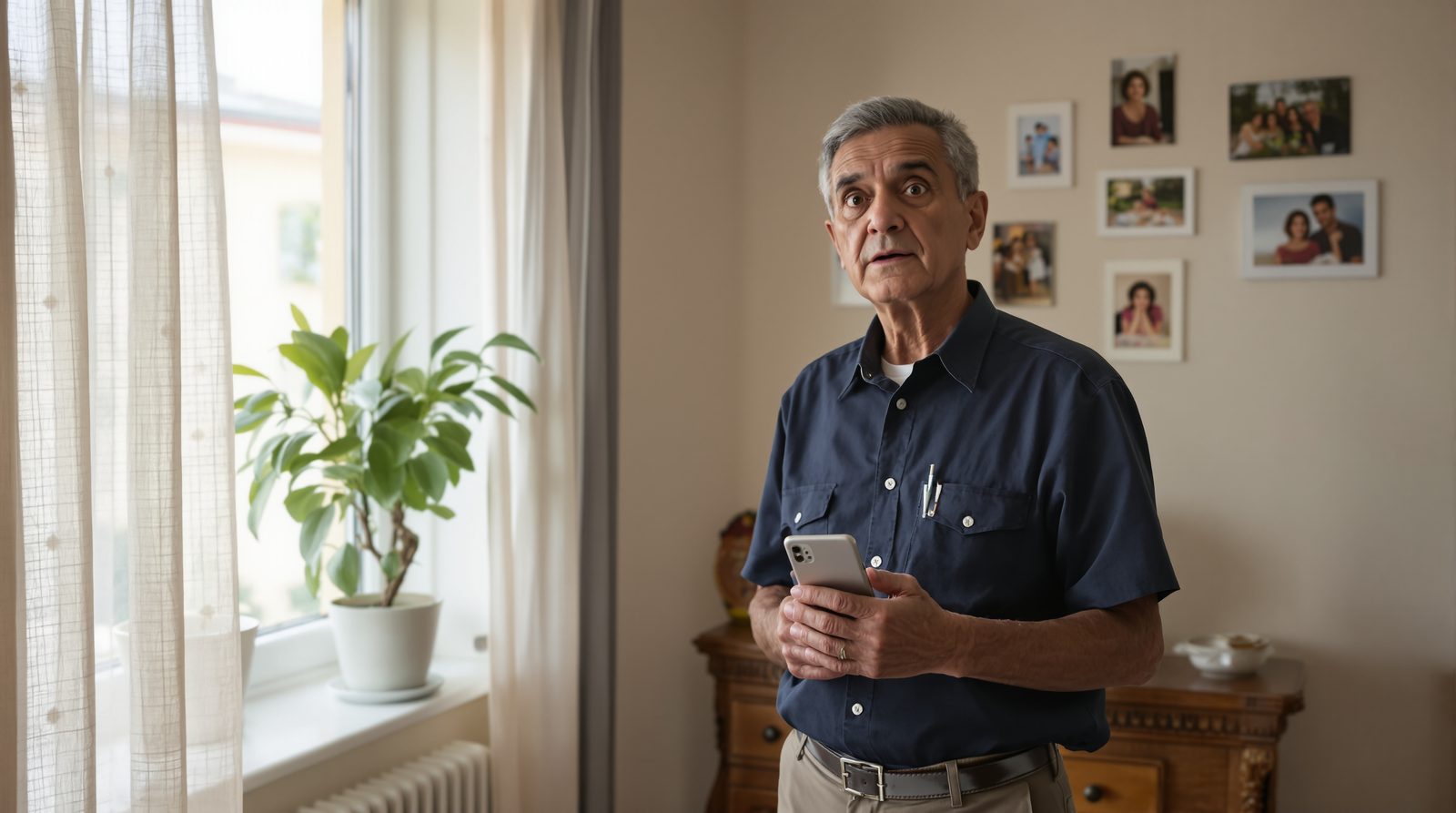
Dad froze when the robocall said his number was suspended. Eun found him still holding the phone.
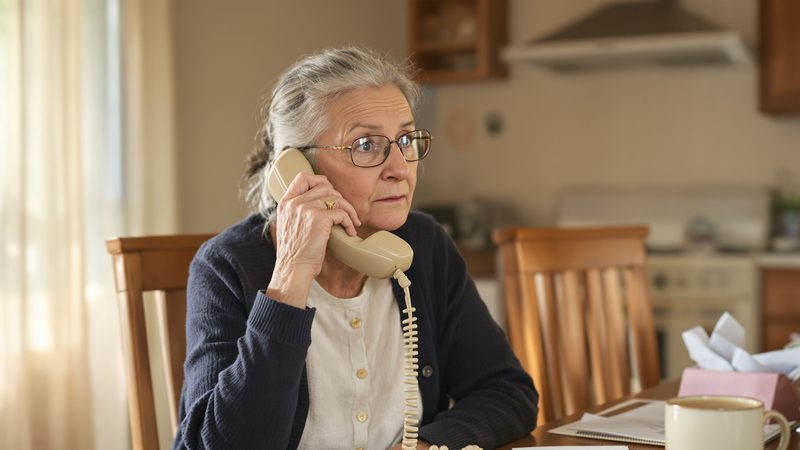
Antonio, 76, in Toledo, was finishing his crossword at the kitchen table when his landline rang. The voicemail came through on speaker. A flat, computerized voice said his Social Security number had been suspended due to suspicious activity in Texas, and that local police were on their way to his door.
He had never been to Texas. He had never been arrested. He sat for a long time looking at the phone, the crossword pen still in his hand. Then he called the number back. A man picked up on the second ring and said, sir, you need to verify your number right now.
Antonio's daughter Eun found him an hour later, still at the table, still holding the phone. He had not given anyone anything yet. But he had been about to. That is the part that haunted her — not what happened, but what almost did.
They said the police were coming. I believed them for a minute.
He opened Tiina.
Social Security scam calls are robocalls that threaten suspension, arrest, or seized benefits unless the senior verifies their SSN or pays a fine. The Social Security Administration does not suspend numbers, does not leave threatening voicemails, and does not call to demand payment. With Tiina, a voice-first AI companion for older adults, Mom or Dad describes the call out loud and gets the answer in one calm sentence: an SSN cannot be suspended. End of story.
If your dad froze on this call, it is not because you didn't warn him enough. You warned him. He still froze. The voice was authoritative, the threat was specific, and the panic response is older than scams — it is the same response his body learned in 1962 when a teacher said his name in a tone he did not like.
Your job is not to make him immune. Your job is to give him a thirty-second pause button between the panic and the wallet.
The pause is the whole game.
What's actually happening on a Social Security scam call
The call usually starts as a robocall voicemail. A computerized voice says your Social Security number has been suspended, compromised, or linked to a crime in a southern border state. The caller leaves a callback number. If your parent calls it, a live person picks up and stays in character — calm, official, threatening just enough to keep them on the line.
The Federal Trade Commission tracked government impersonation as one of the top reported fraud categories targeting adults over 60 in its most recent Consumer Sentinel Data Book, with reported losses in the hundreds of millions of dollars. Social Security impersonation is one of the biggest slices of that pie. The reason it works is not because your parent is naive. It works because the script is engineered to short-circuit the part of the brain that asks questions.
The end of the call is always the same: the scammer asks the senior to verify their SSN, buy gift cards to 'protect' their assets, or wire money to a 'federal safe account.' There is no federal safe account. There is no agent named Officer Davis. The Social Security Administration confirms on its own site that it does not suspend numbers and does not demand immediate payment by phone.
What Tiina does when Mom is still holding the phone
Antonio opened Tiina on his iPhone and described the call out loud — the robocall, the Texas warrant, the man who answered the callback. He did not have to remember the right keyword or know the official term for it. He just said what happened.
Tiina answered in plain language. A Social Security number cannot be suspended. The SSA does not call with arrest threats. The voicemail was a scam, the man on the phone was a scammer, and Antonio had done the right thing by not reading his number out loud. Then Tiina walked him through the next step: hang up, block the number in the Phone app, and report it at oig.ssa.gov.
Antonio did not need to call his daughter to feel sure. He went back to his crossword. Eun heard about it that evening, after the fact, when he mentioned it the way you mention a near-miss in traffic. It had already become a small story instead of a crisis.
What changes after Dad spots one of these calls himself
The first time a senior recognizes a scam in real time, something shifts. The next call is easier. The one after that, Dad hangs up before the recording finishes. He starts to trust his own gut again, which is the part the scammers were trying to take from him in the first place.
This is the part most adult children do not see coming. You think the win is blocking the number. The bigger win is that your parent stops feeling like a target and starts feeling like a person who can spot a liar. He does not need you to vet every call. He does not need to hand over his independence to stay safe.
Eun did not have to install a content filter on her father's phone. She did not have to take over his finances. He kept his life. He just got a faster way to check his gut.
A scammer counts on no one being there to ask. Tiina is — a companion on the phone who'll talk through any "urgent" call, calmly, before your parent does anything they can't undo.
What you can do for Dad this weekend
First, set up the mySocialSecurity account at ssa.gov together. It takes ten minutes and gives him a place to see his actual status any time he is worried. The peace it provides is not abstract — it is a webpage that says everything is fine.
Second, save one sentence in his Notes app or on a sticky note by the phone: An SSN cannot be suspended. End of story. That is the line he repeats to himself when the next call comes. It is also the line you can text him after he tells you about a scary voicemail.
Third, put Tiina on his iPhone so he has a place to ask out loud before he calls anyone back. The whole point is that the pause happens before the wallet comes out, not after.
What this sounds like with Tiina in the room
Antonio opened Tiina on the kitchen counter and described what he had just heard. A voicemail said my Social Security number was suspended in Texas. The man who answered when I called back said police were coming. Tiina answered without hurry. That call was a scam, Antonio. Social Security numbers cannot be suspended, and the SSA does not call with arrest threats. Antonio exhaled. So nothing is wrong with my account? Nothing. You can confirm at the mySocialSecurity site any time. Want me to walk you through blocking the number? He said yes. Two minutes later he was back at the crossword, and the man in the call center was somebody else's problem.
Dad doesn't freeze on scam calls anymore. He hangs up and finishes his coffee.
Tiina lives on Dad's iPhone. When the next robocall threatens jail or suspension, he opens her, describes what he heard, and gets a one-sentence answer he can trust. The call ends. The day keeps going. The pause is the whole game.
Set Tiina up for Dad →Methodology & editorial policy
Reviewed and updated May 14, 2026 by the Tiina Editorial Team. Re-checked as new federal data, agency updates, or product changes warrant. Sources are linked below; numbers are not composite.
About composite scenarios. Scenes and sample conversations in this article are composite. Names and identifying details are changed; the moment is real.
About Tiina. Tiina is a voice-first AI companion for older adults — an app for iPhone and iPad that your parent opens to talk through a moment that doesn't feel right.
Sharing. Quote freely with a link back to this page. For full reprints, email hello@tiina.ai.
Sources. 4 references — primary sources for the numbers and claims above.View all
- FTC Consumer Sentinel Data Book — We used the FTC's elder fraud loss reporting as the framing for how Social Security impersonation ranks against other government impersonation scams.. ftc.gov/consumer-sentinel-network
- Social Security Administration — Scam Awareness — We cited the SSA's own statement that it does not suspend numbers or threaten arrest by phone.. ssa.gov/scam
- SSA Office of the Inspector General — We pointed readers to the official channel for reporting SSA impersonation.. oig.ssa.gov
- AARP Fraud Watch Network — We referenced AARP's ongoing tracking of government impersonation calls for additional context.. aarp.org/money/scams-fraud
Frequently Asked Questions
Yes — Social Security impersonation has been one of the top-reported government scams every year since 2018, according to FTC Consumer Sentinel and the SSA Office of the Inspector General. The current dominant variants are phone calls claiming your SSN has been 'suspended' due to suspicious activity, text messages warning of a 'problem with your number,' and emails pointing to fake mySocialSecurity login pages. SSA does not suspend numbers, does not threaten arrest, and does not demand payment by gift card, wire, or cryptocurrency. If you get any of these contacts, hang up or delete, and report at oig.ssa.gov. See our overview of phone scams targeting seniors for the broader pattern.
Real Social Security emails come from addresses ending in '.gov' — typically '@ssa.gov' — and never ask you to verify your SSN, bank info, or password by clicking a link. Anything from '@socialadministration.com,' '@ssa-gov.org,' Gmail, Yahoo, or a personal-looking address is fake. SSA's general practice is to direct you to log in at ssa.gov yourself rather than click an in-email link. Hover over the sender name to see the actual address, and check the URL of any link before tapping. When in doubt, delete the email and sign in directly at ssa.gov, or report the phishing attempt at oig.ssa.gov.
SSA sends paper notices by U.S. mail whenever your benefit amount or eligibility changes — a cost-of-living adjustment, a Supplemental Security Income (SSI) recalculation based on income or living arrangements, a Medicare premium update, or an overpayment notice. Real notices arrive on SSA letterhead, reference your claim number, and direct you to call 1-800-772-1213 or log in to mySocialSecurity. They never demand same-day payment, never threaten arrest, and never ask for gift cards. If a 'notice' arrives by text or email asking you to click a link to confirm your account, it is not from SSA. Verify by signing in directly at ssa.gov.
The current Social Security scam text typically warns of a 'problem with your Social Security number' or 'suspicious activity on your account' and demands you call a number to avoid legal action or arrest. SSA does not send these texts. The agency does not threaten arrest, does not suspend numbers, and does not contact beneficiaries by SMS for account problems. Do not call the number, do not reply 'STOP' (which confirms your number is live), and do not click any links. Screenshot the message, then delete it. Report the text at oig.ssa.gov and forward suspicious texts to 7726 (SPAM) so your carrier can flag the sender.