Medicare Scam Calls: The 5 Tells
Dad had his Medicare card on the counter, ready to read the number out loud.
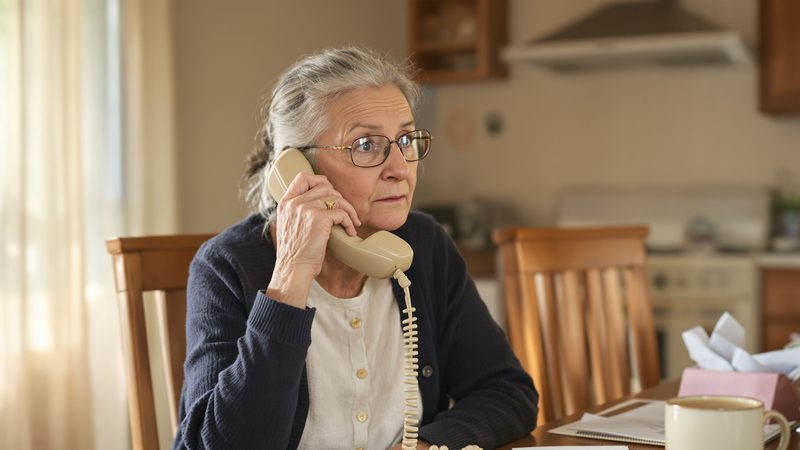
Stephen, 73, in San Diego, was sitting at his kitchen table with the mail when the phone rang. A polite woman said she was a Medicare benefits coordinator calling about Stephen's new plastic card — the old paper one was being phased out. She just needed to verify Stephen's Medicare number to ship the new card.
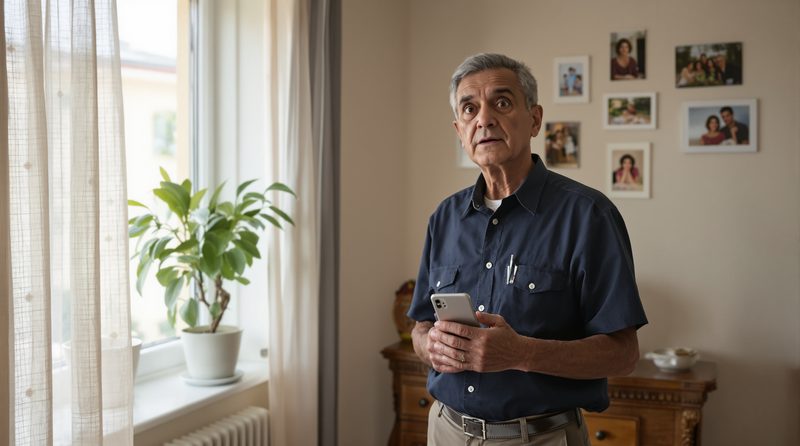
Stephen's red, white, and blue card was already on the table, next to a stack of bills. He picked it up. He had his reading glasses on. He was about to read the number out loud when he paused — not because he suspected anything, but because the woman sounded a little too smooth, like a customer service script.
He set the card back down and picked up his iPhone. He opened Tiina and said, simply, somebody from Medicare wants my card number to send me a new card. Is that real?
She wanted my Medicare number to send me a new card. I almost read it.
He opened Tiina.
Medicare scam calls are phone calls from someone pretending to be from Medicare, a Medicare Advantage plan, or a 'benefits coordinator' asking for your Medicare number, bank info, or a verification code. Medicare does not call beneficiaries unsolicited. With Tiina, a voice-first AI companion for older adults, Dad describes the call out loud and gets the answer in seconds: real Medicare already has his number. The only number that matters is 1-800-MEDICARE.
If your dad almost gave his Medicare number to someone on the phone, it is not because you didn't go over the warning signs at Thanksgiving. You did. The scripts are written to sound like a normal customer service call — polite, mid-day, with vocabulary your dad recognizes — and that is exactly why they slip past the standard warnings.
Your job is not to be the gatekeeper for every phone call he gets. Your job is to give him a faster way to verify a call than reading his number to a stranger to find out.
He already has the number. They don't.
What's actually happening on a Medicare scam call
The call almost always starts with a reason that sounds reasonable. A new plastic card. A new benefit he qualifies for. A free knee brace or back brace covered by Medicare. A genetic cancer screening he can do from home. Each version exists for one reason — to get him to read his Medicare number, his bank info, or a verification code out loud.
Once they have the Medicare number, they bill Medicare for services he never received — DME (durable medical equipment), genetic tests, or telehealth visits with providers he has never met. CMS, the Centers for Medicare & Medicaid Services, has flagged DME and genetic testing fraud as multi-billion-dollar problems in recent years. The senior almost never sees the bill. Medicare absorbs the loss until it doesn't, and the senior's account gets flagged.
Healthcare-related fraud shows up year after year in FTC Consumer Sentinel reporting on scams against adults over 60. AARP and CMS both note that Medicare beneficiaries are specifically targeted during the fall open enrollment window (October 15 through December 7), when call volume to seniors spikes.
What Tiina does when Dad isn't sure
Stephen opened Tiina with the Medicare card still in his hand. He described the call — the woman, the new plastic card, the request to verify the number. Tiina answered without hurry. Medicare does not call beneficiaries to verify Medicare numbers. Medicare already has the number. There is no new card being sent out. The caller was a scammer.
Then Tiina walked through the five tells out loud, so Stephen would recognize the pattern next time: Medicare does not call you first. They do not ask for your Medicare number. They do not rush you. They do not offer free equipment over the phone. The only number that matters is 1-800-MEDICARE.
Stephen hung up. He put the card back in his wallet. He did not call his daughter to feel sure. Amy heard about it that night when Stephen mentioned it the way you mention seeing a fox in the yard — a small, finished story.
What changes after Dad recognizes one in real time
The first save is the loudest because it is the moment Stephen realized the script existed. The second one was quieter — by the third call he hung up at the word 'coordinator.' His body stopped supplying the polite reflex to stay on the line.
Amy did not have to take over her father's Medicare account. She did not have to add herself as an authorized representative just to feel safer. She did not have to fight her father about whether to answer the phone. Stephen kept his own Medicare card and his own benefits.
The dignity matters here. Stephen still gets to be the man who handles his own paperwork at the kitchen table. He just has a faster way to verify a call than reading his number to a stranger to find out who they really are.
A scammer counts on no one being there to ask. Tiina is — a companion on the phone who'll talk through any "urgent" call, calmly, before your parent does anything they can't undo.
What you can do for Dad this weekend
First, write down the five tells on an index card and tape it to the wall by his phone: Medicare does not call first. They do not ask for your number. They do not rush you. They do not offer free equipment. Only 1-800-MEDICARE matters. He can glance at it while the caller is still talking.
Second, set him up at medicare.gov with a real account, so he has a place to check his benefits and recent claims any time he is worried. If he ever sees a claim for a back brace he never got, he will recognize it.
Third, put Tiina on his iPhone so he has somewhere to ask out loud, in the moment, before the card comes off the table.
What this sounds like with Tiina in the room
Stephen opened Tiina with the Medicare card still in his hand. A woman says she's from Medicare and needs my number to send me a new card. Is that real? Tiina answered without hesitating. No, Stephen. Medicare doesn't call to ask for your number — they already have it. That call is a scam. Stephen put the card down. She sounded so normal. That's the design. Real Medicare contacts you by mail first, and the only Medicare phone number that matters is 1-800-MEDICARE. Want me to walk you through how to report this one? Stephen said yes, after he put his card back in his wallet.
Dad doesn't read his card to strangers anymore. He opens Tiina.
Tiina lives on Dad's iPhone. When the next 'Medicare benefits coordinator' calls, Dad asks Tiina out loud before reading anything. The call ends. The card goes back in his wallet. Real Medicare already has his number.
Set Tiina up for Dad →Methodology & editorial policy
Reviewed and updated May 14, 2026 by the Tiina Editorial Team. Re-checked as new federal data, agency updates, or product changes warrant. Sources are linked below; numbers are not composite.
About composite scenarios. Stephen and his daughter Amy are composite characters, and the scenes and sample conversations in this article are illustrative. The call script they depict is documented in the sources below.
About Tiina. Tiina is a voice-first AI companion for older adults — an app for iPhone and iPad that your parent opens to talk through a moment that doesn't feel right.
Sharing. Quote freely with a link back to this page. For full reprints, email hello@tiina.ai.
Sources. 5 references — primary sources for the numbers and claims above.View all
- Medicare.gov — How to Spot Medicare Fraud — We cited Medicare's own statement that it does not call beneficiaries unsolicited and pointed readers to 1-800-MEDICARE.. medicare.gov
- HHS Office of Inspector General — We pointed readers to the official reporting channel for Medicare fraud.. oig.hhs.gov/report-fraud
- FTC Consumer Sentinel Data Book — We referenced FTC reporting on healthcare-related fraud among older adults.. ftc.gov/consumer-sentinel-network
- AARP Fraud Watch Network — We referenced AARP's tracking of Medicare scam call volume during open enrollment.. aarp.org/money/scams-fraud
- HHS OIG Consumer Alerts — We referenced OIG fraud alerts on genetic testing and durable medical equipment schemes billed to Medicare.. oig.hhs.gov/fraud/consumer-alerts
Frequently Asked Questions
The most common Medicare scams involve callers offering 'free' braces, knee braces, back braces, diabetic supplies, genetic cancer screening kits, or COVID test kits in exchange for your Medicare number. CMS and the HHS Office of Inspector General have flagged durable medical equipment (DME) and genetic testing fraud as multi-billion-dollar problems. Other variants include callers offering 'new Medicare cards' (no new card is being issued), 'plan reviews' outside open enrollment, or 'refunds' for overpaid premiums. Medicare does not cold-call beneficiaries for any of these. If anyone calls offering free medical equipment in exchange for your Medicare number, hang up and call 1-800-MEDICARE.
Almost never first. Medicare contacts beneficiaries by mail, and phone follow-up only happens after you called Medicare first or have an open question in your account. Medicare does not cold-call to verify card numbers, offer new plans, ship equipment, or process refunds. Medicare Advantage and Part D plans (which are private insurers) may call existing members about their specific plan, but they cannot legally cold-call to enroll you. If someone calls saying they are 'from Medicare,' it is a scam. Hang up and call 1-800-MEDICARE (1-800-633-4227) yourself — that is Medicare's official phone line.
Stack three layers. First, turn on your carrier's free spam filter (AT&T ActiveArmor, Verizon Call Filter, T-Mobile Scam Shield) — these block known Medicare-impersonation numbers. Second, install Hiya or a similar call-screening app from the App Store. Third, on iPhone, enable Settings → Apps → Phone → Silence Unknown Callers so any number not in your contacts goes to voicemail. Register at donotcall.gov (it won't stop scam robocalls but does stop legitimate telemarketing). Report every Medicare scam call to 1-800-MEDICARE and at oig.hhs.gov so the fraud network can be mapped. See our phone scams targeting seniors guide for the full stack.
Sometimes — but never from a cold call. Some Medicare Advantage plans (private plans, not Original Medicare) offer a grocery or 'flex' allowance as a supplemental benefit, but only for members already enrolled in that specific plan, and only after you signed up. Original Medicare (Parts A and B) does not offer a grocery allowance, and no Medicare program offers a free benefit in exchange for your Medicare number over the phone. The TV ads and cold calls promising '$2,800 in grocery benefits' are almost always lead-generation scams that funnel your information to high-pressure brokers — or outright fraud. Verify any plan benefits at medicare.gov or by calling 1-800-MEDICARE.