Elder Financial Abuse: Warning Signs and What to Do
The most underreported elder fraud category. The bank-statement warning signs, the people most likely to do it, and the hotline call that stops it cold.
Elder financial exploitation is the most underreported category of elder abuse in the United States. The hardest part for caregivers: most of the time it's not a stranger — it's a relative, a neighbor, a hired caregiver, or someone the parent considers a friend. The warning signs are visible on a 90-day bank statement: unfamiliar recipients, round-number withdrawals at regular intervals, new joint account holders, or sudden large gifts. If you suspect it, call your state's Adult Protective Services and the bank's fraud line before you confront the person you suspect. The bank can freeze accounts faster than you can.
Margaret's father was three digits away from giving a scammer access to his life savings.
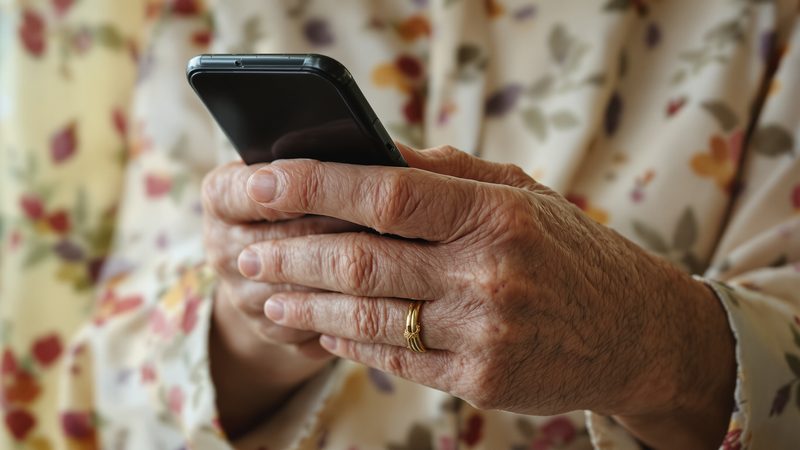
A man had called saying his bank account had been compromised. The caller sounded so professional. He asked for the security code Chase had texted him — to "verify his identity and lock the account." Margaret's father had his phone in his hand. The texted code was on the screen. If Margaret hadn't walked in through the kitchen door, he would have read the six digits out loud.
That's how it ends in the headline version. But the harder version of this story is the one where the person trying to drain the account isn't a stranger on the phone. It's the live-in caregiver. The neighbor who started running errands. The new girlfriend her father met at the senior center. The nephew nobody has heard from in fifteen years.
A composite, drawn from FTC Consumer Sentinel filings. Names changed.
Who actually does it
Per the National Center on Elder Abuse: roughly 58% of financial exploitation cases against older adults are perpetrated by family members. Another ~30% are friends, neighbors, or paid home-care aides. Strangers (phone scammers, mail fraud, romance scams) are a smaller slice of the dollar losses but get most of the news coverage.

- The adult child or grandchild with a substance problem. Cash, jewelry, items pawned for cash. Often gradual.
- The new romantic partner. Sudden joint accounts, large "gifts," named on the will, isolated from family.
- The hired caregiver who crosses lines. Round-number withdrawals "for groceries" that don't add up. Items missing from the house.
- The trusted neighbor or friend. Often an "errand runner" who starts handling the checkbook.
- The phone or text scammer. One-time large losses, often gift cards or wires. See our guide to phone scams.
What to look for on the bank statements
Get permission to review a 90-day statement. Don't read it for math — read it for pattern:
- Repeating round-number withdrawals. $200 every Saturday. $500 the first Monday of each month. Patterns mean someone has a system.
- New ACH recipients you don't recognize. Cross-check against utilities, regular vendors. Anyone new gets a question.
- Cashier's checks or large cash withdrawals. Especially if they're written to "cash" or to an unfamiliar name.
- New joint account holders or authorized signers. Especially if added in the last 90 days.
- Pawn-shop activity on credit card statements.
- Changes to estate documents. Beneficiary changes on retirement accounts. New entries in the will. New POAs filed.
One signal is a question. Three signals from the list above is a confrontation moment. Five signals is a call to Adult Protective Services and the bank's fraud line — in that order.
What to do — in order
- Call the bank's fraud line first. Not the branch — the dedicated fraud number on the back of the card. Banks can freeze or restrict accounts faster than you can. Ask about a "trusted contact" designation, which lets the bank flag you on suspicious activity even without you being on the account.
- Call Adult Protective Services (APS). Every state has an office. The Eldercare Locator (1-800-677-1116) routes you to the local one. Reports can be anonymous. APS investigates without your parent finding out who reported, in most states.
- File a police report if there's clear theft. Especially for items missing from the house or cash withdrawn under coercion. The case number is what you need for the bank to reverse charges.
- Do NOT confront the suspected person first. They will move money, destroy records, and pressure your parent to defend them before you've protected the account.
- Then talk to your parent. See our don't-shame conversation guide — the same framing applies.
A scammer counts on no one being there to ask. Tiina is — a companion on the phone who'll talk through any "urgent" call, calmly, before your parent does anything they can't undo.
The bank-side tools most caregivers don't know exist
Banks have quietly built better elder-fraud protections in the last few years. Most are opt-in and your parent has to authorize them — but they exist, and they're free:
- Trusted contact designation. Adds you as a person the bank can call if they see suspicious activity, without making you a joint account holder. Your parent stays in full control. The bank's compliance teams use this aggressively — they call.
- Daily transaction limits. Cap on wires, ATM withdrawals, or Zelle transfers per day. Your parent can still spend; a scammer can't drain everything in one phone call. Most banks will set it at your parent's request — common limits: $500/day Zelle, $1,000/day ATM, $5,000/day wires.
- Read-only family access. Several major banks (Chase, Bank of America, Wells Fargo) now offer view-only family monitoring without giving you transaction authority. You see suspicious activity; you don't move money.
- Hold-on-large-transfers. Many banks will hold any wire or Zelle over a threshold (say $2,000) for 24 hours pending verification call. Reverses most phone-scam losses if reported same-day.
- Senior fraud team escalation. Major banks have dedicated elder-fraud units. Ask explicitly to be transferred to "the team that handles older-adult fraud" — they have powers branch staff don't, including freezing transfers in flight.
None of these require your parent to give up control of their accounts. All require ONE call to the bank to set up. Make the call together at the kitchen table; let your parent talk to the bank with you on speaker.
The autonomy-money conversation
The hardest version of elder financial protection isn't the scam call — it's the slow conversation about money as your parent ages. Two principles that help:
Don't conflate "I want to see" with "I want to control." Many caregivers default to joint accounts or assumed authority because watching is easier when you're on the account. But joint ownership creates its own problems (estate confusion, exposure to your own creditors, family fights). The cleaner pattern: trusted contact + read-only access + a signed financial POA in the drawer for when it's needed.
Don't shame the call your parent took. They'll stop telling you about the next one if the first conversation involved them feeling stupid. The line families repeat most: "The reason most parents get scammed twice is that they didn't tell anyone about the first time." Make sure your conversation makes the second time more likely to be reported.

What this sounds like with Tiina in the room
Thursday night. Your mom realized this afternoon that Marie — the cheerful neighbor who runs her errands — has been taking $200 in cash "for groceries" most Saturdays, and the groceries never quite add up. She's not ready to call you yet. She opens Tiina and says, "How do I tell Marie not to come back. I don't want to embarrass her. But I can't keep paying her." Tiina helps her write it down. Three short sentences. Walks her through them. Tells her she doesn't owe Marie an explanation. Reminds her to call the bank's fraud line tomorrow before she has the conversation. Your mom rehearses it twice. By bedtime she knows what she's going to say.
Before Dad moves the money, he runs it past Tiina.
Romance scams and "your account is frozen" calls only work if she has no one to say it out loud to first. Now she does — and the second she says it out loud, the spell breaks.
Start the trial for Dad →Methodology & editorial policy
Reviewed and updated May 10, 2026 by the Tiina Editorial Team. Re-verified against National Adult Protective Services Association data, FTC Consumer Sentinel filings, and FBI IC3 elder-fraud reports. Updated when major agencies issue new guidance.
About composite scenarios. Margaret and her father are composite, drawn from FTC filings reviewed for this guide. The 58% family-perpetrator figure is from the National Center on Elder Abuse.
About Tiina. Tiina is a voice-first AI companion for older adults — an app for iPhone and iPad that your parent opens to talk through a moment that doesn't feel right.
Sharing. Quote freely with a link back to this page. For full reprints, email hello@tiina.ai.
Sources. 6 references — National APS Association, FTC Sentinel, FBI IC3, CFPB, Eldercare Locator, AARP BankSafe.View all
- National Adult Protective Services Association — Reporting Elder Financial Exploitation. napsa-now.org
- Eldercare Locator — Find your state's APS office — 1-800-677-1116. eldercare.acl.gov
- Consumer Financial Protection Bureau — Reporting Elder Financial Abuse. consumerfinance.gov
- FTC Consumer Sentinel Network — Data Book 2024 — Elder Fraud section. ftc.gov
- FBI Internet Crime Complaint Center — Elder Fraud Report. ic3.gov
- AARP BankSafe Initiative — Trusted Contact and bank-side fraud prevention tools. aarp.org/banksafe