
Hospital Delirium: Why Your Parent Is Suddenly Confused, and What Helps
Delirium is common, often preventable and usually temporary. Here's how to spot it, what to do at the bedside and what to ask the care team.
Some links below are affiliate links: if you buy through them, Tiina may earn a small commission at no extra cost to you. As an Amazon Associate I earn from qualifying purchases.
Hospital delirium is sudden confusion brought on by illness, infection, surgery, medicines, pain, dehydration or lost sleep. It starts over hours or days and comes and goes, unlike dementia, which builds slowly. Tell the nurse right away if your parent isn't acting like themselves. Bring their glasses and hearing aids, stay as much as you can, and ask what's causing it.
We're not doctors, and this isn't medical advice. It's general information to help you recognize delirium and work with your parent's care team. Any sudden change in thinking is a medical problem: in the hospital, tell the nurse right away. At home, call the doctor the same day, or 911 if your parent is very drowsy, hard to wake or has signs of a stroke.
On Monday your dad went into the hospital with pneumonia, tired but himself. By Wednesday night he was pulling at his IV, insisting he had to get to work, and he looked at you like a stranger. Someone on the night shift said older people just get like this. You knew better. He has never been like this. What you're likely seeing is delirium, a sudden confusion that hits a large share of older hospital patients and is often missed. It's frightening. It's also something families can spot early and do a lot about.
What hospital delirium is
MedlinePlus describes delirium as sudden severe confusion caused by rapid changes in brain function during a physical or mental illness. It's usually temporary and reversible once the cause is treated. A review in The Lancet found it affects up to half of hospitalized older adults, and that 30% to 40% of cases can be prevented.
There's rarely a single cause. In older adults, delirium usually comes from several things stacking up: the illness itself, an infection such as a urinary tract infection or pneumonia, surgery and anesthesia, new or stopped medicines, pain, dehydration, constipation, and nights of broken sleep in a noisy room. The more fragile the brain going in, the less it takes. A person with dementia can tip into delirium from something as small as one dose of a sleeping pill.
The signs to watch for
According to the American Geriatrics Society's Health in Aging tip sheet, delirium can start within a few hours, come and go, and change quickly. Watch for:
- Confusion about where they are, the time or why they're there
- Trouble paying attention or following a conversation
- Alertness that comes and goes during the day, often worse at night
- Saying things that don't make sense
- Seeing or hearing things that aren't there
- Sudden mood or personality changes, agitation or restlessness
- Being unusually sleepy, slow or withdrawn
The quiet kind is easy to miss
Delirium has two faces. The loud one, agitation and pulling at tubes, gets noticed. The quiet one, a parent who just seems sleepy, flat and far away, often doesn't. The Lancet review notes that this quiet, or hypoactive, form is more common in older patients and is linked to worse outcomes. If your talkative mom has gone silent and staff describe her as "resting comfortably," say something.
You're the expert on your parent. The same review says the most important step in diagnosing delirium is a history from someone who knows the patient, because staff meeting your parent for the first time can't tell what's new. Be specific: "Last week she did her own crossword and paid her bills. Today she doesn't know what month it is."


Thinking can take weeks to come back after a hospital stay, and the days at home are quiet. Your parent can tap Call Tiina for a patient conversation in their own words, with someone who explains things as many times as they need and never rushes them.
Delirium or dementia?
They can look alike, and they can happen together, but they're different problems:
- Speed: delirium comes on over hours or days. Dementia develops over months and years.
- Pattern: delirium fluctuates, clear one hour and confused the next. Dementia is more steady from day to day.
- Attention: delirium wrecks attention and alertness early. In early dementia, attention is often fine even when memory isn't.
- Outcome: delirium often improves as the cause is treated. Dementia doesn't go away.
What families can do at the bedside
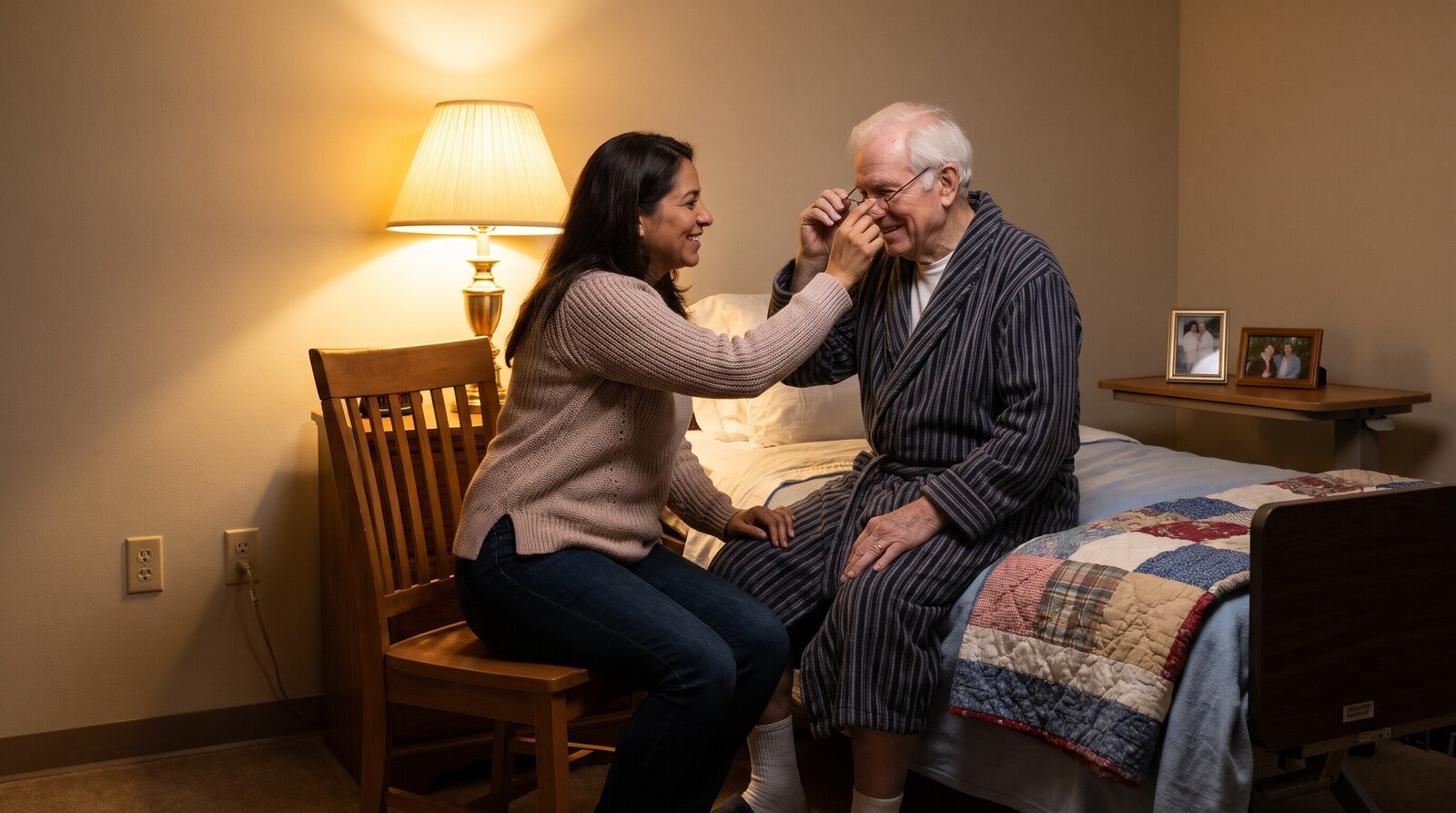
This is where you make a real difference. In one randomized trial included in the Lancet review, older medical patients whose family members delivered a set of simple daily delirium-prevention steps developed delirium about half as often (6% compared with 13%). The Health in Aging tip sheet recommends:
Stay as much as you can, including meals and, if the hospital allows it, overnight. Take shifts with siblings or friends if you can. Keep glasses, hearing aids and dentures on your parent, not in a drawer. They often get put away in the hospital, and without them a parent can quickly become disoriented. Explain gently and often where they are and why, in short, calm sentences, without arguing with what they believe. Bring the familiar: family photos, a favorite blanket, music they love.
Keep day and night different. Open the curtains and keep lights on during the day, and ask for quiet and dim lights at night. A clock and calendar where your parent can see them help. Get them moving. Ask staff whether your parent can sit in a chair, walk the hall with help, or play a simple card game. Help them eat and drink, since dehydration feeds delirium.
If your parent has dementia, these steps matter even more. For the confusion that can follow them home, read about sundowning and what to do at 5 p.m..
What to ask the care team
Tell the nurse the moment you notice a change, and ask for the doctor to be told. Then work through these questions. Writing the answers down helps when the shift changes:
- Do you think this is delirium? Has my parent been screened for it?
- What might be causing it? Have you checked for infection, dehydration, constipation, low oxygen and pain?
- Which medicines are new or changed? Could any sedatives, sleeping pills or strong pain medicines be lowered or stopped?
- What non-drug steps are you taking first? Medicines to calm agitation don't treat the cause.
- Can my parent get out of bed and walk with help today?
- Does the hospital have a delirium prevention program, a geriatric team or volunteer companions?
- Can a family member stay overnight?
Recovery after the hospital
Recovery takes longer than most families expect. MedlinePlus says delirium often lasts about a week, and thinking can take several more weeks to return to where it was. Full recovery is usually expected but depends on the cause. The Lancet review links delirium to a higher risk of later memory decline, so don't let it slide once your parent is discharged.
Before your parent leaves, ask whether they're ready to go straight home or need a stay in rehab first, and who will be with them the first few nights. Use the home-from-hospital sheet to plan the discharge conversation with the nurse. Book a follow-up visit with the primary care doctor soon after discharge, bring a list of what you noticed, and use these questions for your parent's doctor to make the visit count.
At home, keep routines steady, keep glasses and hearing aids in use, and protect sleep. If the confusion comes back or gets worse, call the doctor. And at the start of any future hospital stay or surgery, tell the team your parent had delirium before, and mention dementia or poor eyesight if they apply. Dementia and poor eyesight are known risk factors, and the team can plan around them. If you're not sure whether memory was slipping before the hospital, these early signs of dementia can help you think it through.
Dad is home from the hospital, and the afternoons have company.
The paperwork that comes home with him makes more sense when he reads it to Tiina, or shares a photo, and hears it in plain words, and with notifications on she can remind him about the follow-up visit. In the quiet weeks of recovery, she is someone patient to talk to.
Try Tiina with Dad →Frequently Asked Questions
Methodology & editorial policy
Reviewed and updated October 31, 2026 by the Tiina Editorial Team. Facts, programs and prices in this guide come from the sources listed below.
About composite scenarios. The opening scene is a composite.
About Tiina. Tiina is a voice-first AI companion for older adults: an app for iPhone and iPad that your parent opens whenever they want someone to talk to, day or night.
Sharing. Quote freely with a link back to this page. For full reprints, email hello@tiina.ai.
Sources. 3 references: MedlinePlus, Health in Aging Foundation (American Geriatrics Society), The Lancet (PubMed Central).View all
- MedlinePlus. Delirium. medlineplus.gov
- Health in Aging Foundation (American Geriatrics Society). Tip Sheet: Managing Delirium in Older Adults. healthinaging.org
- The Lancet (PubMed Central). Inouye SK, Westendorp RGJ, Saczynski JS. Delirium in elderly people. pmc.ncbi.nlm.nih.gov