Spoofed Caller ID: Why Numbers Lie
Dad's screen said Wells Fargo Fraud. The voice was a scammer.
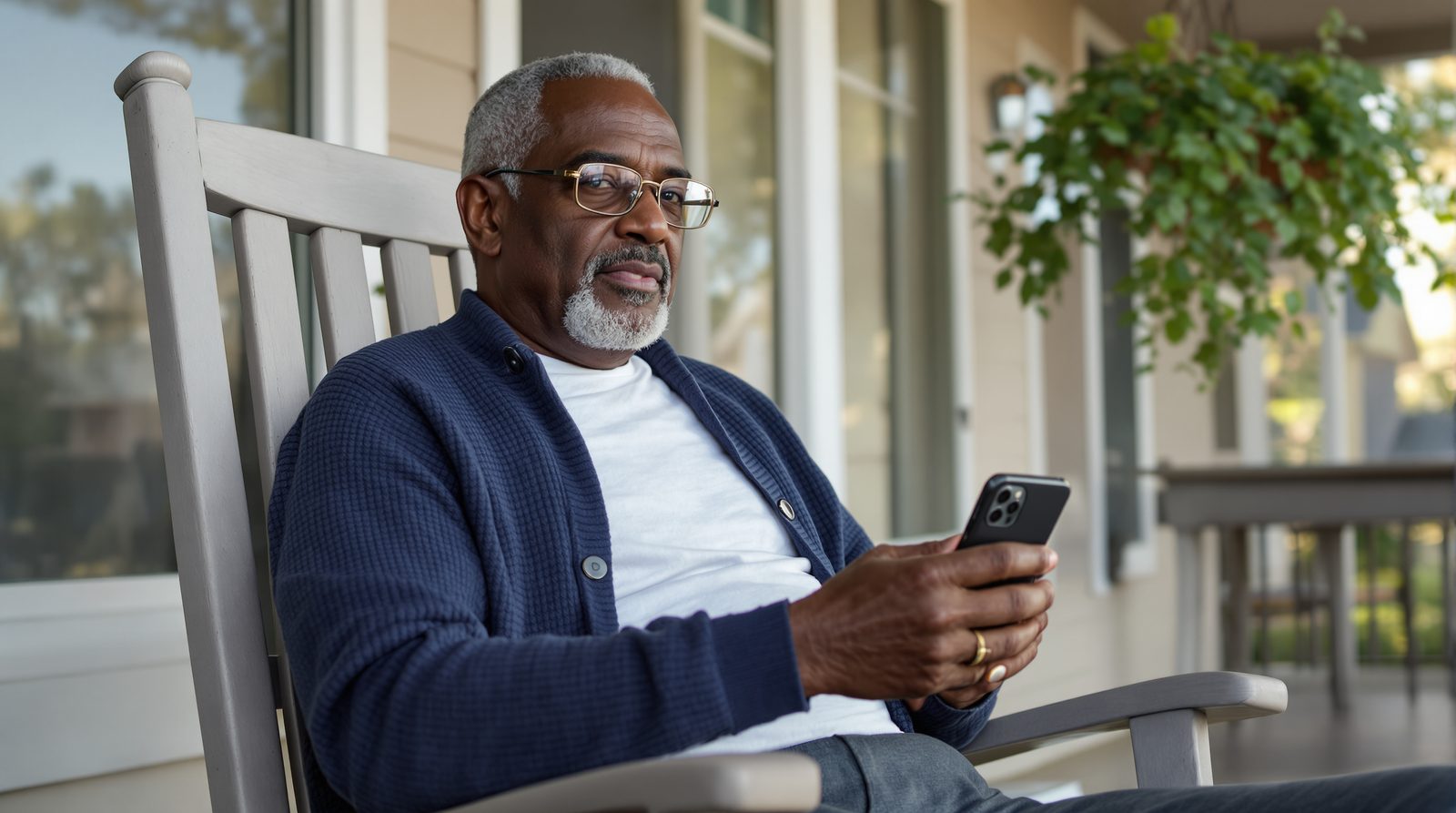
Marcus, 70, in Atlanta, was at the kitchen sink when his iPhone buzzed on the counter. The screen said Wells Fargo Fraud Department. He picked up. A young man with a Georgia accent said there had been a suspicious $900 charge at a Best Buy in Charlotte. Was Marcus traveling. Marcus said no.
The man said the bank could reverse the charge immediately, but Marcus would need to verify his identity. He would receive a six-digit code by text. The man just needed Marcus to read it back. The text came through almost instantly. Marcus read the first three digits out loud before he stopped.
He had a vague memory of his daughter saying — last Christmas? at Easter? — that you never read codes to anyone, ever. He set the phone down on the counter. He picked up the iPhone instead and opened Tiina.
The screen said Wells Fargo. He wanted my verification code.
He opened Tiina.
Spoofed caller ID is a technology that lets scammers display any phone number they choose on your screen — your bank, Medicare, the IRS, even your own daughter's number. The number on your screen is not proof of who is calling. With Tiina, a voice-first AI companion for older adults, Dad describes the call out loud, gets the calm answer, and remembers the rule: hang up and call back from a number you trust — the back of your card, not what was displayed.
If your dad almost read the code, it is not because he doesn't listen to you. It is because the caller ID said Wells Fargo Fraud Department, and the human reflex when your bank calls about fraud is to cooperate, fast. The screen lied. His reflex did not.
Your job is not to make him doubt every call from a real institution. Your job is to give him one rule and one tool — hang up, call back the number on the card, and ask Tiina before reading anything out loud.
The number on the screen isn't proof.
What's actually happening with spoofed caller ID
Spoofing is the technical practice of falsifying the caller ID information that shows up on the recipient's phone. The technology is cheap and widely available — VoIP services let a scammer choose any number to display, including the real customer service line of a real bank. The number on your screen is metadata, not proof. It is more like a 'from' line on an email than a return address verified by the post office.
Scammers exploit this in two ways. First, neighbor spoofing — they display a number with your local area code and prefix, so the call looks like a neighbor. Second, brand spoofing — they display the real customer service number of Wells Fargo, Chase, Bank of America, Medicare, the IRS, or your local police. When a real institution's number appears on screen, the senior's guard drops.
The FCC's STIR/SHAKEN framework requires major carriers to authenticate calls and flag suspicious spoofing, and it has reduced the worst spoofing somewhat. But the technology is not foolproof, and high-quality spoofing still gets through. FTC Consumer Sentinel and AARP Fraud Watch both rank impersonation scams (bank, government, business) as top fraud categories targeting adults over 60.
What Tiina does when the screen says one thing and the caller is another
Marcus opened Tiina with the text-message code still on his screen, unread aloud. He described the call — the Wells Fargo Fraud Department on his caller ID, the $900 charge in Charlotte, the man who needed him to read a code back to verify his identity.
Tiina answered quickly. The caller ID can be faked. A real bank fraud line will never ask you to read a verification code back to them — the code is sent so that you verify it on a secure page, not so a phone agent can use it to log in as you. The call was almost certainly a scam, even if the screen looked official. The right move was to hang up and call the bank back using the number on the back of the debit card.
Marcus did exactly that. He hung up. He turned over his debit card. He dialed the number printed on the back. The real bank confirmed no fraud charge, no $900 Charlotte transaction, no fraud department call. The code on his phone, if he had read it, would have given the scammer access to his account.
What changes after Dad learns to flip the card
The first time Marcus called back the real number on his debit card, he felt a little silly making the bank confirm there had been no charge. The bank teller was patient about it and told him he had done exactly the right thing. After that, the habit stuck. The screen on his phone became a suggestion, not a verdict.
Brittany did not have to add herself to her father's bank accounts. She did not have to take over the household finances or freeze his debit card. Marcus kept his own banking. He just had a new rule — flip the card, dial the number printed on it, ignore the screen if the call started with someone else.
The dignity matters here. Marcus still gets to handle his own money. He just stopped trusting the caller ID, which is the one piece of phone technology that actively lies.
A scammer counts on no one being there to ask. Tiina is — a companion on the phone who'll talk through any "urgent" call, calmly, before your parent does anything they can't undo.
What you can do for Dad this weekend
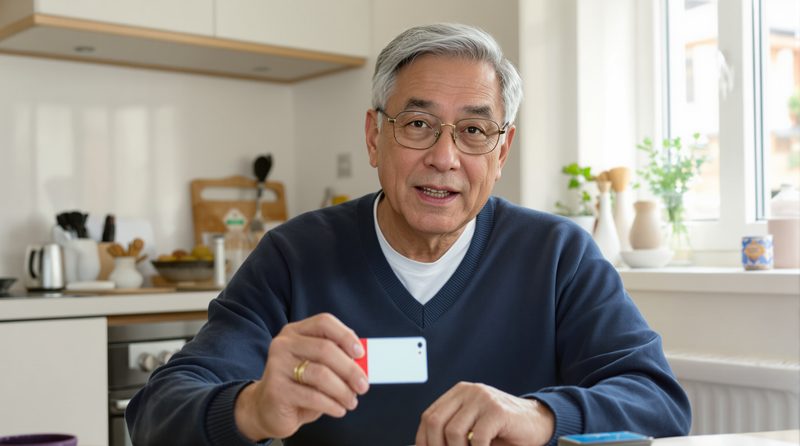
First, walk him through the back of his debit card and his credit card with him, in person. Show him where the customer service number is printed. Tell him: this number, on this card — never the number that appears on the screen — is the only number that matters when the bank calls. Take a photo of the cards on his phone if he wants a backup.
Second, save one sentence on a note by his phone: Your bank will never ask you to read a verification code back to them. Verification codes are sent so you can prove it is you on a secure site — not so a phone agent can use them to log in as you.
Third, put Tiina on his iPhone so he has somewhere to ask, out loud, before reading anything from a text message to anyone. The rule is simple: never read a code to a person, ever, for any reason.
What this sounds like with Tiina in the room
Marcus opened Tiina with the verification code text still on his lock screen. Someone from Wells Fargo Fraud Department says I had a suspicious charge in Charlotte. He wants me to read a code back. Tiina answered without hesitation. Marcus, that is a scam. Your bank will never ask you to read a verification code back to them. The caller ID can be faked to look like Wells Fargo. Marcus paused. So what do I do? Hang up. Turn over your debit card and call the number printed on the back. Ask them about the charge yourself. That's the only number that's actually your bank. Marcus hung up and flipped the card.
Dad calls back from the card now. The screen doesn't decide for him.
Tiina lives on Dad's iPhone. When the next call says it's the bank, Medicare, or the IRS, Dad opens Tiina, asks out loud, and remembers the rule: hang up and call back the number on the card. The screen lies. The card doesn't.
Set Tiina up for Dad →Methodology & editorial policy
Reviewed and updated May 14, 2026 by the Tiina Editorial Team. Re-checked as new federal data, agency updates, or product changes warrant. Sources are linked below; numbers are not composite.
About composite scenarios. Scenes and sample conversations in this article are composite. Names and identifying details are changed; the moment is real.
About Tiina. Tiina is a voice-first AI companion for older adults — an app for iPhone and iPad that your parent opens to talk through a moment that doesn't feel right.
Sharing. Quote freely with a link back to this page. For full reprints, email hello@tiina.ai.
Sources. 4 references — primary sources for the numbers and claims above.View all
- FCC — Caller ID Spoofing — We cited the FCC's consumer guide on how caller ID spoofing works and what's been done to reduce it.. fcc.gov/spoofing-and-caller-id
- FCC — STIR/SHAKEN — We referenced the STIR/SHAKEN framework as the partial-but-incomplete technical defense against spoofing.. fcc.gov/call-authentication
- FTC Consumer Sentinel Data Book — We referenced FTC data on bank, government, and business impersonation scams enabled by caller ID spoofing.. ftc.gov/consumer-sentinel-network
- AARP Fraud Watch Network — We referenced AARP's tracking of impersonation scams that rely on caller ID spoofing.. aarp.org/money/scams-fraud
Frequently Asked Questions
Yes — easily and cheaply. Inexpensive VoIP services let any caller display any number on the recipient's screen, including the real customer service line of any bank, the IRS, Social Security, your local police department, or even your own number. The number you see is just metadata the calling system sends, not verified by your carrier. The FCC's STIR/SHAKEN framework, rolled out across major U.S. carriers, reduces some spoofing of domestic landlines and cell numbers, but it does not eliminate spoofing from VoIP and overseas call centers. The only reliable verification is to hang up and call the institution back using a number you find yourself.
Usually yes — you'll start getting calls or texts from strangers asking why you called them, even though you didn't. That is the clearest sign scammers are using your number to spoof outbound calls. You can't stop it directly (your carrier doesn't control what other systems display), but you can answer those callbacks, calmly explain your number is being spoofed and you did not call, and recommend they hang up. Report the spoofing to your carrier and to the FCC at fcc.gov/consumers/guides/spoofing-and-caller-id. Most spoofing campaigns rotate numbers within a few days, so the misdirected callbacks usually stop on their own.
You can't fully eliminate it, but you can minimize incoming spoofed calls and reduce outbound spoofing of your number. For incoming: stack your carrier's free spam filter (AT&T ActiveArmor, Verizon Call Filter, T-Mobile Scam Shield), install Hiya, and enable iPhone's Silence Unknown Callers. For outbound spoofing of your number, contact your carrier — they can sometimes assign you a new number or add additional protections. The FCC's STIR/SHAKEN framework, mandatory for U.S. carriers since 2021, helps reduce spoofing of legitimate numbers. Report persistent spoofing at fcc.gov/consumers/guides/spoofing-and-caller-id and reportfraud.ftc.gov.
Technically yes, but rarely in time to matter for the victim. Law enforcement and the FCC can sometimes trace spoofed calls back to their VoIP origin by subpoenaing call routing records from carriers, but the process takes weeks and most scam call centers are overseas in jurisdictions that don't cooperate. Individual consumers cannot trace a spoofed call themselves — apps that claim to 'reverse-trace' a spoofed number only show the fake number that was displayed, not the real origin. Report spoofed calls to reportfraud.ftc.gov and fcc.gov; the aggregated data helps regulators map fraud networks even if your specific call isn't traced.