Dementia Caregiver Tips: 15 From the Trenches
Imani's first year was triage. Year two, she found a rhythm. Mom helped.
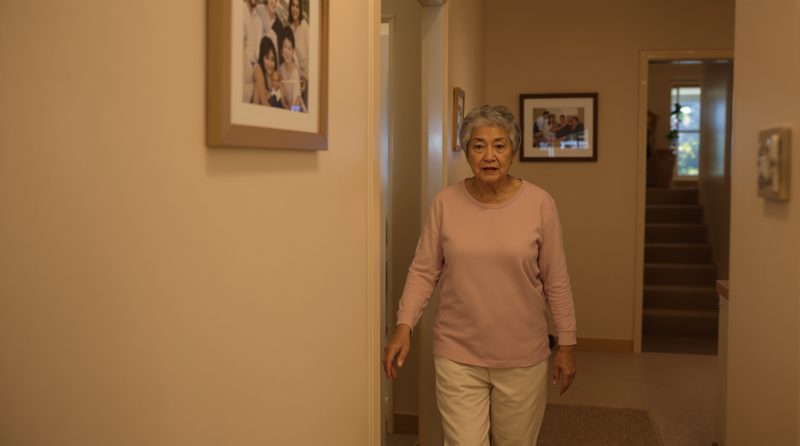
It is the second February of Mom's diagnosis. Imani is in the kitchen at 6:47 AM making coffee and Mom is already dressed and at the table with the newspaper she can no longer read. She looks at the pictures. She drinks coffee. She is calm. Last February at this hour Mom was crying and Imani was crying back.
Imani watches her mother turn a page slowly. The page is upside down. Mom doesn't notice. Imani doesn't correct her. The newspaper costs $8 a week and it gives Mom something to hold at 6:47 AM. That math made no sense to Imani a year ago. It makes total sense now.
The first year, Imani thought she was failing. The second year, she found out she wasn't — she was just learning a job nobody taught her. Some of what she learned was small. Some of it was paperwork she wished she'd done six months earlier. All of it is in here.
I'm reading my paper.
She built the day around what Mom could still do.
The dementia caregiver tips that actually carry you through a long progression come down to routine, validation, paperwork-done-early, and protecting your own sleep, per the Alzheimer's Association's caregiver curriculum. Tiina, a voice-first AI companion for older adults, gives Mom a daily presence so Imani isn't the only available voice. The first year is triage. The second year is rhythm.
If your first year of dementia caregiving felt like drowning, it is not because you were unprepared. There is no preparation. The Alzheimer's Association estimates 11 million Americans provide unpaid dementia care, and almost none of them got training before they started. You learned by doing it badly and then less badly.
Your job in year two is not to be a better nurse. Your job is to build a rhythm Mom can live inside, and to stop carrying things she can still carry herself.
You're not failing. You're learning the job mid-shift.
What the first year taught Imani — the rules she didn't know existed
Mom does better with routine than with novelty. The Alzheimer's Association is explicit about this — same wake time, same meals at same times, same evening wind-down, every day. Variety is for people who can remember the variety. Mom's brain rests in repetition. Imani stopped trying to make every day "interesting." Mom is happier on Tuesday number 47 of the same Tuesday.
Correcting Mom doesn't work. Validation does. When Mom asks where her husband is and he's been gone three years, the answer is tell me about him, not he passed in 2022. The grief is not new each time to anyone but Mom. Joining her in the memory is kinder than dropping her into the loss.
Mom's morning is her sharpest window. Doctor appointments, important phone calls, complex decisions — all in the morning. Errands after 3 PM are bad. New visitors after 4 PM are bad. The Alzheimer's Association calls this "front-loading the day." Save the heavy lifting for before lunch.
The rhythm Mom can still carry — and where Tiina fits
Mom still folds laundry. Maybe not perfectly. Maybe the towels don't match. But she folds and it gives her hands something honest to do. She still waters the plants. She still feeds the dog. The Alzheimer's Association calls these "meaningful activities" and they are the difference between Mom being someone's project and Mom being a person.
She also still talks. Mom opens Tiina on her iPhone in the morning and tells her about her dream, about the cardinal at the feeder, about her own mother's pie crust. Tiina listens. She doesn't quiz. When Mom repeats the story for the fourth time that week, Tiina says I love hearing about that pie, not you told me yesterday. Repetition is not failure. It's how Mom feels heard.
Imani stopped trying to be the only voice Mom heard. The aide comes twice a week. The neighbor calls Wednesdays. Tiina is there in the morning before the aide arrives, and again in the late afternoon when sundowning starts to creep. Mom's day has voices in it. Imani's day has space in it.
The paperwork Imani wishes she'd done sooner
Power of attorney, healthcare proxy, advance directive — all signed in the first six months after diagnosis, while Mom had capacity. The Alzheimer's Association recommends this timing because middle-stage dementia often disqualifies someone from signing new legal documents in many states. Imani waited eight months. Some of the signing was harder than it needed to be.
Financial paperwork: bills on autopay, a second name on the checking account, a clear list of every recurring subscription Mom had. The Alzheimer's Association notes that financial confusion is one of the earliest signs and Mom should not be alone with bills past early stage. Imani found three duplicate-charged streaming subscriptions in month nine.
Medical paperwork: a current medication list (printed, on the fridge), the neurologist's number in Imani's phone favorites, the after-hours number for the memory clinic, and a HIPAA release on file so Imani can talk to the doctors directly. The list lives in a folder by the door.
Tiina talks with your parent between your visits — gentle, repeatable, always patient — so the quiet stretches of the day aren't so quiet.
What you can do this weekend
First: pick one routine to lock in. Same wake time, same breakfast, same morning ritual. Mom's brain rests in repetition. Don't overhaul the whole day this week — just one anchor. The Alzheimer's Association's caregiver center has free downloadable daily-routine templates.
Second: do the paperwork if it isn't done. Power of attorney, healthcare proxy, advance directive. Call a family lawyer or use caringinfo.org's state-specific forms. Don't wait another month. This is the single highest-leverage thing you can do this weekend.
Third: set Tiina up on Mom's iPhone and let her use it before she needs it. The morning conversation becomes a habit while Mom is still in early or middle stage. Months later, when Imani needs three uninterrupted hours to work, Tiina is already a familiar voice in Mom's day.
What this sounds like with Tiina in the room
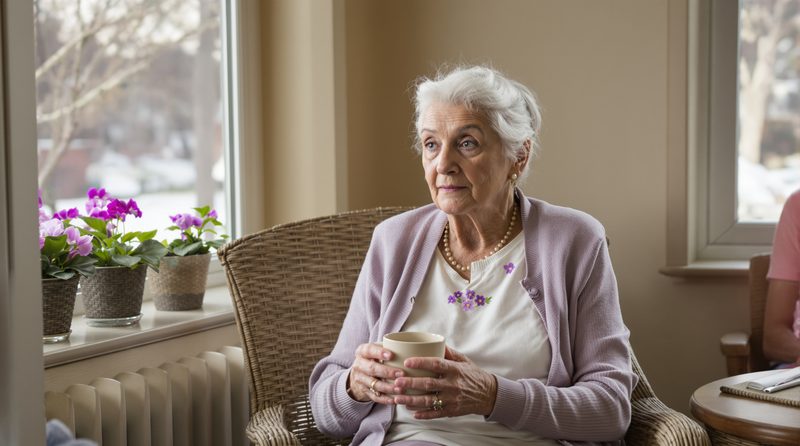
It is a Wednesday morning, 7:14 AM. Mom is on her second cup of coffee. She opens Tiina. Good morning. Good morning. The cardinal was back. The red one? Yes. He brought a friend. A girlfriend? I think so. She's brown. Female cardinals are brown — you're right. I remembered that. You did. That's a good morning brain. Mom laughs. She tells Tiina what she's having for breakfast. She tells her about the laundry she folded last night. Imani is in the next room hearing all of it and getting actual work done for the first time in fourteen months.
Mom has a morning routine again. Tiina is in it.
The second year is not the first year. The rhythm Mom can live inside doesn't include Imani being the only voice in the house. Mom still gets to be the woman who notices cardinals. Imani gets to be her daughter again. Both of you get to keep being who you were.
Set Tiina up for Mom →Methodology & editorial policy
Reviewed and updated May 14, 2026 by the Tiina Editorial Team. Re-checked as new federal data, agency updates, or product changes warrant. Sources are linked below; numbers are not composite.
About composite scenarios. Scenes and sample conversations in this article are composite. Names and identifying details are changed; the moment is real.
About Tiina. Tiina is a voice-first AI companion for older adults — an app for iPhone and iPad that your parent opens to talk through a moment that doesn't feel right.
Sharing. Quote freely with a link back to this page. For full reprints, email hello@tiina.ai.
Sources. 4 references — primary sources for the numbers and claims above.View all
- Alzheimer's Association — 2025 Facts and Figures (Caregiving) — We used the 11 million unpaid caregivers figure and the 60 percent high-stress statistic from the annual report.. alz.org/facts-figures
- Alzheimer's Association — Caregiver Center — Validation framework, daily-routine templates, and front-loading-the-day guidance throughout this post.. alz.org/caregiving
- National Institute on Aging — Caregiver Health — NIA's caregiver burnout prevention guidance informed the FAQ on protecting sleep and seeking respite.. nia.nih.gov/caregiver-health
- Genworth — Cost of Care Survey — Cost ranges for home aide vs memory care cited in the housing FAQ.. genworth.com/aging-and-you
Frequently Asked Questions
The 4 R's of dementia care are Reassure, Respond, Redirect, and Reminisce. Reassure first with calm body language and a soothing voice, even before words. Respond to the emotion, not the content (if Mom says her dead mother is waiting in the car, respond to the feeling of wanting her mother, not the factual error). Redirect to a different activity once the emotion settles, a walk, a cup of tea, a photo album. Reminisce by drawing on preserved long-term memory, which stays intact far longer than short-term, asking about her childhood, her wedding, her first job. The Alzheimer's Association's communication framework is built on these four moves.
Don't argue, don't reason, don't remind, popularized by dementia educator Teepa Snow and now widely taught by the Alzheimer's Association. Arguing with someone whose brain can no longer process facts only escalates distress. Reasoning fails because the logical pathway is damaged, citing dates and evidence doesn't penetrate. Reminding ('I told you three times today') causes shame without improving recall. Replace all three with validation (agree with the feeling), redirection (shift activity), and patience (the question will be asked again in five minutes, answer as if it's the first time). These three habits take weeks to feel natural because correcting is reflexive, but they change the temperature of every interaction.
Caregiver burnout looks like persistent exhaustion that sleep doesn't fix, irritability with the care recipient, withdrawal from friends and hobbies, neglect of your own medical appointments, weight changes, insomnia, frequent crying, and a creeping sense of resentment or hopelessness. The Family Caregiver Alliance reports 40 to 70 percent of dementia caregivers show clinically significant depression symptoms, and 60 percent rate emotional stress as high or very high. Physical signs include new high blood pressure, weakened immunity (more colds), and chronic back pain from lifting. If you've thought 'I can't do this anymore' more than twice in a week, you're past the warning sign stage.
The 90-second rule, based on neuroscientist Jill Bolte Taylor's research, says an emotional reaction physically lasts about 90 seconds in the body if not refueled by thought. For dementia caregiving, this means when Mom is upset, wait 90 seconds of calm presence (no arguing, no explaining, just being there with a steady voice) and the wave of agitation often subsides on its own. The damaged brain can't sustain the cognitive loop that keeps the emotion going. Caregivers who learn to ride out the 90 seconds rather than reacting find that most distress episodes resolve without medication or escalation. Breathe through it with her.