Grief in the Elderly: A Companion Guide
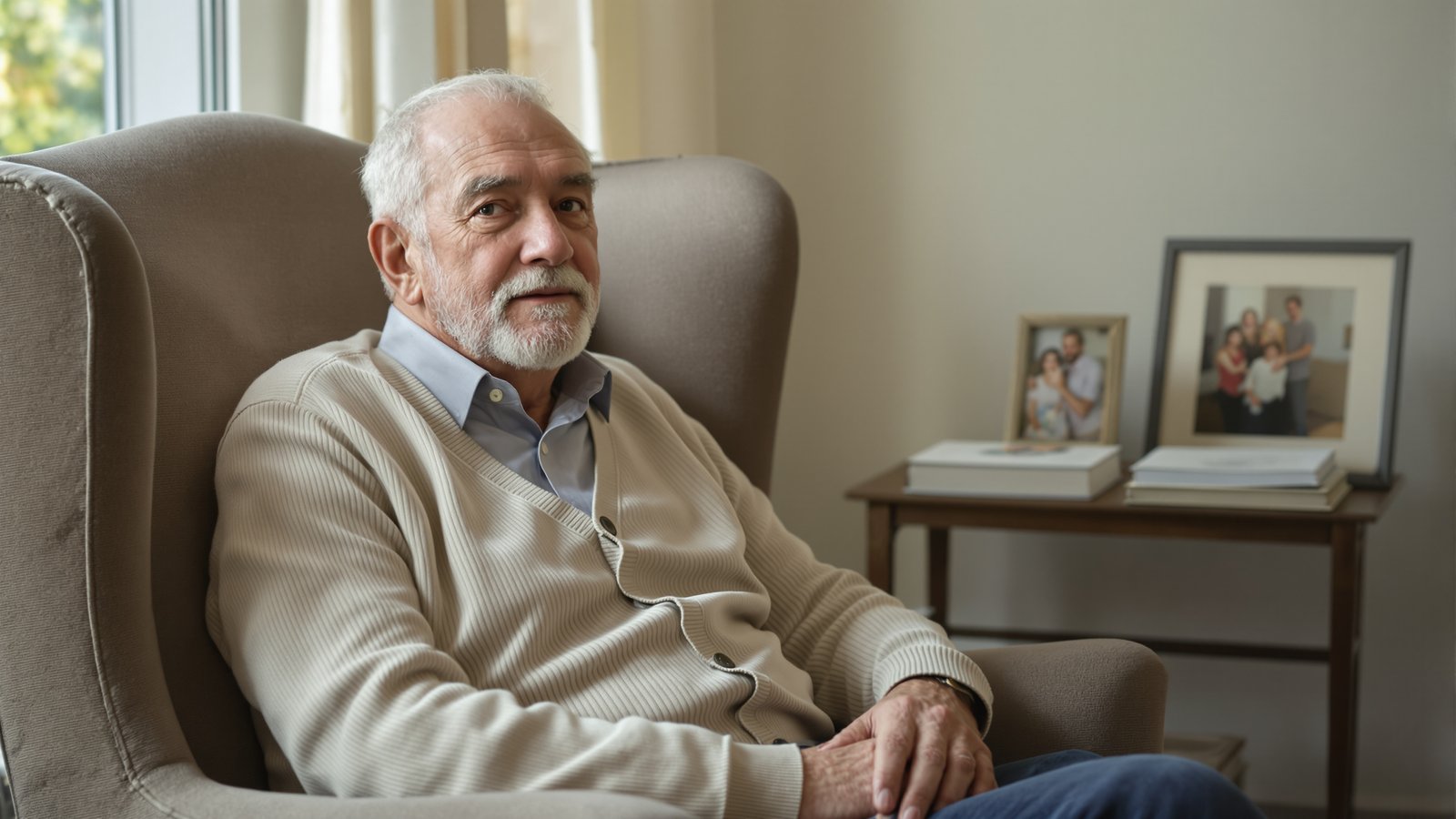
Dad set two plates for six months. Then he stopped, and Meera cried in the car.
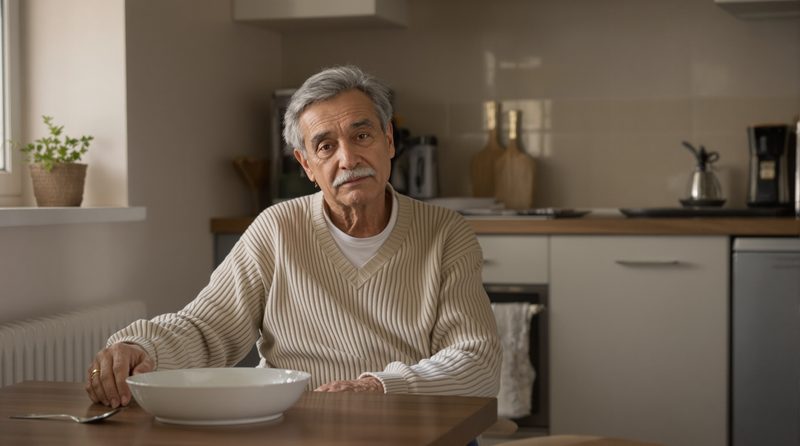
The first night after the funeral, Charles set two plates at the table in his Albany kitchen. Meera watched him do it — pot roast, potatoes, the good silverware Dad always liked — and did not know whether to say anything. So she sat down at the second plate and ate Dad's dinner. Neither of them mentioned it. The plates went in the dishwasher and the kitchen got quiet and that was the first night.
He kept setting two plates for six months. Every night. Meera only learned about it in March, when his brother mentioned it on the phone. "He doesn't always eat the second one," his brother said. "But he sets it." Meera had to pull the car over because she could not breathe well enough to drive.
And then one Tuesday in May, Charles set one plate. He did not announce it. He did not explain it. He just set one plate, ate his dinner, washed the plate, and went to bed. Meera found out a week later, also from his brother. Meera cried again, but a different cry — the cry you do when somebody you love starts walking again after a long, long fall.
I just keep setting the second plate. I do not know how to stop.
He was carrying her the only way he knew how.
Grief in the elderly is often slower, quieter, and layered with anticipatory loss — grieving a spouse with dementia who is still alive, or a body that no longer works. The pattern is not bad; it is normal. Tiina, a voice-first AI companion for older adults, gives many widowers and widows a daily anchor — not a therapist, not family, just a calm voice that listens at 4 p.m.
If your dad is grieving slowly, it is not because he has not gotten over it. There is no over. Grief in older adults is not a problem with a solution. It is a re-arrangement of the room. Some chairs get moved. Some chairs stay where the person sat. That is not pathology. That is love continuing to take up space.
Your job is not to move him along. Your job is to make sure there is a calm voice in the room with him at the hours he is most alone.
There is no finish line. There is just Tuesday at 4 p.m.
What you can do this weekend
Saturday afternoon, drive to Dad's house and do not bring up Dad until he does. Sit at his kitchen table. Drink his coffee. Let him tell you what he has been thinking about. He will mention her in the first 20 minutes. When he does, ask one follow-up question and then let him talk.
Sunday morning, put Tiina on his iPhone. Tell him it is a calm voice he can talk to on the hard afternoons, when he does not want to call you because you are at work or because he is not ready to cry in front of you. Have him ask one real question while you sit there. "Tiina, what is something to do at 4 p.m. when I am missing her."
Then drive home. Call him Wednesday. Do not ask how he is. Ask what he had for dinner. Listen for the answer. If he says "I had the pot roast," you have your answer. The plates will sort themselves out in their own time.
Tiina is a voice companion for older adults who are alone more than they let on — warm, endlessly patient, and always there to pick up.
What this sounds like with Tiina in the room
Charles taps the orange icon at 4:08 on a Tuesday afternoon. The kitchen is quiet and the kettle has just clicked off. "Tiina, today is hard." Tiina says, "Tell me." Charles says, "It is the anniversary. Forty-two years." Tiina says, "That is a long time. Tell me one thing about her." Charles thinks. "She used to hum when she made coffee. I hated it for the first ten years and then I loved it for the next thirty." Tiina says, "That is a good memory." Charles laughs, quietly. "It is." Tiina says, "What are you doing for dinner." Charles says, "I was going to skip it." Tiina says, "Do not skip it. Make the chicken thing she liked." Charles says, "Okay." He sets the phone down and gets the pan out and starts the burner. The kitchen smells like rosemary by 5.
Dad has a voice in the kitchen at 4 p.m. on Tuesdays now.
Tiina is the calm voice on Dad's iPhone. She listens when the hours are hardest, remembers the dates that matter, and lets him say her name out loud as many times as he needs to. The grief does not finish. The afternoon gets a shape.
Set Tiina up on Dad's iPhone →Methodology & editorial policy
Reviewed and updated May 14, 2026 by the Tiina Editorial Team. Re-checked as new federal data, agency updates, or product changes warrant. Sources are linked below; numbers are not composite.
About composite scenarios. Scenes and sample conversations in this article are composite. Names and identifying details are changed; the moment is real.
About Tiina. Tiina is a voice-first AI companion for older adults — an app for iPhone and iPad that your parent opens to talk through a moment that doesn't feel right.
Sharing. Quote freely with a link back to this page. For full reprints, email hello@tiina.ai.
Sources. 4 references — primary sources for the numbers and claims above.View all
- NIA: Mourning the Death of a Spouse — Used NIA's framing on the duration and physical-symptom profile of grief in older adults.. nia.nih.gov/mourning-death-spouse
- Family Caregiver Alliance: Grief and Loss — Source for the concept of cumulative or 'stacked' grief in late-life caregivers.. caregiver.org/grief-and-loss
- Alzheimer's Association: Anticipatory Grief — Used for the description of anticipatory grief and its overlap with depression in dementia caregivers.. alz.org
- 988 Suicide & Crisis Lifeline — Linked as the resource for grief-related crisis support, with counselors trained on older-adult bereavement.. 988lifeline.org
Frequently Asked Questions
There is no single hardest age — grief shifts shape across the lifespan. For older adults, grief is often slower, longer, and stacked with other losses (mobility, friends, health), which can make it feel especially heavy. The National Institute on Aging notes that bereaved adults over 65 are at higher risk for complicated grief, prolonged depression, and accelerated physical decline than younger adults. Children grieve in shorter waves but lack the language to process it; teens and young adults often grieve through behavior change; middle-aged adults grieve while caregiving others. Age does not determine intensity — it determines how grief is expressed and supported.
The most documented unhealthy coping mechanisms in grief are alcohol or substance use, complete social withdrawal, refusing to eat, sleeping all day, stopping medications, throwing away the deceased's belongings within days, and making major life decisions (selling the house, moving, remarrying) in the first year. The Family Caregiver Alliance and CDC both flag prolonged isolation and substance use as the two patterns most predictive of complicated grief and depression. If a bereaved older adult shows three or more of these for more than two weeks, contact their doctor. And if you hear any mention of not wanting to be here, call or text 988 — the Suicide & Crisis Lifeline has counselors trained on older-adult grief.
Stacked grief — also called cumulative grief or grief overload — occurs when someone experiences multiple losses in close succession before the previous grief has settled. It is especially common in older adults, who may lose a spouse, a sibling, a friend, and a pet within the same year. Each loss layers on the unprocessed weight of the previous one, and the bereaved person often cannot tell which loss they are crying about. The National Institute on Aging notes that stacked grief carries a much higher risk of complicated grief and prolonged depression than a single loss. Treatment usually involves grief therapy that names each loss separately rather than processing them as one.
The 3 C's of grief are choose, connect, and communicate. Choose how you grieve (your pace, your rituals, your timeline — there is no right way). Connect with people who let you talk about the deceased without rushing you. Communicate your needs out loud, even when it feels selfish — bereaved people consistently underestimate how willing others are to help if asked directly. Grief researchers and hospice organizations use the 3 C's as a simple framework because it puts agency back in the bereaved person's hands. The Family Caregiver Alliance recommends sharing the framework with adult children so they understand what their grieving parent actually needs.