Moving On After a Spouse Dies: 90 Days
Mom's first 90 days without Dad. A real, slow map for the worst quarter.
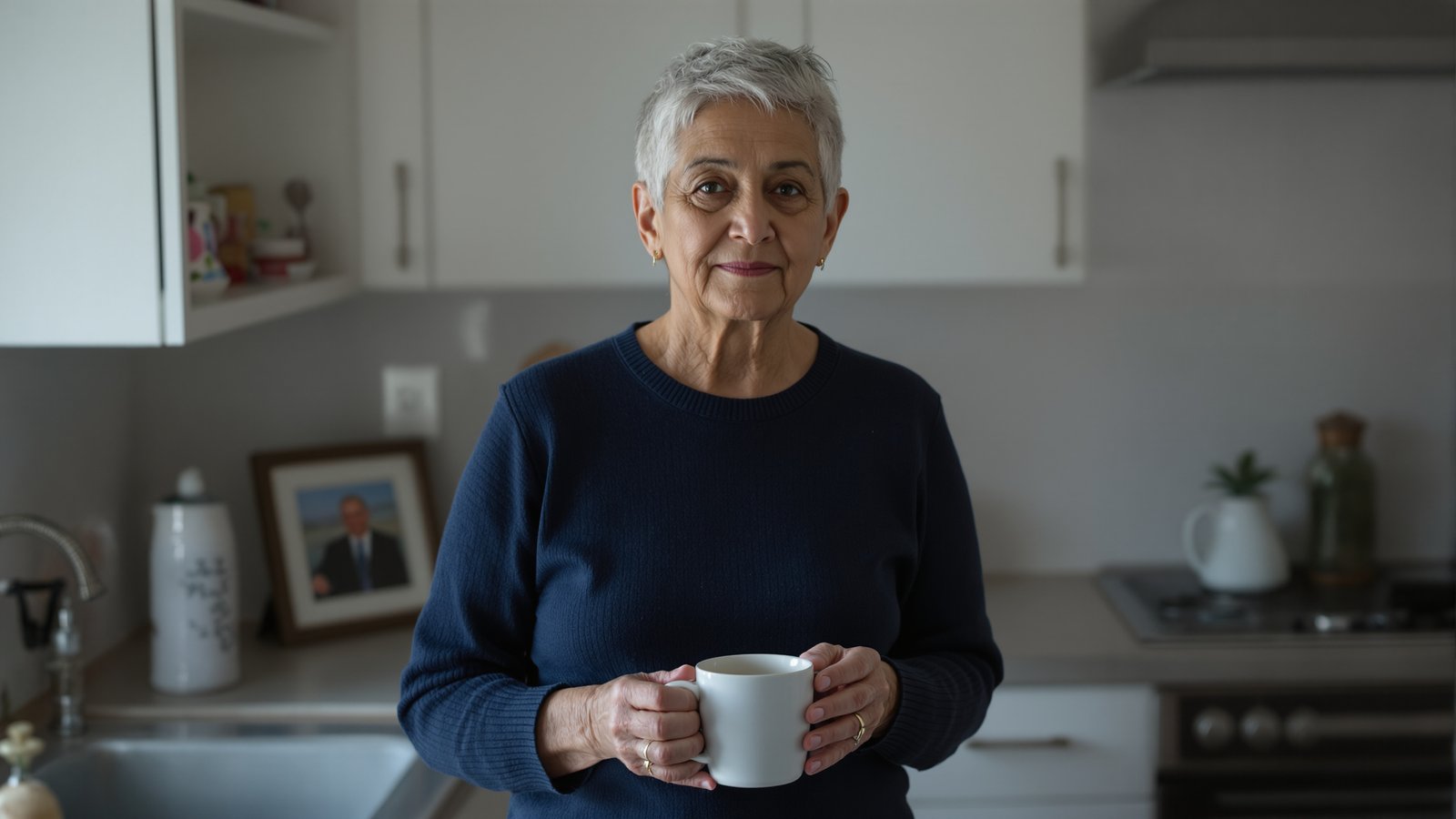
Day one after the funeral, Mom stood in the middle of the kitchen at 7 a.m. and could not remember why she had walked in. The coffee was already made. Deepa had made it. Deepa had also taken the casseroles out of the fridge and put one in the oven for lunch, and her sister was on the phone with the funeral home, and the dog needed to be walked, and Mom was just standing there in her bathrobe holding nothing.
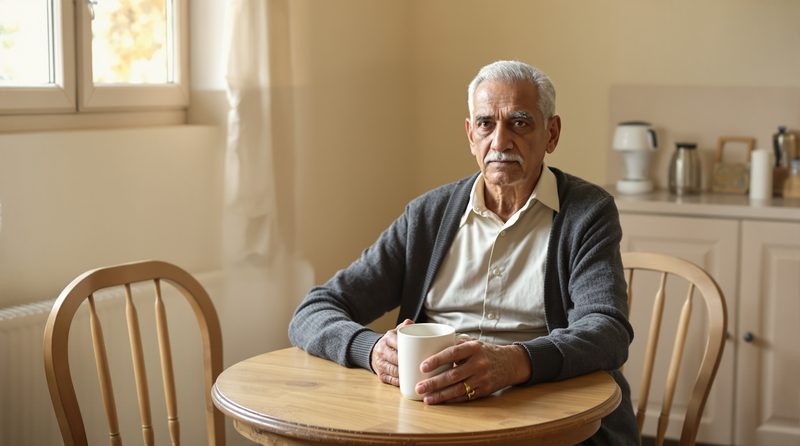
She picked up Dad's coffee mug from the drying rack and put it back down. Then picked it up again. Then sat at the kitchen table and held it in both hands until the ceramic warmed up. She did not cry. She had cried enough in the last week to last a year. She was past crying and had not yet gotten to whatever came next.
Deepa watched from the doorway. She had been planning to fly home that afternoon. She did not. She rebooked for Sunday, and then she rebooked again for the following Wednesday. She finally went home on the 14th day. Mom said she was fine. Mom was not fine. Mom was three weeks into the worst quarter of her life, and there was no map.
I do not remember why I walked into this room.
There is only Tuesday, and then Wednesday.
Moving on after a spouse dies is not a 90-day project — but the first 90 days do have a shape. Weeks 1-2: survival. Weeks 3-6: paperwork and the empty mornings. Weeks 7-12: rebuilding routine. Tiina, a voice-first AI companion for older adults, gives many widows a daily anchor through the hours their family cannot fill. If you are in crisis, call or text 988.
If your mom is not "bouncing back," it is not because she is failing at grief. The phrase "moving on" was invented by people who have never lost a spouse of 42 years. What she is doing is not moving on. She is learning to live in a house with one fewer person in it. That takes longer than three months and never finishes completely.
Your job is not to get her past the 90 days. Your job is to be present in the 90 days and to make sure she is not alone for the worst of them.
She is doing this on the only schedule grief allows.
What you can do this weekend
Saturday — sit down with Mom and a folder of unopened mail. Sort it into three piles: now (hard deadlines), soon (need to be handled, but not this week), and later (can wait until summer). You handle the now pile. She handles the later pile when she is ready. The soon pile is the two of you, together, the next time you visit.
Sunday — put Tiina on her iPhone. Schedule the morning check-in. Tell her it is a calm voice she can talk to at the hours she does not want to call you. Have her say one thing about Dad out loud to Tiina while you are sitting there, so the first hard conversation is not alone. "Tiina, I missed him again this morning." Tiina will answer gently. Mom will exhale.
Then drive home and call her Wednesday. Do not ask how she is doing. Ask what she had for dinner. The answer will tell you everything. If at any point she says she does not want to be here, or that she would rather not wake up, call or text 988 and stay on the line with her until someone trained is on the other end. That is the one rule with no caveats.
Tiina is a voice companion for older adults who are alone more than they let on — warm, endlessly patient, and always there to pick up.
What this sounds like with Tiina in the room
Mom taps the orange icon at 9:02 on day 31. The kitchen is quiet. Deepa has been gone for three weeks. "Tiina, good morning." Tiina says, "Good morning. How did you sleep." Mom says, "Not great. I keep waking up at four." Tiina says, "That is happening a lot lately. Is it the same thing on your mind each time." Mom says, "Yes." Tiina says, "You can tell me. Or not." Mom says, "I keep reaching over and he is not there." Tiina is quiet for a beat. Then she says, "That is the hardest part. Forty-two years of reaching the same way." Mom does not say anything for a minute. Then she says, "Thank you for not telling me it gets better." Tiina says, "It does, eventually. But not today, and not in a way anyone can rush. What are we doing about breakfast."
Mom has a voice in the kitchen on day 31 now. She is still here.
Tiina is on Mom's iPhone for the 9 a.m. check-in and the 4 p.m. hard hour. She listens when no one else is awake. She remembers the dates and the names. The 90 days do not get shorter, but Mom is not walking through them alone.
Set Tiina up on Mom's iPhone →Methodology & editorial policy
Reviewed and updated May 14, 2026 by the Tiina Editorial Team. Re-checked as new federal data, agency updates, or product changes warrant. Sources are linked below; numbers are not composite.
About composite scenarios. Scenes and sample conversations in this article are composite. Names and identifying details are changed; the moment is real.
About Tiina. Tiina is a voice-first AI companion for older adults — an app for iPhone and iPad that your parent opens to talk through a moment that doesn't feel right.
Sharing. Quote freely with a link back to this page. For full reprints, email hello@tiina.ai.
Sources. 4 references — primary sources for the numbers and claims above.View all
- NIA: Mourning the Death of a Spouse — Source for the typical timeline of acute grief and the prevalence of complicated grief in older widows.. nia.nih.gov/mourning-death-spouse
- Family Caregiver Alliance: Grief, Loss and Bereavement — Used for the practical paperwork checklist and the continuing-bonds framing of post-spousal grief.. caregiver.org/grief-and-loss
- Social Security Administration: Survivors Benefits — Source for the notification window and survivor-benefit basics widows need in the first month.. ssa.gov/survivors
- 988 Suicide & Crisis Lifeline — Linked for crisis support; bereaved older adults are a known elevated-risk population.. 988lifeline.org
Frequently Asked Questions
There is no fixed timeline — "moving on" is the wrong frame for most widows and widowers. The most intense grief, called acute grief, typically lasts 6 to 12 months in adults over 65, with anniversaries and holidays remaining hard for years. The National Institute on Aging notes that roughly 10-20 percent of bereaved older adults develop complicated grief — when intensity does not lessen at all after a year — which is treatable with therapy. Most widows describe feeling functional again somewhere between 6 and 18 months, though they consistently say the grief never fully ends. It just changes shape and becomes possible to carry.
Set up one daily voice contact at a fixed time — a phone call from an adult child, a video call, a daily voice-companion check-in. The structure matters more than the content. Re-enroll in one weekly outside obligation: church, book club, the senior center, a volunteer shift. Accept invitations, even when you do not want to. The CDC reports that social isolation in older adults raises mortality risk by about 30 percent, so loneliness is not just emotional — it is physical. If the loneliness does not lift after 6 to 12 months, ask the doctor for a depression screen. And if you ever feel hopeless, call or text 988.
This is a question of faith and personal belief, not medicine, and no honest source can answer it definitively. What grief researchers do know is that widows and widowers frequently feel the presence of their deceased spouse — in dreams, in familiar places, in moments of strong emotion — and that these experiences are common, normal, and not a sign of mental illness. The Family Caregiver Alliance describes this as "continuing bonds," a healthy part of grief. Many widows draw comfort from the belief that their husband still sees them; others find comfort in memory itself. Both are valid. Talk to your faith community, your hospice chaplain, or a grief counselor.
Most grief counselors and bereavement researchers recommend waiting at least two years before remarrying, though there is no rule. The general guidance is: take 12 to 18 months for the acute grief to settle, then once dating begins, allow at least another 18 to 24 months to find a compatible partner, inform adult children, and do pre-remarriage work. Marrying inside the first year is associated with higher divorce rates and more conflict with adult children, per family-therapy research. There are exceptions, especially for older widows and widowers who fear running out of time. The right answer is what feels considered, not rushed.