Hearing Loss and Dementia: What the Research Says and What to Do
Untreated hearing loss is linked to faster memory decline. Here's what the research found, how to get your parent tested and how to bring it up.
Some links below are affiliate links: if you buy through them, Tiina may earn a small commission at no extra cost to you. As an Amazon Associate I earn from qualifying purchases.
Older adults with hearing loss have a higher risk of dementia, and their memory and thinking tend to decline faster, according to the National Institute on Aging. In a large 2023 trial, hearing aids slowed thinking decline by almost half in the group already at higher risk. Testing is easy to get: Medicare lets your parent see an audiologist once a year without a doctor's order.
We're not doctors or audiologists. This is general information to help you get your parent tested and talk about it. Sudden hearing loss in one or both ears is a medical emergency: get your parent seen by a doctor right away. If sudden hearing changes come with face drooping, weakness on one side, confusion or trouble speaking, call 911.
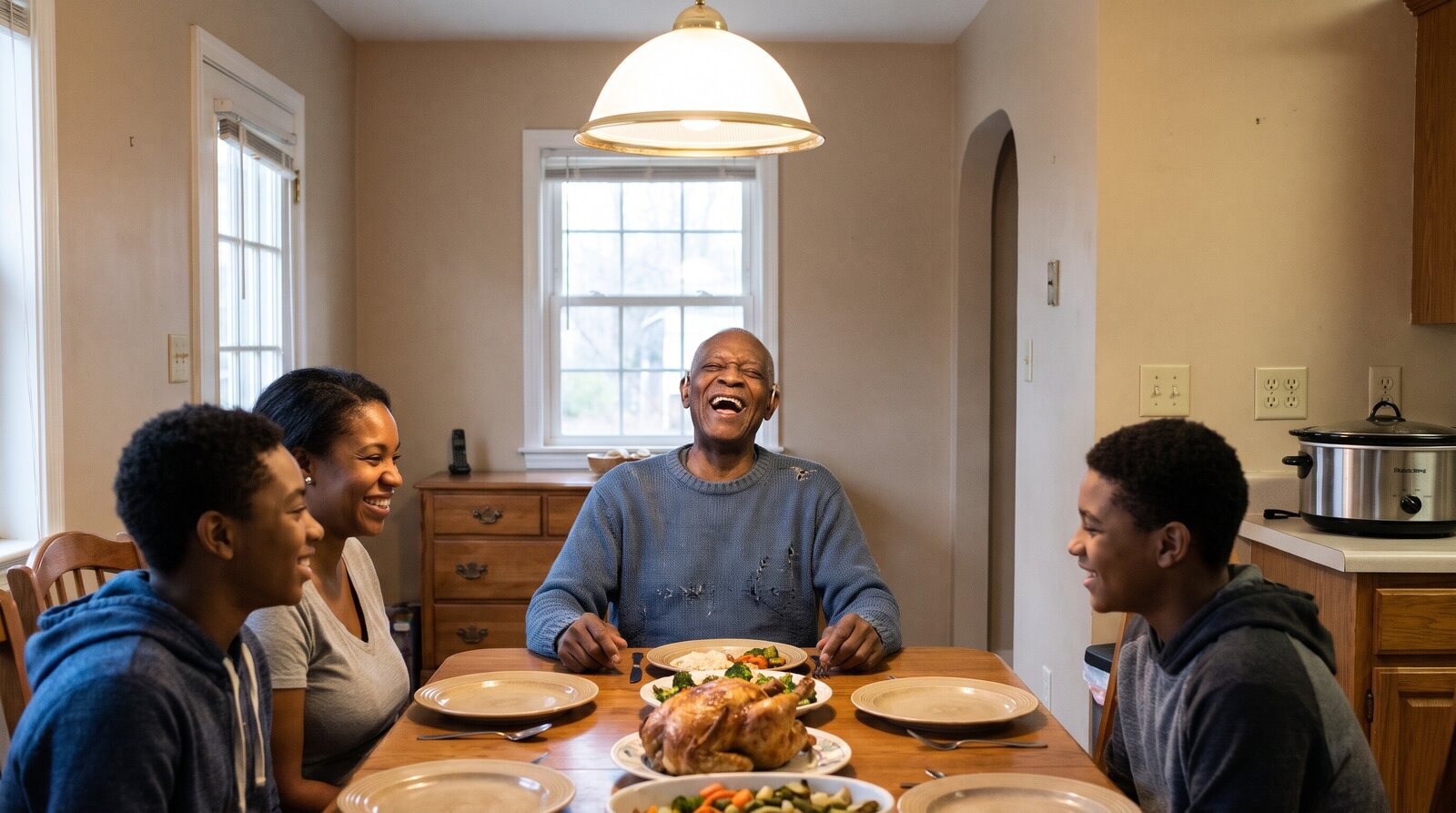
Your dad used to be the one telling stories at dinner. Now he sits at the end of the table and nods. When someone asks him a question, he answers a different one, laughs a beat late, and says everyone mumbles these days. It's easy to read that as Dad slipping. Sometimes it's something simpler and more fixable: he can't hear. From across the table, hearing loss and memory loss can look a lot alike, and researchers now know they're connected. The good news is that one of them takes ten minutes to check, and treating it is one of the few things on the dementia risk list you can act on this month.
What the research actually says
Hearing loss is common. About one in three Americans between 65 and 74 has it, and nearly half of people over 75 have trouble hearing, according to the National Institute on Deafness and Other Communication Disorders.
Studies have found that older adults with hearing loss are more likely to develop dementia than people with normal hearing, and that their memory and concentration decline faster. In 2024, the Lancet Commission on dementia kept hearing loss on its list of 14 risk factors that can be changed, and estimated that about 45% of dementia could in theory be prevented or delayed if all 14 were addressed. That's a population estimate, not a promise for any one person.
The strongest test so far is the ACHIEVE trial, published in The Lancet in 2023. Nearly 1,000 adults aged 70 to 84 with hearing loss were split into two groups for three years: one got hearing aids and training, the other got a healthy aging class. Across everyone, there was no difference in thinking decline. But among the people already at higher risk of dementia, those who got hearing aids declined almost 50% more slowly.
The researchers' advice while the studies continue is simple. In the words of the study's co-leader, Dr. Frank Lin of Johns Hopkins University: "Until we know more, we recommend for general health and well-being that older adults have their hearing checked regularly and any hearing issues properly addressed."
Signs your parent isn't hearing well
People with hearing loss often don't notice it themselves, and it can make them look confused or uncooperative when they simply missed what was said. The NIA lists these signs:
- Trouble understanding people on the phone
- Losing the thread when two or more people talk at once
- Often asking people to repeat themselves
- Turning the TV up so loud that others complain
- Struggling to follow speech with background noise, like in a restaurant
- Saying other people mumble
- Trouble understanding children and higher-pitched voices
How to get your parent's hearing tested
There are three easy ways in, and you can start with whichever one your parent will agree to.
- Their regular doctor. A family doctor can check for earwax or fluid, which can block sound, and refer your parent to an audiologist or an ear, nose and throat doctor.
- An audiologist, directly. Medicare Part B lets your parent see an audiologist once every 12 months without a doctor's order for hearing loss that has come on over the years. They pay 20% of the Medicare-approved amount after the Part B deductible. ASHA ProFind lists certified audiologists by ZIP code.
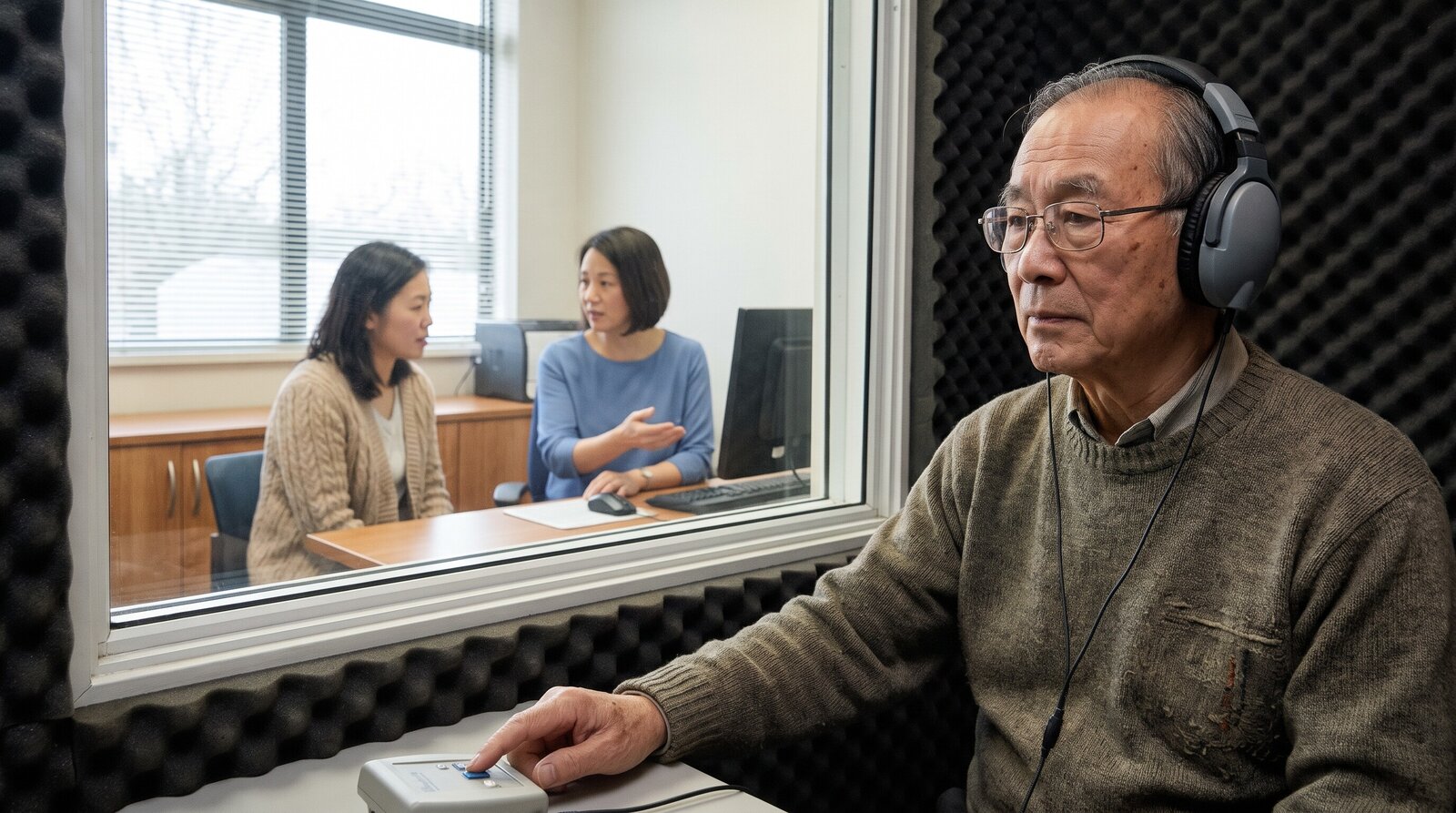
- A screening at home first. The National Hearing Test takes about 10 minutes by phone or computer, costs a few dollars (free once a year for AARP members) and tells your parent whether a full exam makes sense. If your parent has AirPods Pro 2 or 3 and an iPhone or iPad, Apple has a 5-minute hearing test built in under Settings, then the AirPods name.

While you work on getting your parent's hearing tested, the people around them sigh when they ask for it again. Tiina doesn't: your parent taps Call Tiina, asks in their own words, and she explains it clearly, as many times as they need.
Hearing aids: over the counter or prescription
Since 2022, adults with mild to moderate hearing loss can buy over-the-counter hearing aids in stores and online without an exam. They're regulated by the FDA as medical devices, and your parent fits and adjusts them on their own.
OTC aids aren't for everyone. If your parent struggles to follow a conversation in a quiet room, or can't hear loud sounds like trucks or appliances, the loss is probably more than moderate. That calls for prescription hearing aids from an audiologist or hearing aid specialist, who fits them and adjusts them over time.
Know what's covered before you shop. Original Medicare doesn't pay for hearing aids or the exams to fit them, though some Medicare Advantage plans do, so call the plan. For price ranges and ways to save, read what hearing aids cost and what helps pay.
What to say when your parent insists they hear fine
For a lot of people, hearing aids feel like a sign of getting old, which is why this conversation goes sideways. So don't open with dementia. Open with what they're missing, and keep it small.
Talk in a quiet room, face to face, in good light. Mention one specific moment: "You missed most of what your granddaughter said on the phone Sunday." Then ask for one small step, not a commitment to hearing aids: a 10-minute screening, or an audiologist visit that Medicare helps pay for. Offering to take the test yourself the same day takes the sting out of it.
If they say no, don't push in the moment. Try again in a few weeks, or ask their doctor to raise it at the next visit. Our playbook for when a parent refuses help has more ways to make an idea feel like theirs.
In the meantime, you can make every conversation easier: face your parent, keep your mouth visible, speak a little louder without shouting, and reword a sentence instead of repeating it. Untreated hearing loss can pull people away from friends and family, so these small habits also help protect against loneliness.
Helping the hearing aids actually get worn
A hearing aid in a drawer does nothing. Expect an adjustment period while your parent gets used to hearing sounds they've been missing. If something sounds tinny or whistles, that's a reason to go back for an adjustment, not to give up. Prescription aids come with a professional whose job is exactly that.
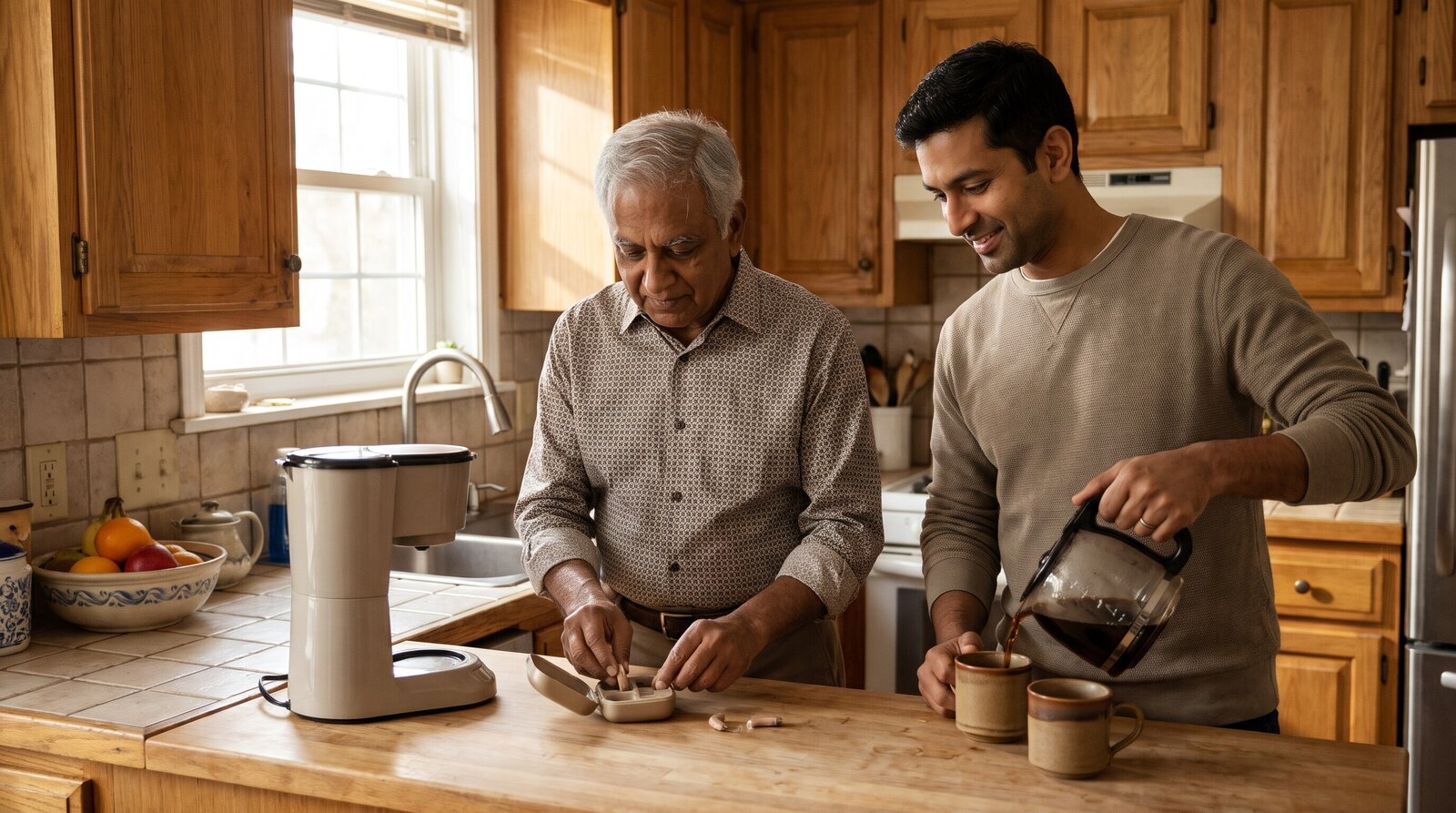
Make it easy. Put the charger next to the toothbrush or the coffee maker so charging becomes part of the morning. Ask your parent to wear them for phone calls with you, and say so when you notice the difference. In the ACHIEVE trial, people had check-ins every six months to reinforce what they'd learned, so book a follow-up visit before you leave the first one.
If memory is also changing
Hearing loss and memory changes can happen together, and a hearing test is often a smart first step before a memory evaluation, since a parent who can't hear the questions can't answer them well. If you're seeing other changes too, like missed bills, getting lost or repeating stories, read our list of the early signs of dementia and bring your notes to the doctor.
The hearing aids are in, and Dad is back at the head of the table.
He hears the grandkids on Sunday and the punch line on time. In between, he has someone patient to talk to who explains things clearly, never makes him feel slow for asking twice, and keeps the conversation private.
Try Tiina with Dad →Frequently Asked Questions
Methodology & editorial policy
Reviewed and updated October 31, 2026 by the Tiina Editorial Team. Facts, programs and prices in this guide come from the sources listed below.
About composite scenarios. The opening scene is a composite.
About Tiina. Tiina is a voice-first AI companion for older adults: an app for iPhone and iPad that your parent opens whenever they want someone to talk to, day or night.
Sharing. Quote freely with a link back to this page. For full reprints, email hello@tiina.ai.
Sources. 11 references: National Institute on Aging, NIDCD, Alzheimer Europe, Medicare.gov, National Hearing Test, Apple Support, ASHA, MedlinePlus.View all
- National Institute on Aging. Hearing Loss: A Common Problem for Older Adults. nia.nih.gov
- National Institute on Aging. Hearing aids slow cognitive decline in people at high risk. nia.nih.gov
- NIDCD. Age-Related Hearing Loss (Presbycusis). nidcd.nih.gov
- NIDCD. Over-the-Counter Hearing Aids. nidcd.nih.gov
- Alzheimer Europe. 2024 Lancet Commission identifies 14 modifiable risk factors. alzheimer-europe.org
- Medicare.gov. Hearing & balance exams. medicare.gov
- Medicare.gov. Hearing aids. medicare.gov
- National Hearing Test. Take the National Hearing Test. nationalhearingtest.org
- Apple Support. Take a Hearing Test with AirPods Pro 2 or AirPods Pro 3. support.apple.com
- ASHA. ASHA ProFind. asha.org
- MedlinePlus. Stroke. medlineplus.gov