
When an Elderly Parent Is Angry and Mean: Causes and What to Say
There's often a reason under the anger, and sometimes it's medical. What to check, what to say, and how to protect yourself.
Some links below are affiliate links: if you buy through them, Tiina may earn a small commission at no extra cost to you. As an Amazon Associate I earn from qualifying purchases.
When a parent becomes angry or mean as they age, there's often something underneath: pain, poor sleep, hearing loss, depression, medication side effects, losing independence or early dementia. A sudden change needs a call to the doctor. In the moment, stay calm, don't argue, name the feeling and give your parent some control. And set limits on how you'll be treated. You can love your parent and still step away from cruelty.
We're not doctors or therapists. A sudden change in mood or behavior needs a call to your parent's doctor the same day, because infections, medication problems and other illnesses can cause it. If your parent talks about harming themselves, call or text the 988 Suicide & Crisis Lifeline at 988. If anyone is in danger, call 911.
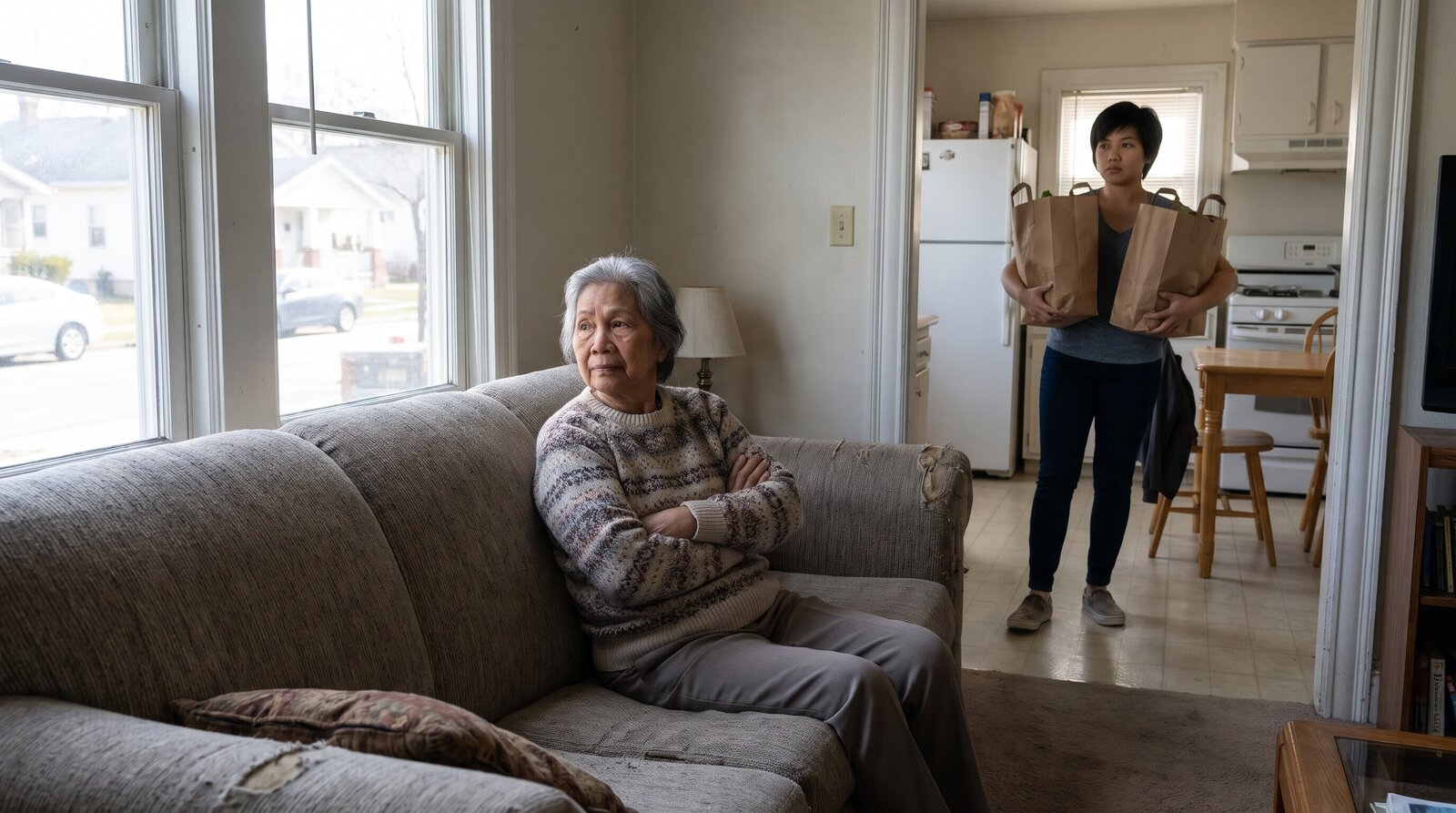
You drove forty minutes with groceries, and within five minutes your mother has told you the bread is the wrong kind, you never visit, and your sister would have done it right. You stand in her kitchen feeling twelve years old and furious. She wasn't always like this. Or maybe she was, a little, and it's gotten worse. Either way, you're tired of being the target. Here's what's often going on underneath, what helps in the moment, and when it isn't something you should just put up with.
Why some parents get angrier as they age
Anger is sometimes the easiest feeling to show. Underneath it may be fear, pain or grief your parent can't or won't name. The National Institute on Aging's list of reasons people with dementia become agitated is a useful checklist for any older parent:
- Pain they're not mentioning, from arthritis, a bad tooth or constipation.
- Too little sleep.
- Losing independence, like no longer driving, needing help in the shower, or having you manage the money.
- Loneliness and too little contact with other people.
- Too much noise or confusion, or too many people in the room.
- Being pushed to do something that has quietly become very hard.
- Medications, or two medications interacting.
Check these medical causes first
Depression. It often doesn't look like sadness in older adults. NIA lists irritability and restlessness among the common symptoms, along with losing interest in things, sleeping badly and pulling away from people. Depression is common in older adults but not a normal part of aging, and it usually gets better with treatment. Here are the signs of depression in an elderly parent to look for.
Hearing loss. A parent who can't follow the conversation can come across as rude, suspicious or short-tempered, and feel left out and frustrated underneath.
Early dementia. The Alzheimer's Association's warning signs include changes in mood and personality: becoming confused, suspicious, depressed, fearful or anxious, or easily upset at home or with friends. If the anger comes with memory slips, getting lost or trouble with bills, read about the early signs of dementia and book a visit.
A sudden change. If your parent was fine last week and is suddenly agitated, confused or hostile, that may be delirium, sudden confusion that MedlinePlus says can come from infections like urinary tract infections or pneumonia, or from medicines. Call the doctor that day.
Before the appointment, write three or four specific examples, when the change started, and every medication and supplement your parent takes on the Caregiver's Survival Guide's health changes sheet, and ask for a medication review and a hearing check.
What to say in the moment
You can't win an argument with an angry parent, and trying usually makes it worse. NIA's advice for agitation works for most hard moments: speak calmly, listen to the worry underneath, avoid arguing, and reassure your parent they're safe and you're there to help. If you feel yourself boiling over, take a few deep breaths and count to ten.
Try naming the feeling instead of defending yourself. "You sound really frustrated that you can't drive to the store anymore" lands better than "I'm doing my best here." Give back a little control where you can: "Would you rather go to the pharmacy Tuesday or Thursday?" A parent who feels in charge of small things often fights less about big ones.
A change of scene helps too. NIA suggests a snack, a drink, a walk, music or an easy shared chore like folding laundry. If your parent has dementia, correcting their memory rarely helps; these tips on what to say to someone with dementia cover the phrases that do.
Afterward, keep a short log for a week or two: when the outbursts happen, what came just before and who was there. Patterns point to causes. In a parent with dementia, anger that shows up in the late afternoon may be sundowning. Anger after a bad night may simply be exhaustion. Add what you notice to the health changes sheet so it goes to the doctor with you.


Loneliness is on the list of causes. Your parent can tap Call Tiina to vent, ask a question or just talk, in their own words, and she's patient every time and never argues back.
Setting limits without the guilt
Understanding why your parent is angry doesn't mean you have to absorb it. A boundary is simply a decision about what you will do, said calmly and then followed through: "I want to help you, Mom. If you start yelling at me, I'm going to leave and come back tomorrow." Then, if it happens, leave kindly and come back tomorrow. You'll likely need to do it more than once.
Other things that help: shorter visits with a clear task, bringing someone else along, sharing visits with siblings, and paying for help with chores so your time together isn't all errands and friction. If guilt is the thing that keeps you from setting limits, read about how to stop the caregiver guilt loop.
Maybe you've wondered whether your parent is a narcissist. Only a professional can say, and the label matters less than the pattern. If the cruelty is lifelong, the goal isn't to change your parent at 85. It's to protect yourself while making sure they're cared for, even if that means someone else does more of the day-to-day care.
When anger turns physical
If your parent hits, throws things or threatens you, take it seriously. NIA advises staying at a safe distance until the behavior stops, putting away car keys, guns, kitchen knives and anything else that could be used to hurt someone, and talking to the doctor if aggression gets worse. In an emergency, call 911 and tell the dispatcher your parent has dementia, if they do.
For help with dementia-related anger any hour of the day, the Alzheimer's Association 24/7 Helpline at 800-272-3900 can talk you through what to try next.
Taking care of you
Being the target of a parent's anger wears you down in a way other caregiving doesn't. Watch for the signs of caregiver burnout: dreading every call, snapping at your own family, feeling numb. A caregiver support group is one of the few places where people will understand exactly what that last visit was like.
And if your own mood has sunk low, the 988 Suicide & Crisis Lifeline is for caregivers too. Call or text 988 any time.
You set the limits. Mom still has someone to talk to at 4 p.m.
When you leave kindly and come back tomorrow, she isn't alone with the frustration. She taps Call Tiina, talks it through with someone patient, and your next visit has more room for coffee and less for the fight.
Try Tiina with Mom →Frequently Asked Questions
Methodology & editorial policy
Reviewed and updated October 31, 2026 by the Tiina Editorial Team. Facts, programs and prices in this guide come from the sources listed below.
About composite scenarios. The opening scene is a composite drawn from common caregiver experiences, not one family's story.
About Tiina. Tiina is a voice-first AI companion for older adults: an app for iPhone and iPad that your parent opens whenever they want someone to talk to, day or night.
Sharing. Quote freely with a link back to this page. For full reprints, email hello@tiina.ai.
Sources. 6 references: National Institute on Aging, Alzheimer's Association, MedlinePlus, NIDCD, 988 Suicide & Crisis Lifeline.View all
- National Institute on Aging. Coping With Agitation, Aggression, and Sundowning in Alzheimer's Disease. nia.nih.gov
- National Institute on Aging. Depression and Older Adults. nia.nih.gov
- Alzheimer's Association. 10 Early Signs and Symptoms of Alzheimer's and Dementia. alz.org
- MedlinePlus. Delirium. medlineplus.gov
- NIDCD. Age-Related Hearing Loss. nidcd.nih.gov
- 988 Suicide & Crisis Lifeline. 988 Lifeline. 988lifeline.org