How to Pay for Home Modifications for Seniors: Grants, Loans and Tax Breaks
A ramp, grab bars or a safer shower can keep a parent at home longer. Who helps pay, and which calls to make first.
Some links below are affiliate links: if you buy through them, Tiina may earn a small commission at no extra cost to you. As an Amazon Associate I earn from qualifying purchases. Tiina is a Moen affiliate through Fortune Brands Innovation.
Start with low-cost local help: your parent's Area Agency on Aging and nonprofits like Rebuilding Together may help with safety repairs. Veterans can get VA grants of up to $6,800 or more for disability-related changes. Very low-income rural homeowners 62 and older may get USDA repair grants of up to $10,000. Some Medicaid waivers cover home changes, and some costs count as medical expenses on taxes.
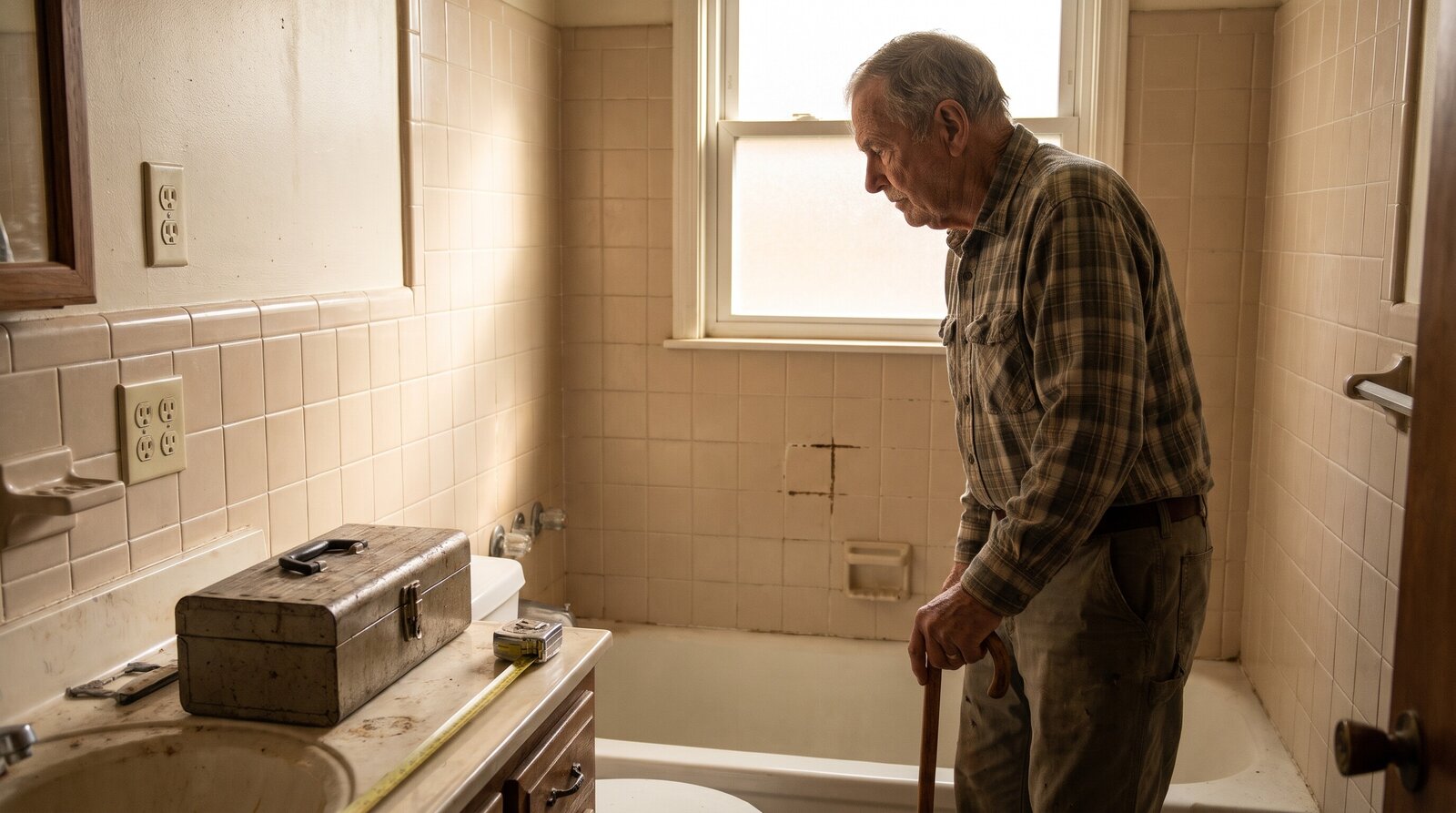
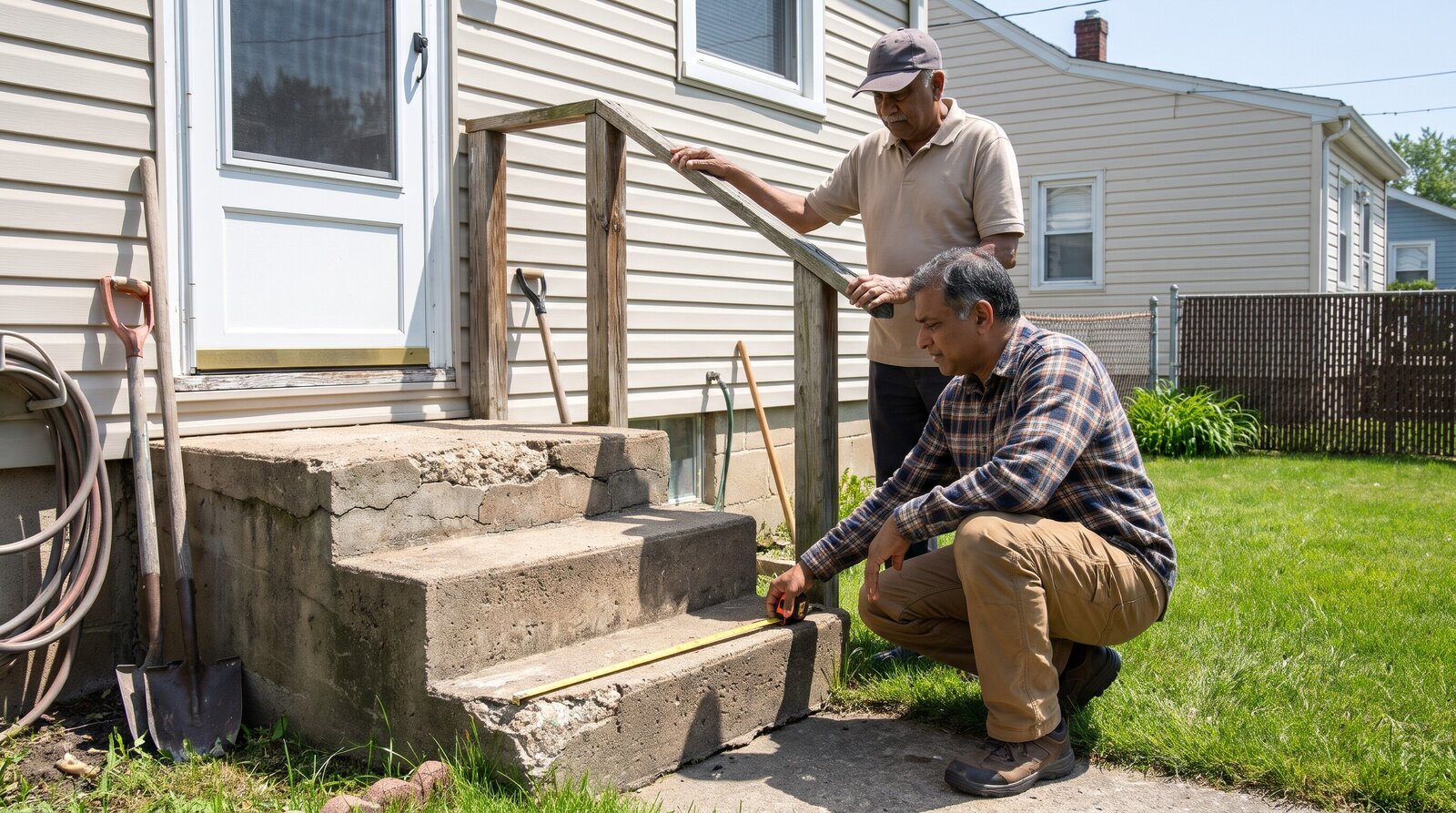
Your dad's knees have turned the three back steps into a daily fight, and he's started skipping showers because climbing out of the tub scares him. The contractor's quote for a small ramp and two grab bars came in at $4,800. Dad lives on Social Security, and you're already covering his groceries. You're about to put it on your own credit card. Before you do, spend an afternoon on the phone. There's more help for home modifications than most families find, especially for veterans and parents with low incomes.
Decide on the one fix that matters most
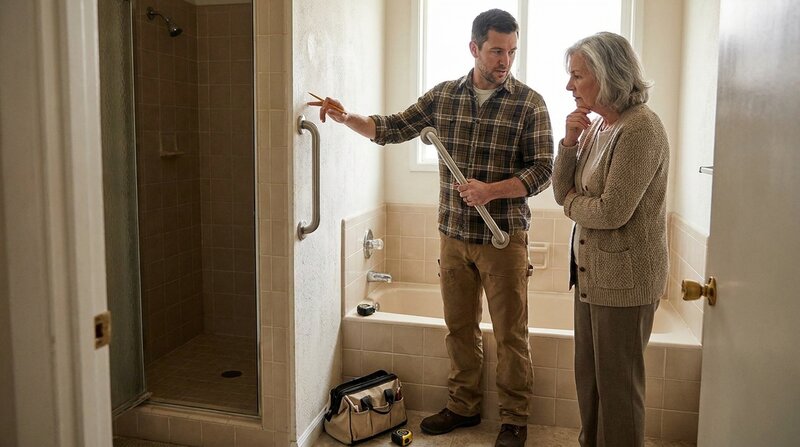
Programs pay for specific changes, not a whole-house remodel, so know what you're asking for. Your Survival Guide's one home fix at a time sheet walks you through picking the single change that would help most. These nine home fixes that prevent falls cover the common ones, our breakdown of what aging in place really costs prices them out, and if grab bars are first on the list, here's where to install them and which to buy.
Get a written estimate before you apply anywhere. Most programs ask for one, and the VA requires an itemized estimate for labor, materials and permits. If your parent's doctor has recommended a change, ask for that in writing too; some programs require medical justification.
Before you hire anyone
Home repair is a common way older homeowners get taken advantage of, so protect your parent while you protect their house. The Federal Trade Commission advises getting several written estimates, hiring only contractors who are licensed and insured, and checking the license with your state or county.
Get a written contract with the contractor's name, address, phone and license number and an estimated start and finish date. Don't pay the whole cost up front, and treat a demand for cash or full payment in advance as a red flag. If your parent signs at home, the contract should include their right to cancel within three business days. And if someone knocks on the door offering a deal on a ramp or a new roof, these signs of elder financial abuse are worth knowing.
Local help: the aging network and nonprofits
Your parent's Area Agency on Aging is the first call. The Administration for Community Living's Senior Nutrition Program page lists home modifications among the supports local aging programs connect older adults to, alongside transportation and home health services. Even when the agency can't pay, it usually knows which local programs can.
Rebuilding Together is a national nonprofit whose local affiliates repair homes for neighbors who can't afford the work. Services and how to apply vary by location, so find the nearest affiliate and follow its application steps.

Your parent can read the contractor's estimate or the VA or USDA application to Tiina, or share a photo of it, and hear what each part is asking for in plain words, as many times as they need. They fill it in; she just makes it clearer.
Medicaid waivers
If your parent qualifies for Medicaid long-term care at home, the state's home and community-based services waiver may pay for changes to the home. Names vary by state: home accessibility adaptations, environmental modifications or home modifications. Florida's Long-Term Care Waiver, for example, lists home accessibility adaptations for people 65 and older, according to its Medicaid.gov waiver fact sheet.
Ask your parent's Medicaid case manager whether their waiver covers the change you need, what documentation is required and who does the work. Apply early. If your parent isn't on Medicaid yet, here's how the Medicaid spend-down and five-year look-back work.
VA grants for veterans
Veterans have the most generous options. Through the Home Improvements and Structural Alterations (HISA) program, the VA provides a lifetime benefit of up to $6,800 for changes that address a service-connected disability, or a non-service-connected disability if the veteran has a service-connected rating of at least 50%. Other veterans can get up to $2,000. Examples include entrance ramps and bathroom changes. HISA won't pay for things like spas, exterior decking or new construction.
To apply, you need a prescription from a VA or VA-contracted doctor, VA Form 10-0103, an itemized estimate and, for renters, the owner's signed and notarized permission. You can ask for an advance payment on the application.
For severe service-connected disabilities, the VA's Specially Adapted Housing and Special Home Adaptation grants are much larger, listed at up to $126,526 and $25,350 for fiscal year 2026. Grants can be used up to six times over a lifetime.
USDA repair loans and grants for rural homeowners
If your parent owns and lives in a home in a rural area, check the USDA's Section 504 Home Repair program, run by USDA Rural Development. Per USDA Rural Development:
- Grants of up to $10,000 (a lifetime limit) go to homeowners 62 and older who can't repay a loan, to remove health and safety hazards.
- Loans of up to $40,000 at a fixed 1% rate, repaid over 20 years, can fund repairs and improvements. Loans and grants can be combined for up to $50,000.
- Income must be below 50% of the area median, and applicants must be unable to get affordable credit elsewhere.
- Grants must be repaid if the home is sold within three years.
- Location: check your parent's address on USDA's property eligibility map, then contact the local Rural Development office.
Tax breaks for medical home improvements
Some changes count as medical expenses on federal taxes. Under IRS Publication 502, improvements made to accommodate a disability that don't increase the home's value can usually be included in full. The IRS lists entrance ramps, wider doorways and hallways, bathroom railings and support bars, grab bars anywhere, lower kitchen cabinets, modified stairways, porch lifts and modified smoke alarms, among others. If an improvement does raise the home's value, only the cost above that increase counts.
Medical expenses help only if you itemize, and only the amount above 7.5% of adjusted gross income is deductible. If you pay for changes in your parent's home, ask whether you can count them on your return; here's when you can claim a parent as a dependent. A tax preparer can confirm what applies to your family.
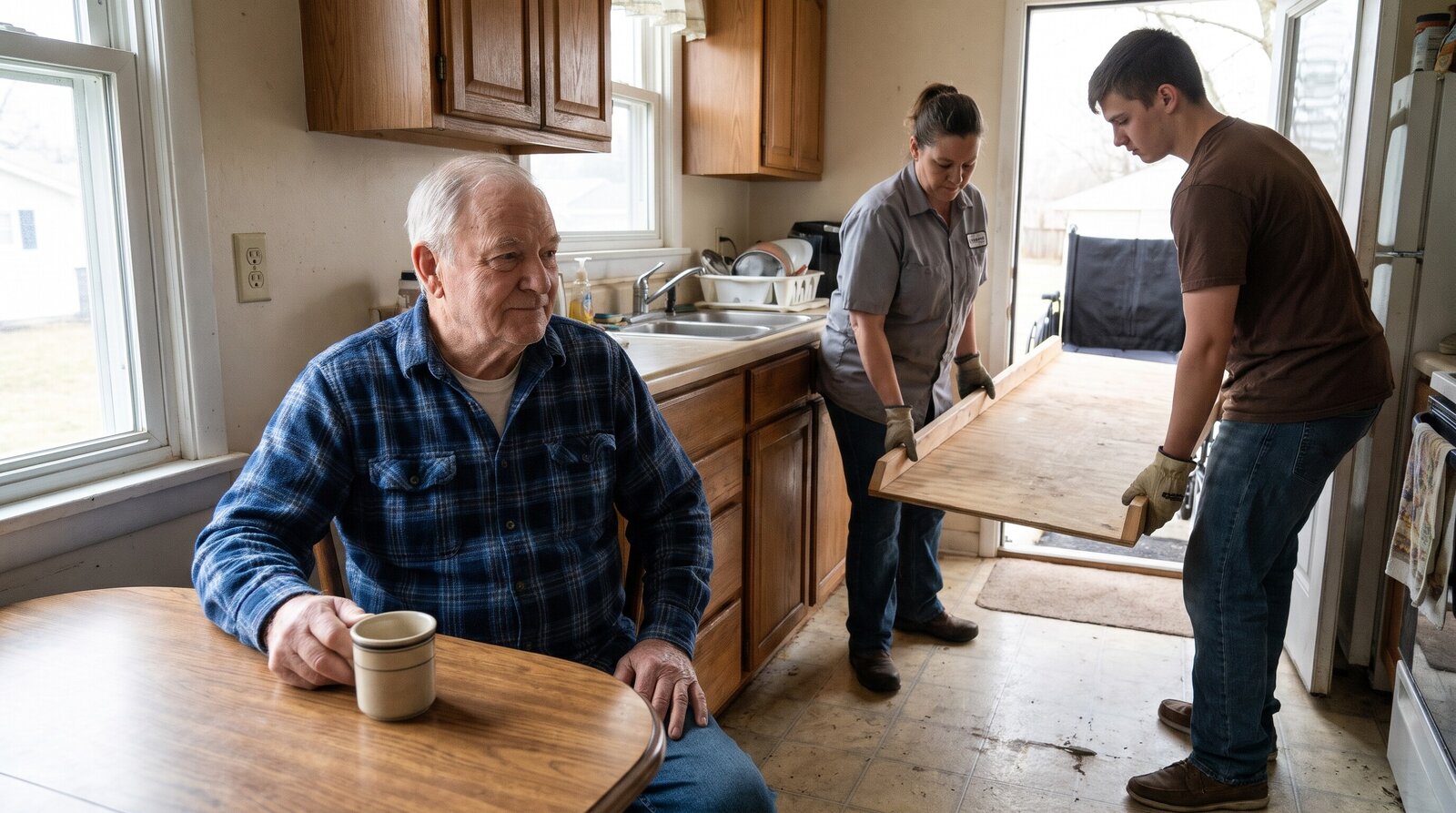
The grab bars are up, the ramp is in, and Dad gets out to the yard again.
The house is safer, and the quiet afternoons are still quiet. He taps Call Tiina for a conversation about the ballgame or the garden, and when the next letter from the VA arrives, she explains it in plain words.
Try Tiina with Dad →Frequently Asked Questions
Methodology & editorial policy
Reviewed and updated October 31, 2026 by the Tiina Editorial Team. Facts, programs and prices in this guide come from the sources listed below.
About composite scenarios. The opening scene is a composite.
About Tiina. Tiina is a voice-first AI companion for older adults: an app for iPhone and iPad that your parent opens whenever they want someone to talk to, day or night.
Sharing. Quote freely with a link back to this page. For full reprints, email hello@tiina.ai.
Sources. 9 references: Administration for Community Living, Rebuilding Together, Medicaid.gov, U.S. Department of Veterans Affairs, USDA Rural Development, USDA, IRS, Federal Trade Commission.View all
- Administration for Community Living. Nutrition Services (supportive services links). acl.gov
- Rebuilding Together. Find Your Local Affiliate. rebuildingtogether.org
- Medicaid.gov. Florida Waiver Factsheet. medicaid.gov
- U.S. Department of Veterans Affairs. Prosthetic and Sensory Aids Service: HISA. prosthetics.va.gov
- U.S. Department of Veterans Affairs. Disability Housing Grants for Veterans. va.gov
- USDA Rural Development. Single Family Housing Repair Loans & Grants (Section 504). rd.usda.gov
- USDA. Property eligibility map. eligibility.sc.egov.usda.gov
- IRS. Publication 502 (2025), Medical and Dental Expenses. irs.gov
- Federal Trade Commission. How To Avoid a Home Improvement Scam. consumer.ftc.gov