Incontinence in Elderly Parents: How to Help, With Dignity
Bladder leaks are common, often treatable and almost never talked about. How to bring it up, what the doctor can do and what to buy.
Some links below are affiliate links: if you buy through them, Tiina may earn a small commission at no extra cost to you. As an Amazon Associate I earn from qualifying purchases.
Incontinence is common in older adults, but it isn't something your parent just has to live with. It can often be stopped or controlled. Start with the doctor, since infections, constipation and some medications cause leaks. Meanwhile, the right products, quick skin care and an easy, well-lit path to the bathroom help a lot. Original Medicare doesn't pay for pads or protective underwear.
We're not doctors, and this is general information, not medical advice. Talk to your parent's doctor about any new or worsening leaks. Call the doctor soon for cloudy or bloody urine, pain when urinating, or leaks that come with fever or new confusion. Call 911 if your parent suddenly loses bladder control along with trouble talking or walking, sudden weakness or numbness in an arm or leg, vision loss, confusion or loss of bowel control.
Three supplies worth buying
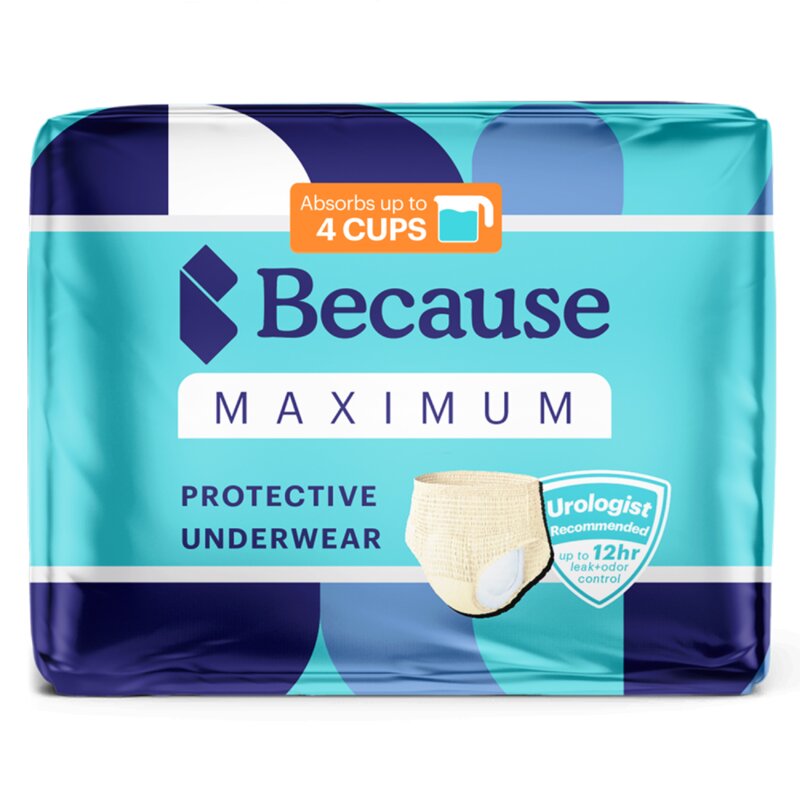
Because Premium Maximum Plus Underwear for Women
Pull-on underwear that looks and fits like regular underwear, absorbs up to 4 cups and has tear-away side seams so it comes off without undressing. The beige and gray colors read as ordinary clothing, which matters to a parent who dreads the word diaper. Because also sells a men's version cut the same way.
Watch for: Sizes run by waist and hip measurement, so measure before you order. This listing is a bundle of four packs, so measure carefully before you order.
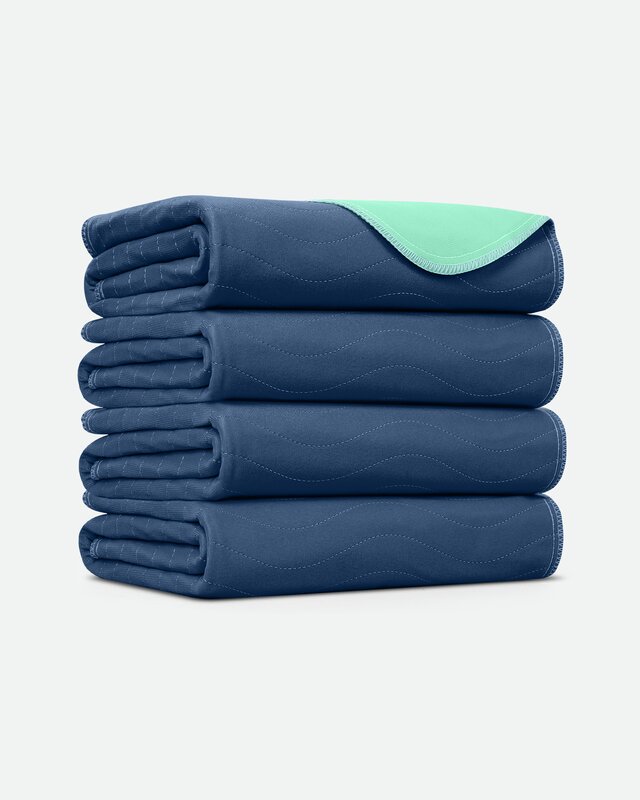
Utopia Bedding Washable Underpads, 4 Pack
Large 34 by 52 inch pads with a soft, multi-layer absorbent top and a waterproof backing that keeps the mattress dry. They are quiet under a sheet and machine washable, and they work on a sofa too. Four in a pack covers one on the bed, one in the wash and spares for the chair.
Watch for: Wash them at room temperature with the waterproof side facing in, tumble dry on low and skip the bleach. Put one on top of the fitted sheet, over a waterproof mattress protector, so a night change takes a minute.

Because Barrier Skin Cream
A zinc oxide cream like the ones MedlinePlus describes, which forms a barrier between skin and moisture. This one adds vitamin E and is paraben-free. Amazon sells the 3-ounce tubes in a pack of three: one for the basket by the bed, one for the bathroom and a spare.
Watch for: Cream goes on clean, dry skin and needs reapplying after every change. If you see broken skin or redness that doesn't fade, call the doctor instead of adding more cream.
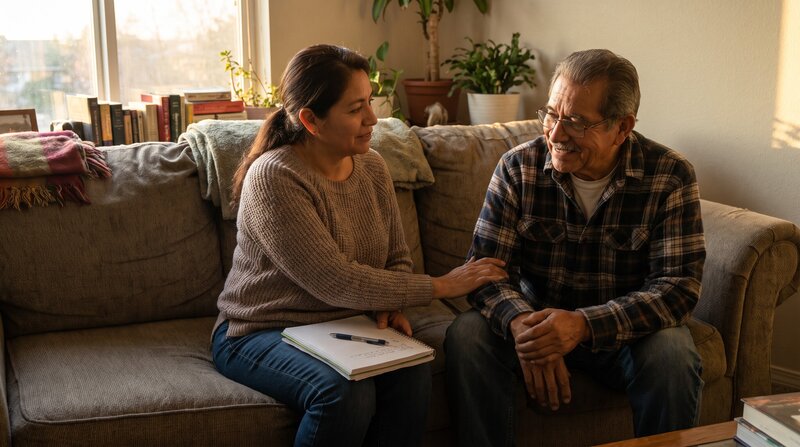
Your mom has started tying a long cardigan around her waist. She skips the church potluck and won't stay over at your house anymore. Then you find a bag of wet underwear tucked behind the laundry basket. She isn't being difficult. She's embarrassed, and she's been handling a problem alone that has real fixes. Bladder leaks are one of the most common reasons older adults quietly pull back from the things they love, and one of the least discussed. Here's how to help without making her feel small.
Why it happens, and why the doctor comes first
Incontinence means leaking urine by accident. It's more common in older people, especially women, and the National Institute on Aging is clear that it can often be stopped or controlled. Some causes are short-term: a urinary tract infection, constipation, vaginal irritation or a medication. Longer-lasting leaks can come from weak bladder or pelvic floor muscles, an overactive bladder, nerve damage from diabetes or Parkinson's, or, in men, an enlarged prostate.
Knowing the type helps the doctor:
- Stress incontinence: leaks when coughing, sneezing, laughing or lifting.
- Urge incontinence: a sudden need to go and not making it in time.
- Overflow incontinence: small, frequent leaks from a bladder that never fully empties.
- Functional incontinence: the bladder works, but arthritis or slow walking means your parent can't get to the toilet in time.
How to bring it up
Pick a private, unhurried moment, not the car ride to the doctor. Keep it matter-of-fact and use your parent's words, like "leaks" or "bladder trouble." Say what you've noticed, then say the two things that take the shame out of it: this is very common, and doctors can often fix it.
Try: "I've noticed you're skipping things you used to love. If it's bladder trouble, a lot of people your age have it, and it's often treatable. Would you want me to come to the appointment, or just help you write down what's going on?"
Call the products protective underwear, not diapers. If your parent shuts the conversation down, let it rest and come back to it. These approaches for a parent who refuses help work here too.

What happens at the doctor
The doctor will ask about symptoms and medications, test urine and blood, and may check how well the bladder empties. Many will ask for a bladder diary, a few days' record of drinks, bathroom trips and leaks. Bring one to the first visit and you'll save weeks. Some people are referred to a urologist.
Treatment depends on the type. The simplest come first: timed bathroom trips, bladder training and pelvic floor exercises. There are also medicines, devices and procedures. One thing worth asking about: NIA notes that some overactive bladder medicines have been linked to a higher risk of cognitive decline in adults over 65, so ask the doctor which options fit your parent. Here's how to talk to the doctor as a caregiver so your parent stays in charge of the conversation.

Your parent can talk with Tiina privately about the leaks, ask what a bladder diary is, and think through how to bring it up with the doctor. Nothing from that conversation is reported back to you.
Choosing products that work
Match the product to the amount of leaking, and buy small packs first to test the fit. Per MedlinePlus, the main options are:
- Pads and liners that stick inside regular underwear, for light leaks.
- Protective underwear that pulls on like regular briefs, for moderate leaks and for a parent who manages on their own.
- Adult briefs with side tabs, for heavy leaks or when someone helps with changing, since they open without taking off pants and shoes.
- Washable underwear with a built-in waterproof layer, which looks more like regular underwear.
- Bed and chair pads, washable or disposable, plus a waterproof mattress protector.
- Drip collectors for men with small leaks.
Paying for supplies, and the skin care that prevents bigger problems
Supplies add up. Original Medicare doesn't cover incontinence supplies or adult diapers. Some Medicare Advantage plans offer extra benefits, so call the plan. If your parent has Medicaid, ask the state Medicaid office whether supplies are covered and what the doctor needs to send, since rules vary by state. On taxes, IRS Publication 502 allows the cost of adult diapers as a medical expense only when they're needed to relieve the effects of a particular disease.
Wetness against the skin breaks it down. MedlinePlus advises cleaning and drying the area right after a leak, using mild diluted soap or a soap-free cleanser, rinsing well and patting dry, and skipping products with alcohol. Creams with zinc oxide, lanolin or petrolatum form a barrier; reapply after each cleaning. Change products on a regular schedule rather than waiting until they're soaked. If you see a rash, broken skin or redness that doesn't fade, call the doctor.
If your parent has dementia, or just wants to get out again
People in the later stages of Alzheimer's often have trouble with incontinence because they don't realize they need to go, forget to go or can't find the bathroom. NIA suggests regular bathroom breaks, a clear and clutter-free path with a light on at all times, and clothes that are easy to get on and off. The Alzheimer's Association adds a few that work: keep the bathroom door open so the toilet is visible, put a picture of a toilet on the door, and consider a portable commode or urinal in the bedroom.
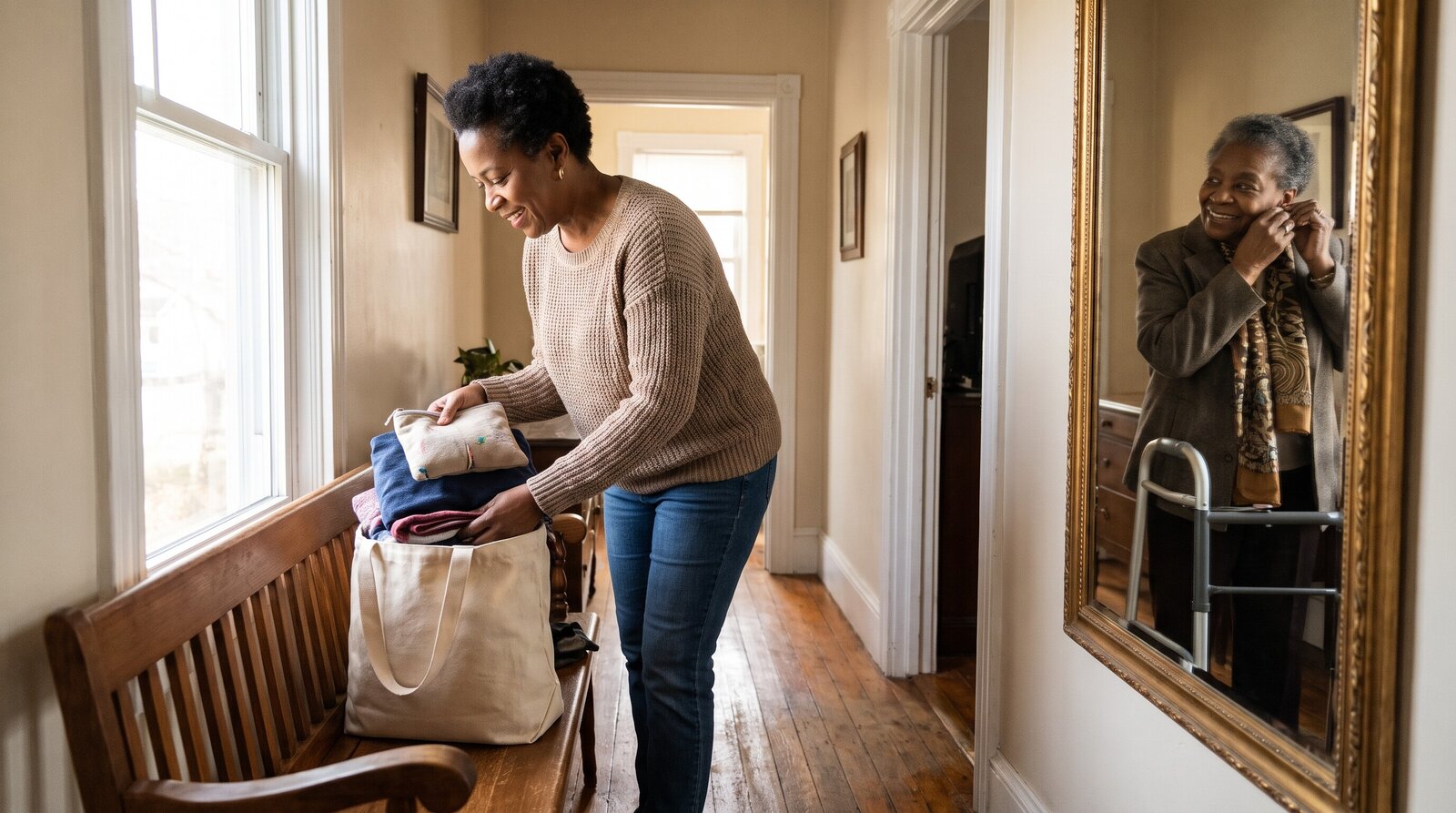
For outings, pack a small bag that looks like any other tote: a change of protective underwear, wipes, a spare pair of pants and a plastic bag. Scout the restrooms when you arrive, and choose an aisle seat. Knowing the plan is in place is often what gets a parent back to church, the movies or the grandkids' games. That matters, because pulling away from people has its own cost, as this piece on loneliness in elderly parents explains.
A plan for nights
Nights are when leaks, falls and lost sleep pile up. The fixes are simple:
- Don't cut back on water. NIA's advice is to cut back on caffeinated coffee, tea and soda, which can increase urination, but not to limit water.
- Light the path. Clear the hallway and keep a light on between bed and bathroom. Rushing to the toilet in the dark is how falls happen; here are nine home fixes to prevent falls.
- Layer the bed. Waterproof mattress protector, fitted sheet, then a bed pad on top, so a night change takes two minutes.
- Keep supplies within reach. A small basket by the bed and in the bathroom with protective underwear, wipes and barrier cream.
- Make clothes easy. Elastic waists and nightgowns beat buttons and zippers when there's no time to spare.
- Each drink: the time, what it was and roughly how much
- Each bathroom trip: the time and whether it was urgent
- Each leak: the time, how much (a few drops, a lot) and what was happening (coughing, rushing, asleep)
- Pads or underwear used each day
- Any pain, burning, fever, blood or new confusion
- Every medicine and supplement, with the time it's taken
The potluck, the movies, the grandkids' games: Mom can get out again.
The fix was a doctor's visit, the right underwear, a tote that looks like any other and a plan for nights. On the evenings she'd rather stay in, she taps Call Tiina and has an easy conversation about anything at all, with someone patient who never hurries her.
Try Tiina with Mom →Frequently Asked Questions
Methodology & editorial policy
Reviewed and updated October 31, 2026 by the Tiina Editorial Team. Facts, programs and prices in this guide come from the sources listed below.
About composite scenarios. The opening scene is a composite.
About Tiina. Tiina is a voice-first AI companion for older adults: an app for iPhone and iPad that your parent opens whenever they want someone to talk to, day or night.
Sharing. Quote freely with a link back to this page. For full reprints, email hello@tiina.ai.
Sources. 10 references: National Institute on Aging, MedlinePlus, Medicare.gov, IRS, Alzheimer's Association, Because Market, Utopia Bedding.View all
- National Institute on Aging. Urinary Incontinence in Older Adults. nia.nih.gov
- MedlinePlus. Urinary incontinence. medlineplus.gov
- MedlinePlus. Urinary incontinence products: self-care. medlineplus.gov
- MedlinePlus. Skin care and incontinence. medlineplus.gov
- Medicare.gov. Incontinence supplies & adult diapers. medicare.gov
- IRS. Publication 502 (2025), Medical and Dental Expenses. irs.gov
- Alzheimer's Association. Incontinence. alz.org
- Because Market. Premium Maximum Plus Underwear for Women. amazon.com
- Utopia Bedding. Washable Underpad Dual Tone. amazon.com
- Because Market. Barrier Skin Cream. amazon.com