Medicaid Non-Emergency Medical Transportation: Free Rides to the Doctor
Which benefits pay for a parent's rides to medical appointments, who qualifies for each, and exactly how to book.
Some links below are affiliate links: if you buy through them, Tiina may earn a small commission at no extra cost to you. As an Amazon Associate I earn from qualifying purchases.
If your parent has Medicaid, it must cover rides to medical appointments when they have no other way to get there. Many states arrange these rides through a transportation broker you call ahead. Some Medicare Advantage plans include rides, PACE programs drive members to appointments, and paratransit and volunteer drivers fill the gaps. Original Medicare doesn't pay for routine rides.
Your mom has a cardiologist, a retina specialist and a standing lab appointment, and she stopped driving last spring. You've been taking half-days off work to get her there, and it can't go on like this. Here's what many families don't realize: several benefits exist specifically to pay for rides to medical care, and they often go unused because nobody explains them or how to book. Below is each one, who qualifies, what it covers and the exact steps to get a ride on the calendar.
Medicaid non-emergency medical transportation (NEMT)
Non-emergency medical transportation is a required Medicaid benefit. According to MACPAC, the federal commission that advises Congress on Medicaid, it covers trips to and from medical appointments for members who have no other way to get there. Rides can be by taxi, van, bus or another vehicle, and states can also repay members, or their family and friends, for mileage when they drive in their own car.
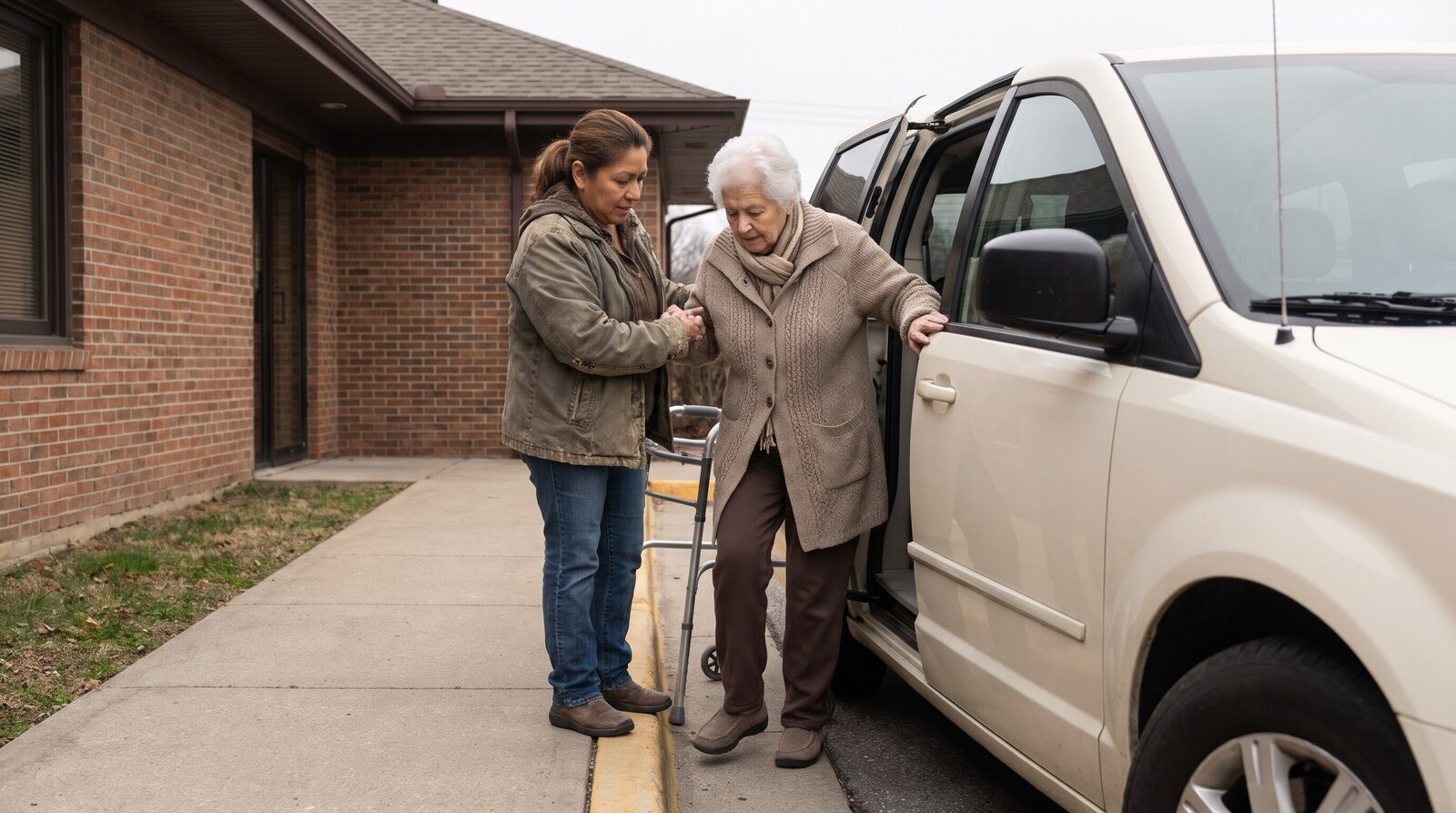
Who qualifies? A CMS fact sheet says Medicaid may give a ride to someone who doesn't have a working car or a driver's license, or who has a physical or mental disability or can't travel or wait for a ride alone. The ride has to be for Medicaid-covered care, and it goes to the appointment and back home only.
The details vary by state. Some states charge a small copay, some limit the number of trips, and some require approval before the ride. MACPAC gives examples: Arizona charges certain adults a $2 copay per one-way taxi trip, and New Hampshire limits wheelchair van trips to 24 a year.
How to book a Medicaid ride
The most common setup, according to MACPAC, is a transportation broker: a company the state hires to take ride requests and assign drivers. Some states arrange rides directly or through Medicaid health plans instead. Either way, booking works much the same:
- Find the number. It's usually on the back of your parent's Medicaid card or in their health plan's member handbook. If not, call member services and ask, "Who handles non-emergency transportation?"
- Call well ahead. Book as soon as the appointment is set. Ask how many days' notice the broker needs.
- Have the details ready: your parent's Medicaid ID, the appointment date and time, the doctor's name, address and phone number, and whether your parent uses a cane, walker or wheelchair.
- Ask about the ride home. Is it booked for a set time, or does your parent call when the visit ends?
- Ask whether you can ride along if your parent needs help at the appointment.
- Get a confirmation number, and call to cancel if plans change. Repeated no-shows can lead to extra rules for future rides.
- If you'd rather drive your parent yourself, ask whether the state repays family drivers for mileage, and what paperwork it needs.

What Medicare does and doesn't pay for
Original Medicare doesn't cover everyday rides to the doctor. It pays for ground ambulance trips only when traveling in any other vehicle could endanger your parent's health.
Medicare Advantage plans are different. The Medicare & You 2027 handbook notes that some plans cover rides to doctor visits, though these benefits are generally limited. Call the number on your parent's plan card and ask: is there a ride benefit, how many one-way trips a year, how far ahead do we book, and which ride company do you use? Some plans work with ride apps. Uber's senior accounts, for example, let older riders add a Medicare Advantage health benefit card in the app's Wallet.

The booking line wants her Medicaid ID, the doctor's address, whether she uses a walker, and how she's getting home. She can talk that list through with Tiina first, in her own words, and with notifications on, ask for a reminder before the pickup.
PACE: medical care with the rides built in
The Program of All-Inclusive Care for the Elderly, or PACE, is a Medicare and Medicaid program for older adults who need a nursing home level of care but can live safely at home with support. It covers all Medicare and Medicaid services, coordinated by a care team, and that includes transportation to the PACE center and to medical appointments.
Your parent can join if they're at least 55, live in a PACE service area, are certified by the state as needing a nursing home level of care, and can live safely in the community with PACE's help. With Medicaid, there's no monthly premium, and there are no copays for care the PACE team approves. It's only offered in some states and areas, so search Medicare's plan finder or ask the state Medicaid office whether there's a PACE program near your parent.
Paratransit for parents with a disability
If a disability keeps your parent from using the regular bus, the local transit agency must offer paratransit: shared van or car rides for eligible riders. Age alone doesn't qualify, so your parent applies to the transit agency and gets a written decision. If the agency hasn't decided within 21 days of a complete application, your parent must be treated as eligible until it does.
Under federal paratransit rules, service covers areas within three-quarters of a mile of bus routes, during the same hours the buses run, for any trip purpose. Rides are booked at least the day before, and some agencies take bookings up to 14 days out. The pickup can be up to an hour before or after the requested time, the fare can be up to twice the regular bus fare, and a personal care attendant rides free.
Volunteer drivers, GoGoGrandparent and ride apps
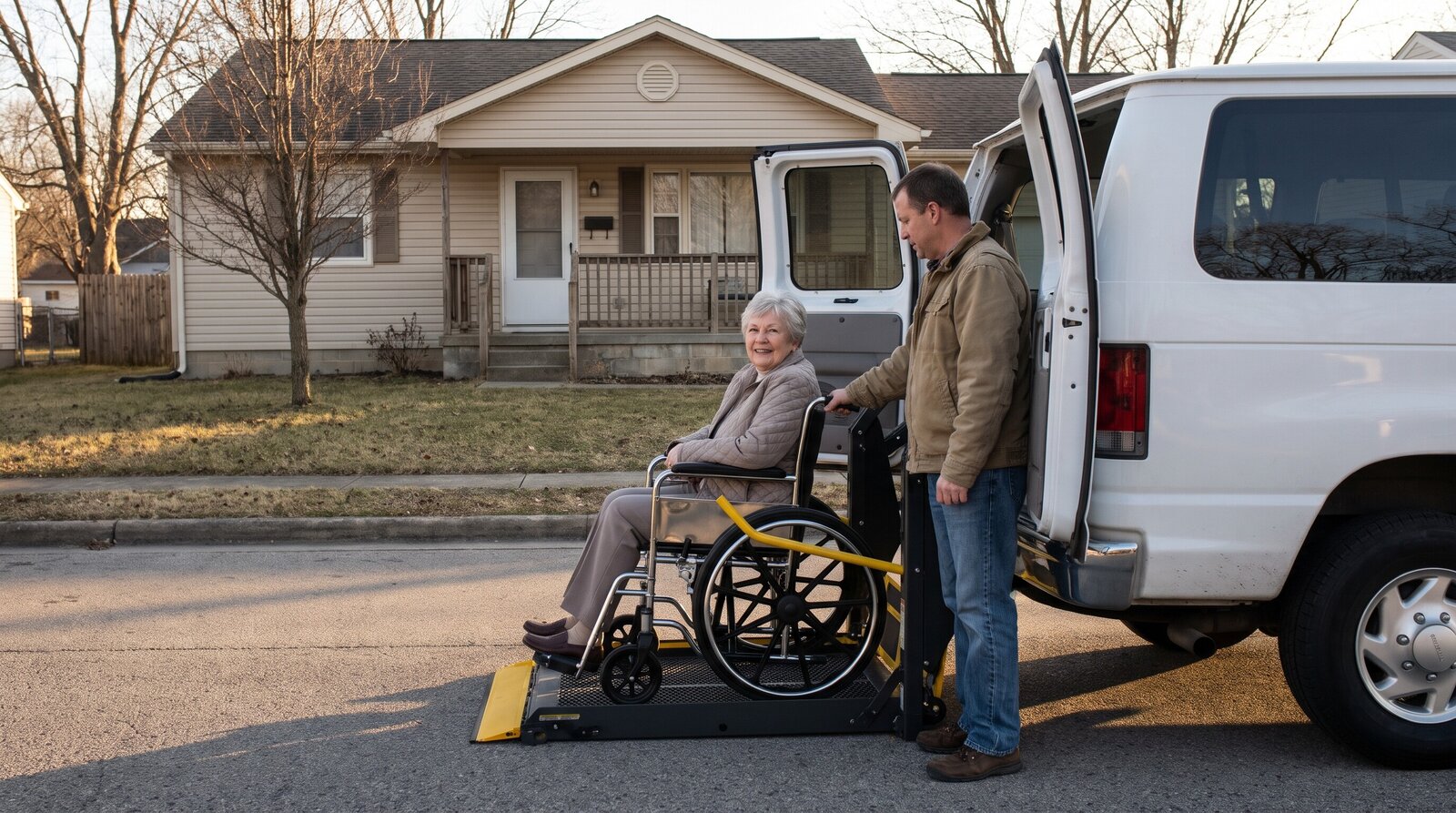
Volunteer driver programs are often the most flexible option. A brief from USAging's National Center on Senior Transportation describes how they match a volunteer to the rider's needs, often keep the driver with the rider or guarantee the trip home up front, and frequently cross county lines to reach specialists. Some offer door-through-door help or an escort. Local nonprofits, faith groups and senior centers often run them, so your parent's senior center or place of worship is a good place to ask.
For a parent without a smartphone, GoGoGrandparent books Uber and Lyft rides through an ordinary phone call. It charges a monthly membership on top of the ride, with several plan levels, so ask them to explain every fee before signing up. Lyft Silver offers a simpler app, more cars that are easy to get in and out of, and live phone support from 8 a.m. to 9 p.m. Eastern. Here's how to set up Uber for a parent, step by step.
Put it on paper
Once you know which benefits your parent has, write the booking numbers and member IDs for each one on the ride-plan sheet in your Survival Guide, so the next booking takes five minutes instead of an afternoon of phone calls.
And don't let rides shrink to medical visits only. Getting to the senior center, church or a friend's house matters for your parent's health and mood, too, and these social activities for seniors give them somewhere worth going. If your parent is still driving and you're worried, here's how to have the conversation about the car keys.
The ride is booked, and Mom has someone to tell about the appointment.
Tiina can't drive her to the cardiologist. She can remind her when the van is due, explain the paratransit letter when it comes, and hear the whole story of the visit when Mom gets home, as many times as she wants to tell it.
Try Tiina with Mom →Frequently Asked Questions
Methodology & editorial policy
Reviewed and updated October 31, 2026 by the Tiina Editorial Team. Facts, programs and prices in this guide come from the sources listed below.
About composite scenarios. The opening scene is a composite.
About Tiina. Tiina is a voice-first AI companion for older adults: an app for iPhone and iPad that your parent opens whenever they want someone to talk to, day or night.
Sharing. Quote freely with a link back to this page. For full reprints, email hello@tiina.ai.
Sources. 11 references: MACPAC, Centers for Medicare & Medicaid Services, Medicare.gov, Electronic Code of Federal Regulations, USAging, National Center on Senior Transportation, Uber, Lyft, GoGoGrandparent.View all
- MACPAC. Non-Emergency Medical Transportation. macpac.gov
- Centers for Medicare & Medicaid Services. Let Medicaid Give You a Ride (fact sheet). cms.gov
- Medicare.gov. Ambulance services. medicare.gov
- Medicare.gov. Medicare & You 2027. medicare.gov
- Medicare.gov. Program of All-inclusive Care for the Elderly (PACE). medicare.gov
- Electronic Code of Federal Regulations. 49 CFR 37.131: Service criteria for complementary paratransit. ecfr.gov
- Electronic Code of Federal Regulations. 49 CFR 37.125: ADA paratransit eligibility process. ecfr.gov
- USAging, National Center on Senior Transportation. Volunteer Transportation. usaging.org
- Uber. Senior accounts for Uber rides. uber.com
- Lyft. Lyft Silver. lyft.com
- GoGoGrandparent. Membership plans. gogograndparent.com