Activities for Dementia Patients at Home: What Works at Each Stage
The best dementia activities aren't games. They're the familiar work of a life, made small enough to succeed at.
Some links below are affiliate links: if you buy through them, Tiina may earn a small commission at no extra cost to you. As an Amazon Associate I earn from qualifying purchases.
The best activities for someone with dementia are ones they already know: folding laundry, setting the table, music from their younger years, old photos, gardening, simple cooking, a short walk. Match the task to what they can still do, break it into one step at a time, and judge success by whether they enjoyed it, not how it turned out. As dementia progresses, simpler and more repetitive tasks work better.
We're not doctors. These are everyday activity ideas, not treatment. Check with your parent's doctor before starting a new exercise routine, and call the doctor if behavior or confusion changes suddenly, since that can signal an illness. If your parent becomes aggressive and you or they are in danger, call 911 and tell the dispatcher your parent has dementia. The Alzheimer's Association 24/7 Helpline is 800-272-3900.
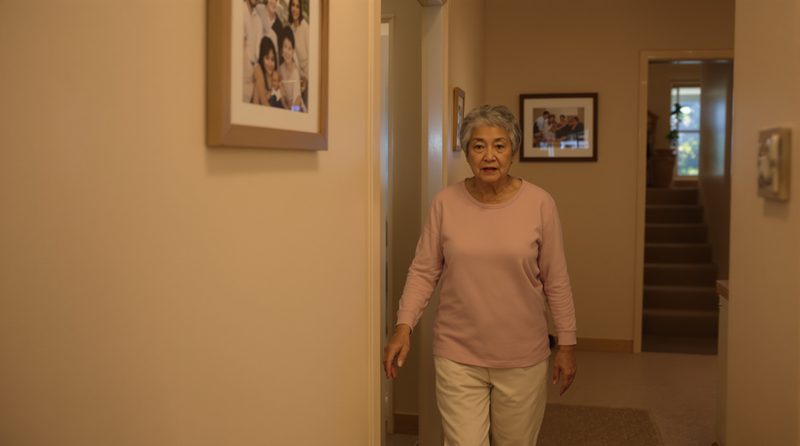
Your dad spent forty years as an accountant. Now he sits in front of the TV most of the day, and when you suggest a jigsaw puzzle he waves it away. Then one afternoon you dump a basket of clean socks on the table and ask for help matching them. He spends half an hour sorting, carefully, the way he used to sort receipts, and he seems more like himself than he has in weeks. That's the secret. The activities that work aren't busywork or brain games. They're familiar jobs that let your parent feel useful again.
Why activities matter so much
A person with dementia still needs to feel useful. The Alzheimer's Association says the right activities can build self-esteem, give structure to the day, create a sense of security and dignity, and even reduce behaviors like wandering.
The hard part is that dementia takes away the ability to start things. Many people living with the disease still have the energy and desire to do things but can't organize, begin and finish a task on their own. The National Institute on Aging puts it simply: people with Alzheimer's may have trouble deciding what to do or starting tasks. So when your parent sits all day, it usually isn't laziness or sadness alone. They need someone to set the table, hand them the first fork and say, "Can you finish this for me?"
Start with who your parent was
The best ideas come from your parent's own life. The Alzheimer's Association suggests relating activities to past work: a former office worker might enjoy putting coins in a holder, helping assemble a mailing or making a to-do list, and a former farmer or gardener may like working in the yard.
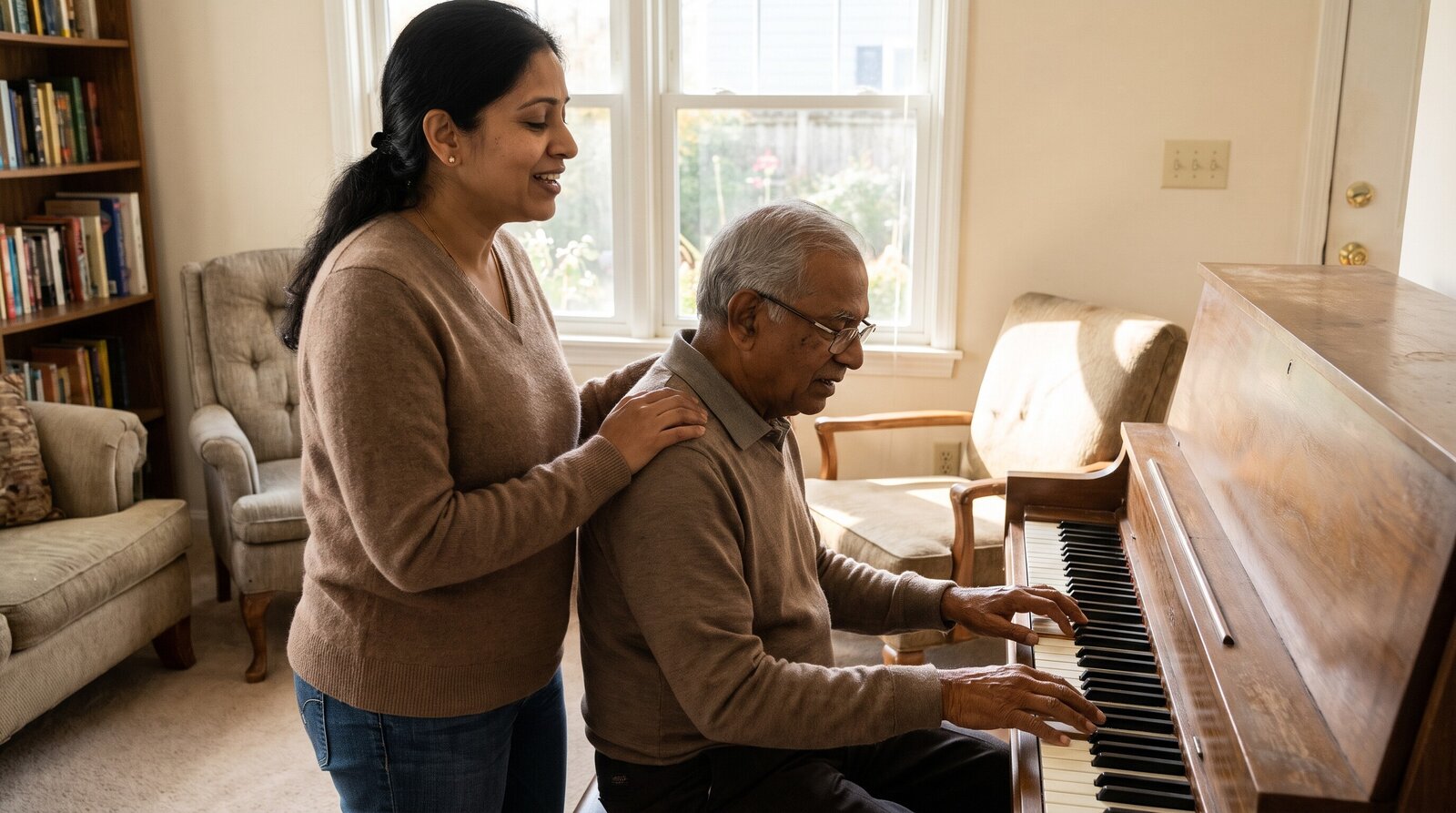
Old favorites still count even when they look different now. A lifelong newspaper reader may enjoy holding and paging through the paper even if they can't follow every story. Someone who played piano may still be able to play simple songs they learned years ago. Write down your parent's job, their hobbies, the music of their twenties, their faith and the role they played at home. That list is your activity plan.
Activity ideas that work at home
These come from the NIA and the Alzheimer's Association, and none of them needs special equipment:
- Household jobs: fold towels, sort socks, wipe the counter, set the table, sort the mail, clip coupons, sort the recycling.
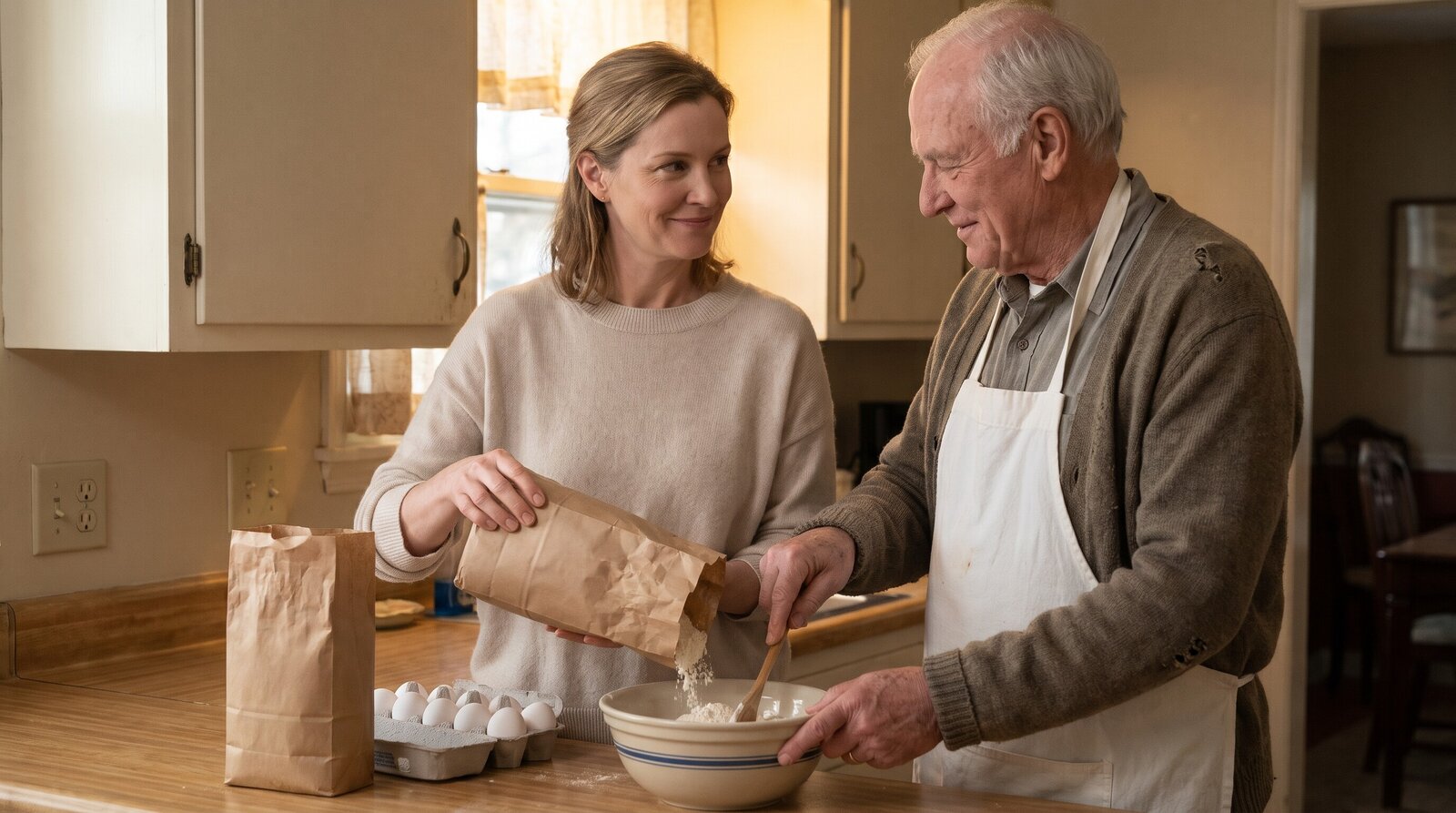
- Cooking and baking: measure, mix, pour and stir, or have your parent tell you how to make a family recipe.
- Music: play songs they loved, sing along, dance, and ask what they were doing when a song was popular.
- Gardening: water plants, plant flowers or vegetables, or talk about how the tomatoes are coming along.
- Movement: take a walk, toss a soft ball or a balloon back and forth, or lift soup cans as hand weights.
- Pets: feed, brush or walk a pet, or just sit and hold one.
- Photos and family: look through albums, play a simple board game with grandchildren, read stories together.
- Faith: pray together or sing a favorite hymn.
- Outings: a favorite restaurant at a quiet hour, a park, a short museum visit or a senior center.

Between the household jobs, your parent can tap Call Tiina and talk about the songs they loved, the recipe they used to make or whatever they're curious about, and hear the answer as many times as they like. She is patient and never rushes.
Adapting activities as dementia progresses
Early stage. Keep doing what your parent already enjoys, for as long as you're both comfortable. NIA suggests planning outings for the time of day when your parent is at their best and keeping them short so they don't get too tired.
Middle stage. Shift to simpler, more repetitive tasks, and expect to demonstrate and give step-by-step directions. Do the difficult part yourself: if your parent can't measure the flour anymore, you measure and they stir.
Later stage. Your parent may take a less active role. That's fine. NIA notes that some people enjoy simply watching, and listening to familiar music, sitting in the sun or being read to all count. If you're trying to work out where your parent is, this caregiver's map of Alzheimer's stages helps.
How to start an activity without a fight
The way you ask matters more than the activity. These tips from the Alzheimer's Association make the biggest difference:
- Ask for help instead of offering entertainment. "Will you please help me?" works better than "Do you want to do a craft?"
- Give one step at a time. Too many directions at once overwhelm.
- Don't correct. If your parent folds the towels their own way, let them, and refold later if you must.
- Focus on the process, not the result. The point is time together and feeling useful.
- Swap an activity for a restless behavior. Hand someone who keeps rubbing the table a cloth to wipe it; play music for someone tapping their feet.
- Stop when it stops being fun. If your parent refuses, it may be fear or a task that's become too hard. Try something easier, or try again later.
Build a simple daily rhythm
A planned day means less time deciding what to do and more time doing things your parent enjoys. Base it on how they used to structure their day and when they're at their best. Leave plenty of time for meals, bathing and dressing, and keep wake-up and bedtimes regular.
A rough shape: breakfast, washing up and a household job in the morning; lunch, music or photos, then rest in the early afternoon; a quiet activity after dinner and the same bedtime routine every night. Don't fill every minute, since people with dementia need a balance of activity and rest. If late afternoons bring restlessness and confusion, read about sundowning and what to do at 5pm.
Keep a quick note of what worked and what didn't. What delights your parent on Tuesday may fall flat on Thursday, and that's normal for the disease, not a failure on your part.
Getting help so you're not the only activity director
You can't fill every hour yourself. NIA notes that a senior center or adult day program gives your parent something to do and gives you a break at the same time. The Eldercare Locator at 1-800-677-1116 can connect you with local programs, and these ways to get respite care cover the rest. If your parent has Medicare, ask their doctor whether a nearby practice is part of Medicare's GUIDE dementia care program, which offers care navigation, caregiver training and help paying for respite.
- What did your parent do for work?
- What did they do with their hands: cook, garden, fix things, sew, build?
- What music did they love in their twenties?
- What chores did they always do at home without being asked?
- Did they have a pet, or love someone else's?
- What did they do on Sunday mornings?
- What places did they love to go?
- What stories do they still tell?
- What time of day are they at their best?
- What upsets them: noise, crowds, being rushed, being corrected?
Dad hums along to the old music, and tells the story behind it.
On the days you can't be there, he can tap Call Tiina and talk about the music he loved, the recipe he wants to make or the question on his mind. She listens, and she never says, "You told me that already."
Try Tiina with Dad →Frequently Asked Questions
Methodology & editorial policy
Reviewed and updated October 31, 2026 by the Tiina Editorial Team. Facts, programs and prices in this guide come from the sources listed below.
About composite scenarios. The opening scene is a composite drawn from common caregiver experiences, not one family's story.
About Tiina. Tiina is a voice-first AI companion for older adults: an app for iPhone and iPad that your parent opens whenever they want someone to talk to, day or night.
Sharing. Quote freely with a link back to this page. For full reprints, email hello@tiina.ai.
Sources. 7 references: Alzheimer's Association, National Institute on Aging, CMS, Medicare.gov, ACL.View all
- Alzheimer's Association. Activities. alz.org
- Alzheimer's Association. Activities at Home: Planning the Day for a Person Living With Middle- or Late-Stage Alzheimer's. alz.org
- National Institute on Aging. Adapting Activities for People With Alzheimer's Disease. nia.nih.gov
- National Institute on Aging. Coping With Agitation, Aggression, and Sundowning in Alzheimer's Disease. nia.nih.gov
- CMS. Guiding an Improved Dementia Experience (GUIDE) Model. cms.gov
- Medicare.gov. Home health services. medicare.gov
- ACL. Eldercare Locator. eldercare.acl.gov