Gifts for Dementia Patients: What Gets Used, Stage by Stage
The best gift for someone with dementia fits where they are now, not who they used to be. Ideas by stage, three worth buying and what to skip.
Some links below are affiliate links: if you buy through them, Tiina may earn a small commission at no extra cost to you. As an Amazon Associate I earn from qualifying purchases.
Choose for the stage your parent is in now. Early on, gifts that protect independence work: a photo calendar, labels, a ride to a favorite place. In the middle and later stages, pick comfort and connection: favorite music, soft clothes, photos with names written in, something to hold. Three worth buying: a digital frame family can fill from afar, a picture-button phone and a robotic companion cat.
Three gifts for someone with dementia that get used
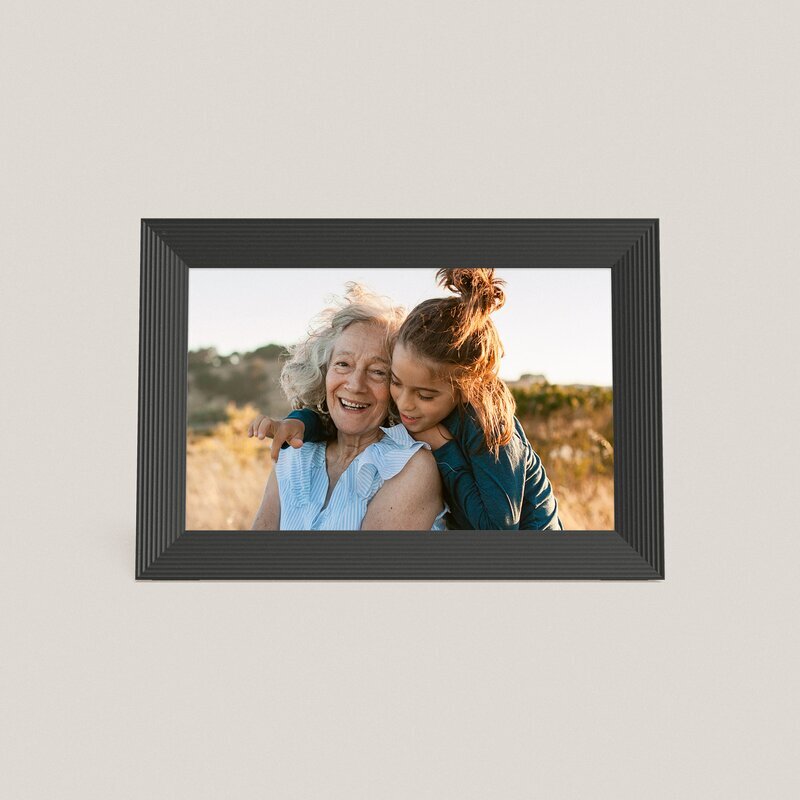
Aura Carver Digital Photo Frame
Family members add photos from their own phones, wherever they are, and new pictures appear on the frame without your parent touching anything. There's no subscription fee, the photos are unlimited, and the Aura app lets you add a caption to each picture, so you can put names under faces. It also plays short videos with sound.
Watch for: It needs Wi-Fi at your parent's home, so set it up before you leave. If video sound startles your parent, turn it off in the app.
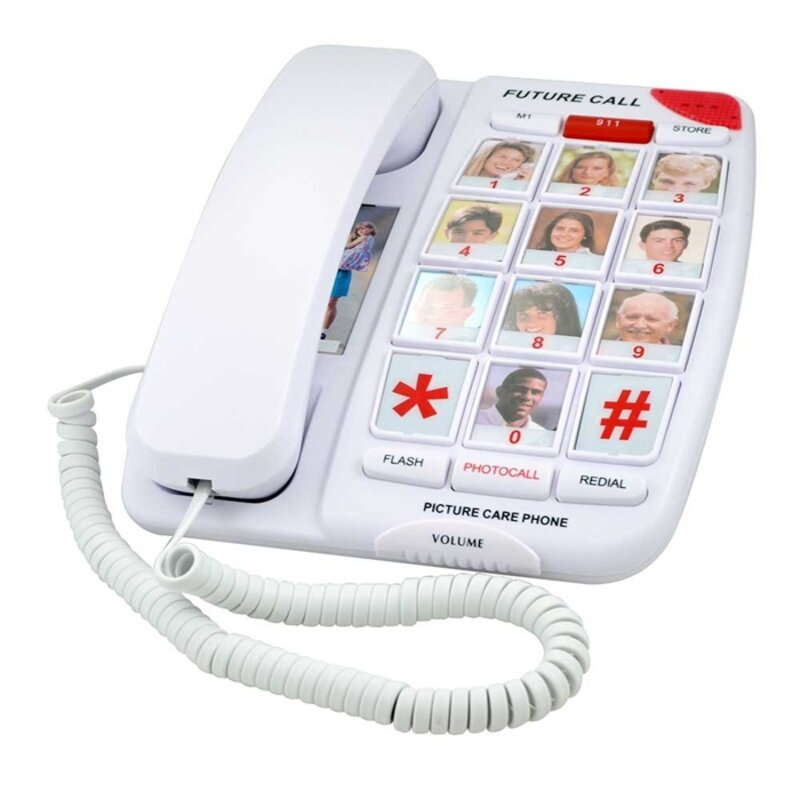
Future Call Picture Care Phone
Ten big buttons hold photos of the people your parent calls most, so they press a face instead of remembering a number. It can be set for one-button dialing, the sound is amplified, and it comes with blank button covers so only the photos show. The Alzheimer's Association lists a picture phone among its everyday gift ideas.
Watch for: It's a corded phone, so it needs a home phone line or a phone service with a standard phone jack. It has an emergency button, which the seller says can be disabled if accidental presses are a worry.
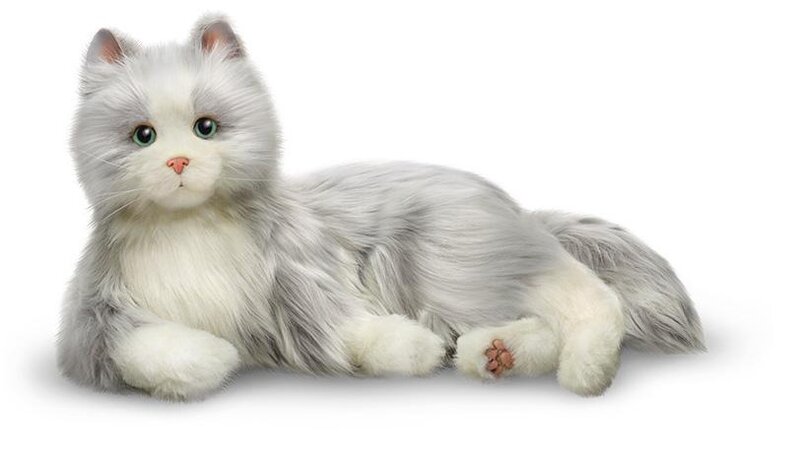
Joy for All Companion Pet Cat
A soft robotic cat that purrs, meows and moves in response to petting and hugging. Built-in sensors react to touch and motion, and the purr can be felt as well as heard. It's made for an older adult who misses having a pet, without feeding, litter or vet bills.
Watch for: It runs on four C batteries (included). Watch the first few times your parent holds it, and set it aside if it upsets or confuses them.
Last Christmas you gave your mom a tablet loaded with family photos. It's still in the box, next to the crossword books she can't follow anymore. She smiled when she opened it, then set it down and asked who it was from. Buying for someone with dementia is hard because the gifts that used to delight them can now confuse them. The ones that work are simpler than you'd think. They're familiar, they take one step to use, and they get picked up every day instead of saved for later.
Start with the stage, not the wish list
The Alzheimer's Association sorts its gift ideas by stage, and it's the most useful way to think about it. If you're not sure where your parent is, this caregiver's map of the Alzheimer's stages helps.
- Early stage: an erasable whiteboard or sticky notes for the day's plans, labeled baskets for drawers and cabinets, gift cards for rides or a favorite activity, a GPS tracker, and a memory calendar with family photos and birthdays already written in.
- Middle to late stage: playlists of favorite songs, soft and loose clothes that are easy to put on and wash, framed photos with the names written in, soothing things like a soft blanket or a handheld massage ball, and adaptive cups, plates and utensils.
- Any stage: a phone that stores pictures of family and friends, night lights that turn on by themselves when it gets dark, a clock with large type for the date and time, and an outing to a concert, a game or a museum.
What makes a gift dementia-friendly
Run any idea through these questions before you buy:
- Does it work in one step? Lift, press or hold. No menus, passwords or charging routines for your parent to remember.
- Is the setup done before it's wrapped? Load the photos, program the buttons and set the volume yourself.
- Is it familiar? A version of something they've always loved beats something new to learn.
- Will it feel adult? The Alzheimer's Association warns against activities that seem childlike or demeaning. A tote of real fabric swatches is better than a toddler toy.
- Can it be used alone and with a visitor? The best gifts give the two of you something to do together.
Photos, done right
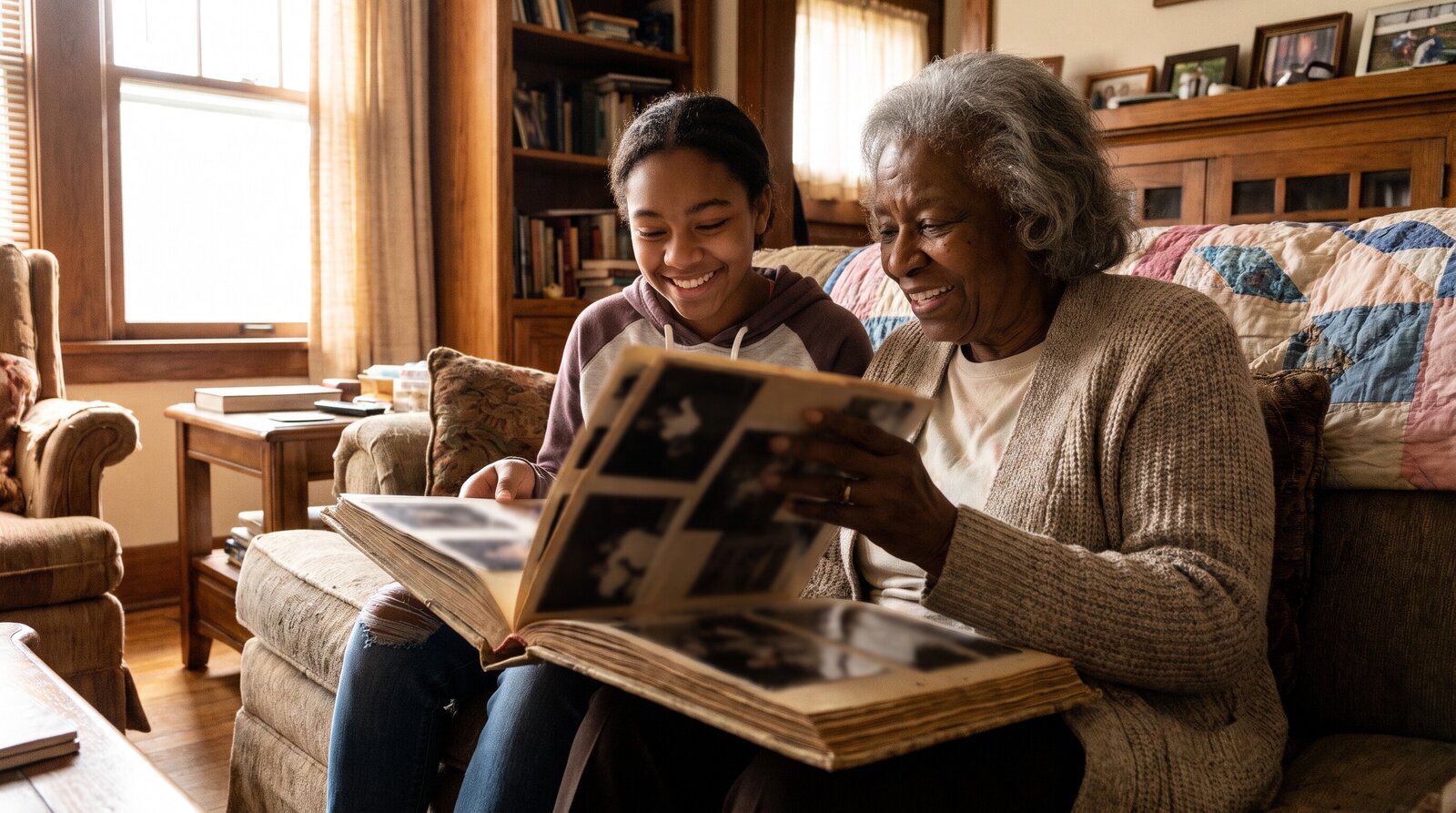
Photos are the classic gift for good reason, but how you give them matters. Write each person's name and how they're related right on the print or the caption: "Your grandson Sam, Easter 2025." The Alzheimer's Association specifically suggests adding names to help with recognition.
Mix the decades. Put the wedding photo, the first house and the old station wagon next to the grandkids, so there's something familiar on every page. One large photo per page beats a crowded collage.
Make it a family project. Ask each relative to send one photo with a two-line story: who's in it, where it was, what happened that day. Print the story on the facing page in large type. When you sit down with the album, read the stories out loud and let your parent add to them. If they get a detail wrong, let it go; the conversation is the point.
An album works well for sitting together and talking. A digital frame keeps new photos arriving between visits with nothing for your parent to do, which is why it's our first pick.


If your parent is in the early stage and still uses an iPhone, the gift fits on the phone they already know: they tap Call Tiina and tell the county fair story again, as many times as they like. No new gadget on the shelf.
Music is one of the best gifts there is
Music can reach a person with dementia when conversation is hard. According to the Alzheimer's Association, studies have shown music may reduce agitation in the middle stages, and even late in the disease a person may tap a beat or sing a song from childhood.
Build a playlist of songs your parent loved, especially from when they were young, and let them pick when they can. Choose a source without commercials, which can be confusing, keep the volume moderate, and turn off the TV so the music isn't competing with other noise.
A smart speaker can play it on request, but voice assistants can frustrate older users. Read why Alexa often fails seniors before you buy one. A family member pressing play on a visit works too.
Gifts that keep hands busy
Restlessness and agitation are common in the middle stages, and the right activity gives busy hands somewhere to go. Think of the jobs your parent did for years: folding, sorting, tending, fixing. A basket of washcloths to fold, a box of large buttons or old keys to sort, a planter with herbs to water, or a simple wooden project with a few big pieces can fill an afternoon with something that feels useful.
The Alzheimer's Association's advice on art activities applies to all of these: keep it at an adult level, build conversation into it, help get it started if needed, and use safe, nontoxic materials. A watercolor set with good paper and a few photos to paint from is a gift you can share. So is an afternoon of baking their signature cookies together, with you doing the oven.
The gift of an outing counts too. The Alzheimer's Association suggests a movie, a concert, a sporting event or a museum. Go at a quiet time of day, keep it short, and plan an easy exit if it gets to be too much. For more ways to connect, read these dementia caregiver tips from the trenches.
What to skip
Some well-meant gifts end up in a drawer, or worse, make your parent feel bad:
- Tablets, smartwatches and gadgets that need updates, passwords or charging
- Trivia games, quizzes and memory puzzles that spotlight what they've forgotten
- Clothes with small buttons, zippers or hooks that are hard to manage
- Anything that adds clutter to a space that's already confusing
- Gifts that only make sense if your parent remembers why you gave them
Don't forget the caregiver
If you're the one doing daily care, you need gifts too. The Alzheimer's Association says the most important gift for a dementia caregiver is time. Its suggestions include coupons for cleaning, cooking or mowing, and gift cards for meal delivery, laundry or a massage.
When a relative asks what they can give this year, name something specific: one Saturday afternoon a month with your parent, or a few weeks of meal delivery. And if you need a longer break, here's how to get respite care.
- Charge it, load it and test it, so it works the moment it's opened
- Write names and relationships on every photo or caption
- Program phone buttons and set volume to the level your parent prefers
- Remove packaging, tags and stickers that could confuse
- Show a caregiver or neighbor how it works, so help is nearby
- Plan to use it together on your next visit
The photos bring the stories back. Tiina is happy to hear every one.
In the early stage, between your visits, Mom sits with the album, taps Call Tiina on the phone she already knows, and tells the story behind each page to someone who never gets tired of it. Patient company is a gift that gets used every day.
Try Tiina with Mom →Frequently Asked Questions
Methodology & editorial policy
Reviewed and updated October 31, 2026 by the Tiina Editorial Team. Facts, programs and prices in this guide come from the sources listed below.
About composite scenarios. The opening scene is a composite.
About Tiina. Tiina is a voice-first AI companion for older adults: an app for iPhone and iPad that your parent opens whenever they want someone to talk to, day or night.
Sharing. Quote freely with a link back to this page. For full reprints, email hello@tiina.ai.
Sources. 5 references: Alzheimer's Association, Aura, The Alzheimer's Store, Joy for All.View all
- Alzheimer's Association. Gift Guide for Caregivers and People Living with Dementia. alz.org
- Alzheimer's Association. Art and Music. alz.org
- Aura. Carver 10-inch digital frame. amazon.com
- The Alzheimer's Store. Memory Picture Phone for Seniors. amazon.com
- Joy for All. Companion Pets Cat. amazon.com