Amplified Big Button Phones for a Parent With Hearing Loss
If your parent says "what?" on every call or has stopped answering the phone, the right amplified phone can bring the conversations back.
Some links below are affiliate links: if you buy through them, Tiina may earn a small commission at no extra cost to you. As an Amazon Associate I earn from qualifying purchases.
An amplified phone makes the caller's voice louder and clearer, with a ringer and a flashing light your parent won't miss. Look for amplification that matches their hearing loss, tone control, big backlit buttons and talking caller ID. A corded base with a cordless handset covers the most ground. If your parent still can't make out words at full volume, a captioned phone that shows the caller's words on a screen is the next step.
We're not doctors or audiologists. A phone can make calls easier, but it doesn't replace a hearing test. If your parent's hearing drops suddenly in one or both ears, treat it as an emergency and get them to a doctor right away; prompt treatment gives the best chance of recovering hearing.
Two amplified phones worth buying
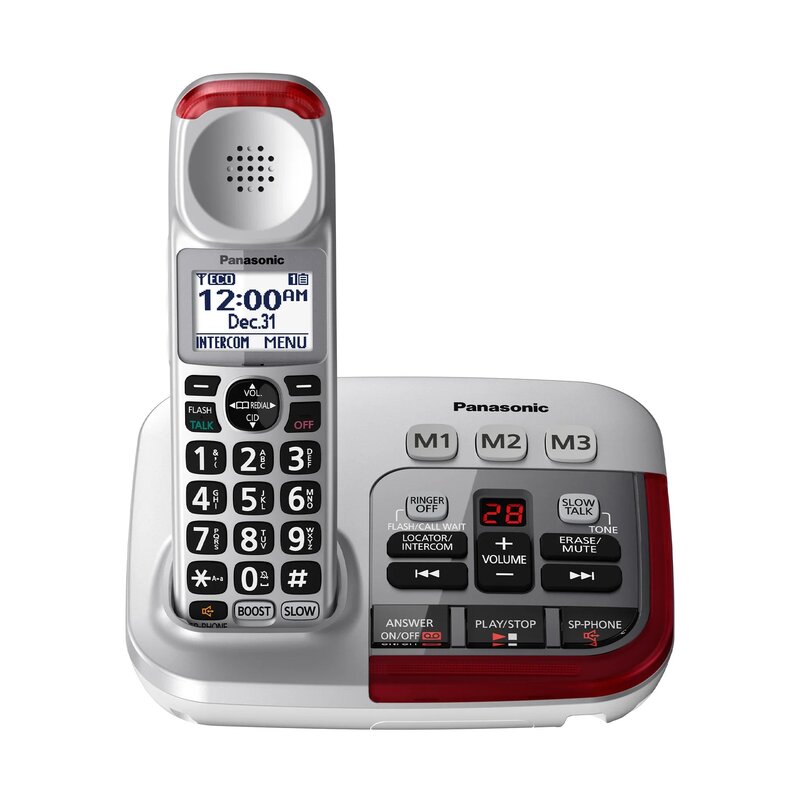
Panasonic KX-TGM450S Amplified Cordless Phone
Up to 50 dB of voice amplification, six tone settings and a Slow Talk button, with a 112 dB ringer and bright LED ring lights. Large backlit buttons, talking caller ID, call blocking, an answering machine and power backup. It works on any home phone line and expands to six handsets.
Watch for: Louder isn't always clearer. If your parent still misses words at full volume, they need captions instead. The handset has to go back on its base to stay charged.
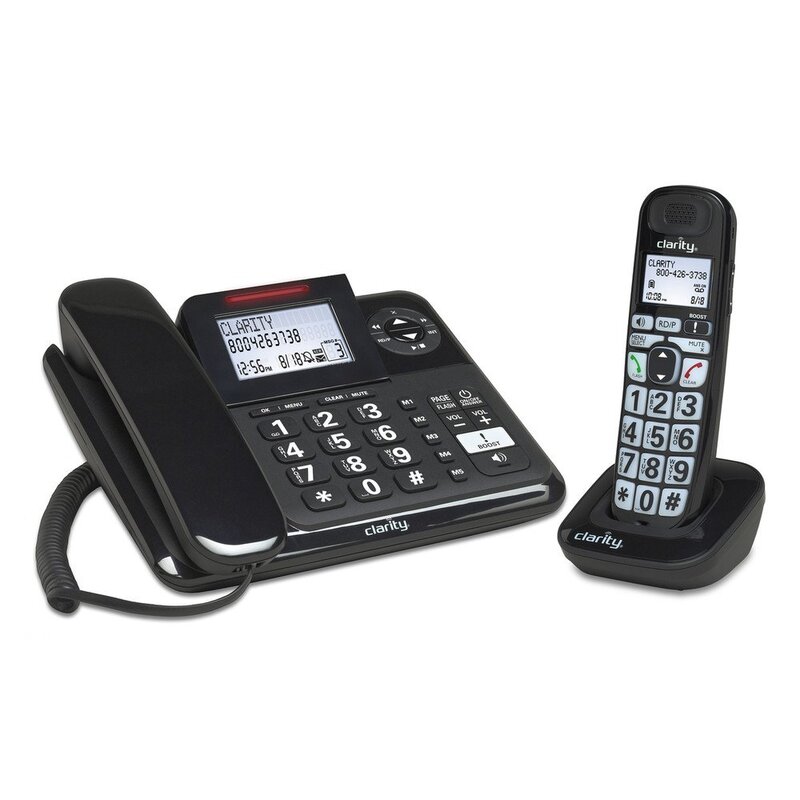
Clarity E814CC Amplified Corded/Cordless Phone
A big button corded phone and a cordless handset in one box, so one phone stays on the desk and one goes room to room. It amplifies incoming sound up to 40 decibels, and the answering machine plays messages back amplified too. The large, high-contrast caller ID screen lights up as a bright visual ringer, the speakerphone is extra loud, and five speed-dial buttons hold the numbers your parent calls most. It's hearing aid compatible and takes up to four cordless handsets. If the power goes out, the corded handset can still make and answer calls.
Watch for: At up to 40 decibels, it's a step above Clarity's mild-to-moderate phones; for the most volume, look at the Panasonic, which goes to 50. The cordless handset only works while the base has power, and stored numbers can't be dialed during an outage.
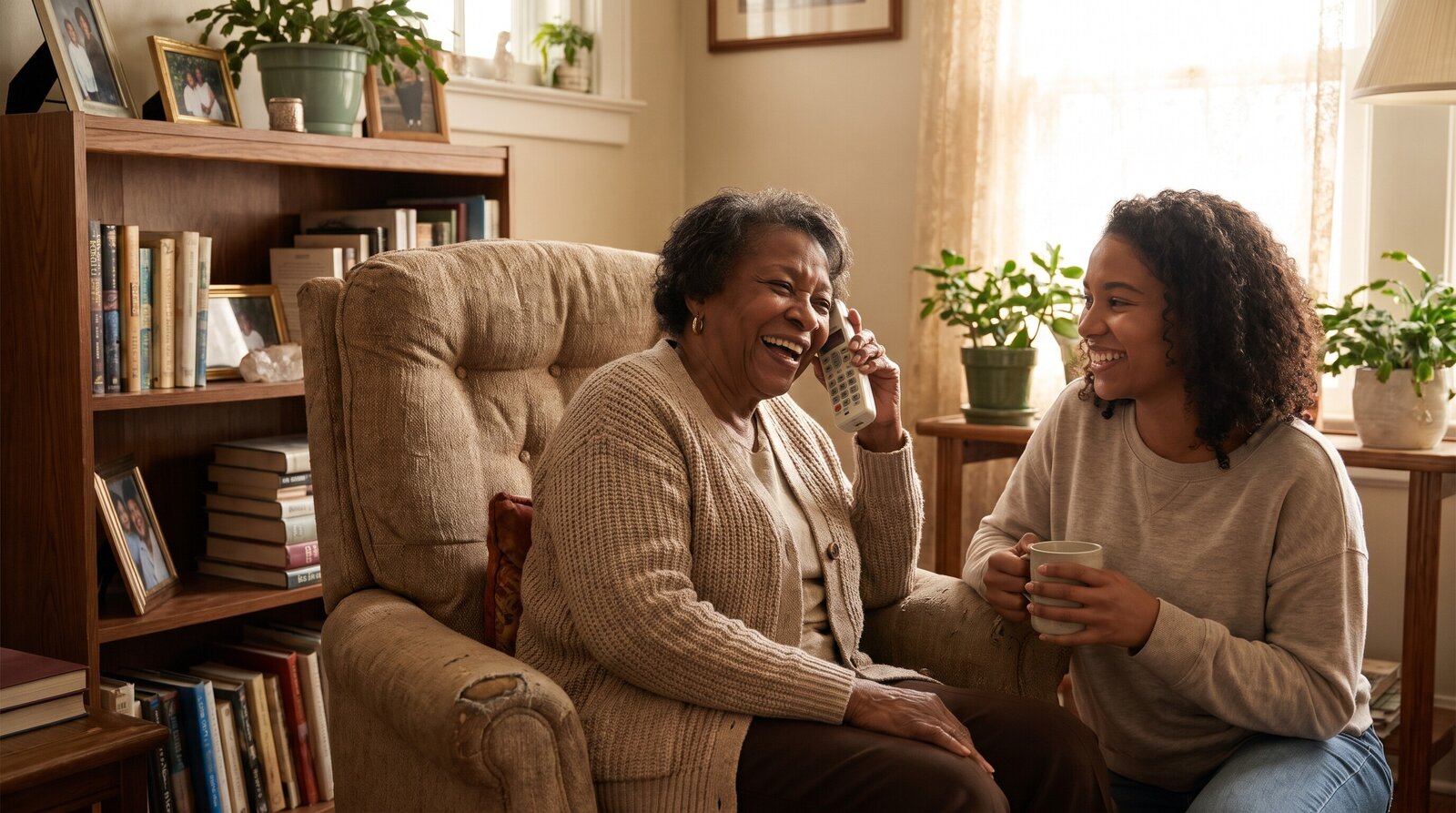
Your mom used to call every Sunday. Now she lets it ring. When you do reach her, the call is mostly "What?" and "Say that again," and she wraps it up early, a little embarrassed. She isn't avoiding you. She's avoiding the phone, because she can't hear it well enough to enjoy it anymore. Hearing loss does this quietly. It doesn't announce itself; it just makes the phone feel like work. The right phone makes your voice louder and clearer without changing a thing about how she makes a call.
Signs the phone has become the problem
Hearing loss is common and creeps up slowly. About one in three people ages 65 to 74 has hearing loss, and nearly half of those over 75 have difficulty hearing, according to the National Institute on Deafness and Other Communication Disorders. The phone is often where it shows first, because there are no lips to read and no face to watch.
Watch for these:
- They ask you to repeat yourself several times a call, or answer a question you didn't ask.
- The handset volume is turned all the way up.
- They let calls go to voicemail, or say "just text me" when they never used to.
- They mishear names, times and numbers, which matters when the doctor's office calls.
- They end calls early or hand the phone to someone else.
Amplified phone or captioned phone?
There are two kinds of home phones built for hearing loss, and they solve different problems.
An amplified phone makes voices louder. Good ones also let you adjust the tone and slow speech down. They work on a regular home phone line, anyone in the house can use them, and they suit mild to moderate hearing loss. Clarity, which makes amplified phones, says its mild-to-moderate phones amplify incoming sound by 25 to 35 decibels, with stronger models going higher.
A captioned phone shows the words. Your parent hears the caller and reads along on a screen. It's the answer when louder stops meaning clearer: your parent hears that you're talking but can't make out the words. For people whose hearing loss means they need captions, these phones can be free. The Hearing Loss Association of America notes that some states provide captioned phones at no charge to people with hearing loss.
For most parents, start with a good amplified phone. If they still say "what?" with the volume all the way up, that's your sign to look into captions.
What to look for in an amplified phone
Amplified phones look alike on the shelf. These are the features that make the difference for a parent with hearing loss:
- Amplification listed in decibels (dB). Clarity rates 25 to 35 dB for mild to moderate loss, and its 50 dB phones are built for moderate to severe loss.
- Tone control and a "slow talk" button that slows the caller's speech.
- A very loud ringer plus a flashing light, so calls aren't missed from the next room.
- Big, backlit buttons and talking caller ID that announces who's calling.
- Call blocking, which also cuts the robocalls that make people stop answering. Pair it with this robocall blocker setup.
- Hearing aid compatibility if your parent wears hearing aids. The Hearing Loss Association of America suggests checking the box for the "HAC" stamp.
- A way to call in a power outage: battery backup, or a corded handset that works without power.

The amplified phone brings your voice through clearly. Between calls, your parent can tap Call Tiina and ask in their own words, and she explains things clearly and says them again as many times as they need, with no rush and no sigh.
Corded, cordless or both
A cordless handset goes where your parent goes, which matters when getting up to answer is slow or risky. The catch is that it has to go back on its charger, and a dead handset is a missed call. A corded phone never needs charging, but it stays on the desk.
For many parents the best setup is both: a corded base where they sit most, plus a cordless handset by the bed or the favorite chair. Both phones we picked let you add more handsets later, so you can put one in every room your parent uses.
Think about power outages, too. Most cordless handsets stop working when the base loses power, unless the phone has a battery backup. A phone with battery backup, or a corded handset that still works when the lights go out, keeps your parent reachable as long as the phone line itself is working. If you've filled in the storm plan sheet, add the phone to it.
Setting it up so your parent actually uses it
A new phone your parent doesn't trust ends up in a drawer. Set it up together, in person if you can, and keep it simple:
- Put it where they sit. Next to their chair or bed, close to a power outlet and the phone jack, with a cordless handset in the other room they use most.
- Set the volume together. Start low and raise it until your voice is clear, not just loud. Clarity's user guide warns that long stretches at very high volume can harm hearing, and says to turn the volume down before pressing Boost.
- Practice the volume button mid-call. Find the boost or volume control together, and have your parent turn it up and down while you talk, so it's second nature when a soft-spoken caller rings.
- Store the numbers that matter. Put you, the doctor's office and the pharmacy on the speed-dial buttons, and save them in the phonebook so caller ID shows who's calling.
- Turn on call blocking. Block repeat robocallers as they come in, so the calls that ring are ones worth answering.
- Make a test call. Call from another room or from your own phone, talk normally, and adjust the tone until your voice sounds natural to your parent.
Get their hearing checked, too
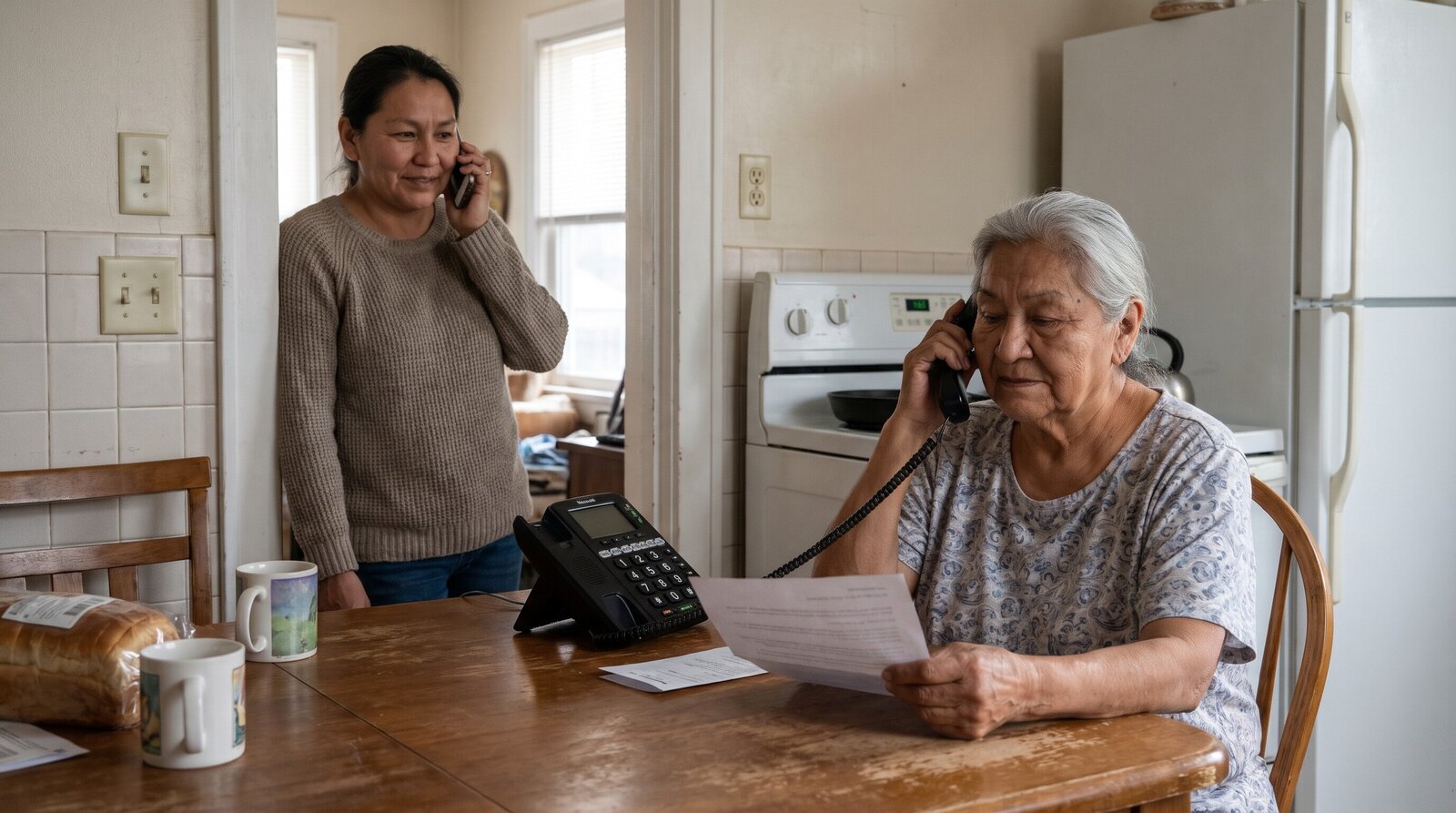
A better phone helps on calls. It doesn't help at the dinner table, at the doctor's office or in front of the TV. If your parent hasn't had a hearing test in a while, that's the other half of this, and here's what hearing aids for seniors cost and what covers them.
Once the new phone is in, tell the doctor's office and the pharmacy that your parent hears best on the home phone, and ask them to call that number first.
If your parent also carries an iPhone, these iPhone settings for seniors make that phone easier to hear and see, too.
With the amplified phone, Sunday calls sound like conversations again.
With the amplified phone, your mom hears you clearly on Sunday. The rest of the week, she taps Call Tiina and finds someone who speaks clearly, explains things in plain words and is glad to say them again as often as she asks.
Try Tiina with Mom →Frequently Asked Questions
Methodology & editorial policy
Reviewed and updated October 31, 2026 by the Tiina Editorial Team. Facts, programs and prices in this guide come from the sources listed below.
About composite scenarios. The opening scene is a composite drawn from common caregiver experiences, not one family's story.
About Tiina. Tiina is a voice-first AI companion for older adults: an app for iPhone and iPad that your parent opens whenever they want someone to talk to, day or night.
Sharing. Quote freely with a link back to this page. For full reprints, email hello@tiina.ai.
Sources. 7 references: NIDCD, Hearing Loss Association of America, Clarity, Panasonic.View all
- NIDCD. Age-Related Hearing Loss (Presbycusis). nidcd.nih.gov
- NIDCD. Sudden Deafness. nidcd.nih.gov
- Hearing Loss Association of America. Captioning. hearingloss.org
- Hearing Loss Association of America. Phones and Mobile Devices. hearingloss.org
- Clarity. Amplified and low vision phones. amazon.com
- Clarity. E814CC user guide. clarityproducts.com
- Panasonic. Amplified Cordless Phone KX-TGM450. amazon.com