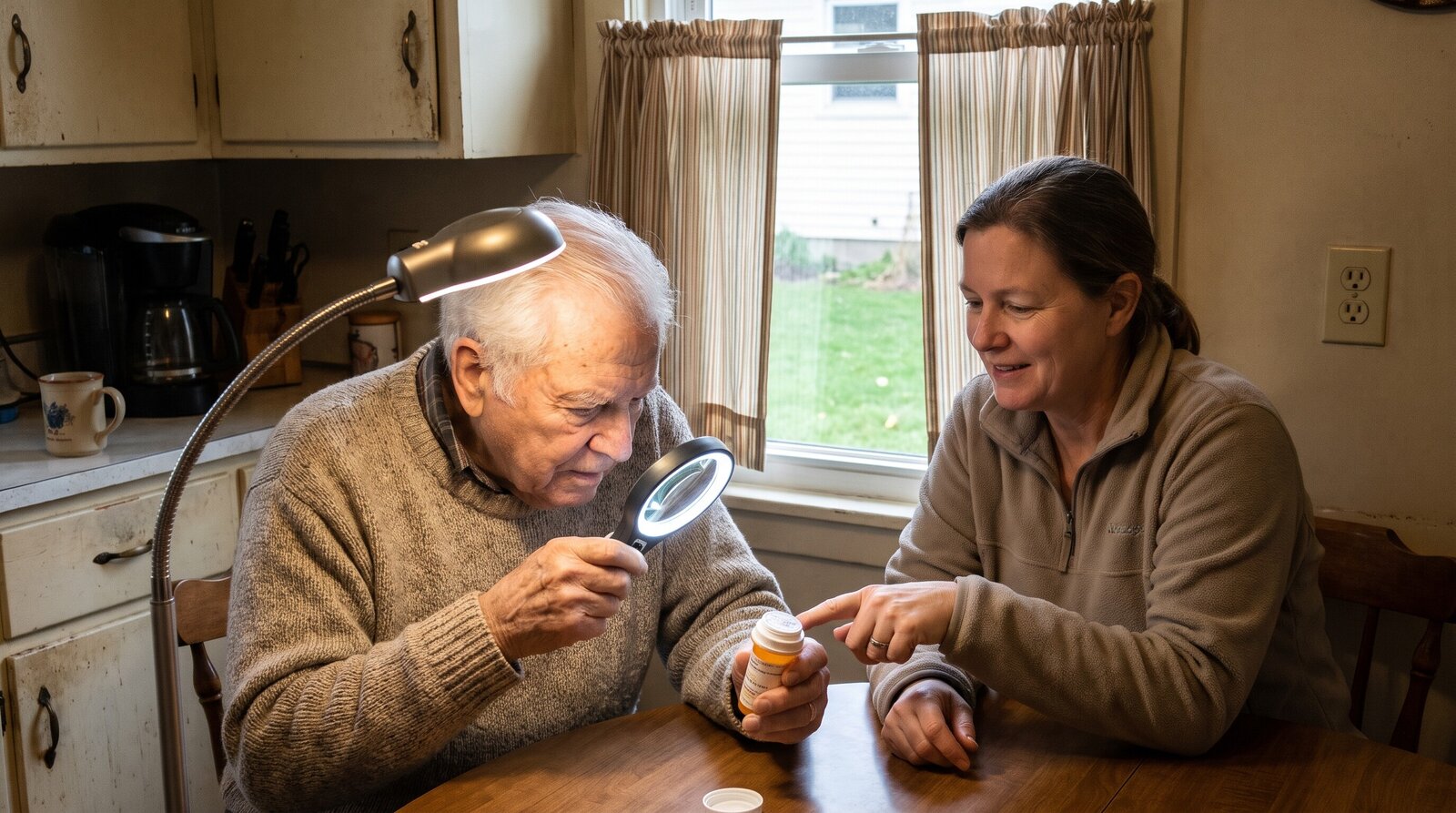
Low Vision Aids: How to Help a Parent Keep Reading and Cooking
Stronger glasses can't fix low vision. Light, contrast, the right magnifier and talking tools can, and a lot of the help is free.
Some links below are affiliate links: if you buy through them, Tiina may earn a small commission at no extra cost to you. As an Amazon Associate I earn from qualifying purchases.
Start with the eye doctor and ask for a referral to vision rehabilitation, where a specialist matches tools to your parent's eyes and daily tasks. Meanwhile, the cheap fixes work: a bright lamp aimed at the task, less glare, bold contrast and the free magnifier and read-aloud tools already on their phone. Free talking books come from the National Library Service. Medicare usually won't pay for magnifiers.
We're not doctors, and this is general information. Any sudden change in vision needs a doctor right away: sudden blurring, a blind spot, double vision, or a shadow or curtain across the view. If sudden trouble seeing comes with numbness, confusion or trouble speaking, it can be a stroke. Call 911.
Three low vision aids worth buying
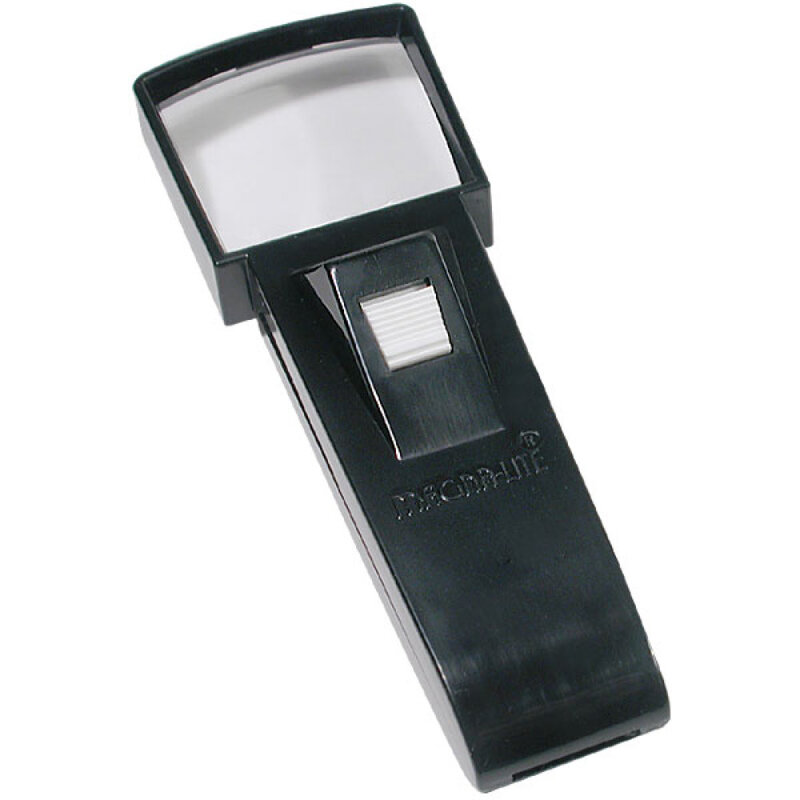
MaxiAids Illuminated Magnifier
A pocket-size lighted magnifier for quick looks: a prescription label, a price tag, a restaurant menu. The built-in light does the work in dim rooms, and 3x is strong enough for most print without shrinking the view to a few letters. Two AAA batteries are included.
Watch for: It's a 1.5-inch lens, so it suits spot reading, not whole pages. For daily mail or a book, ask the low vision specialist about a stand or video magnifier.
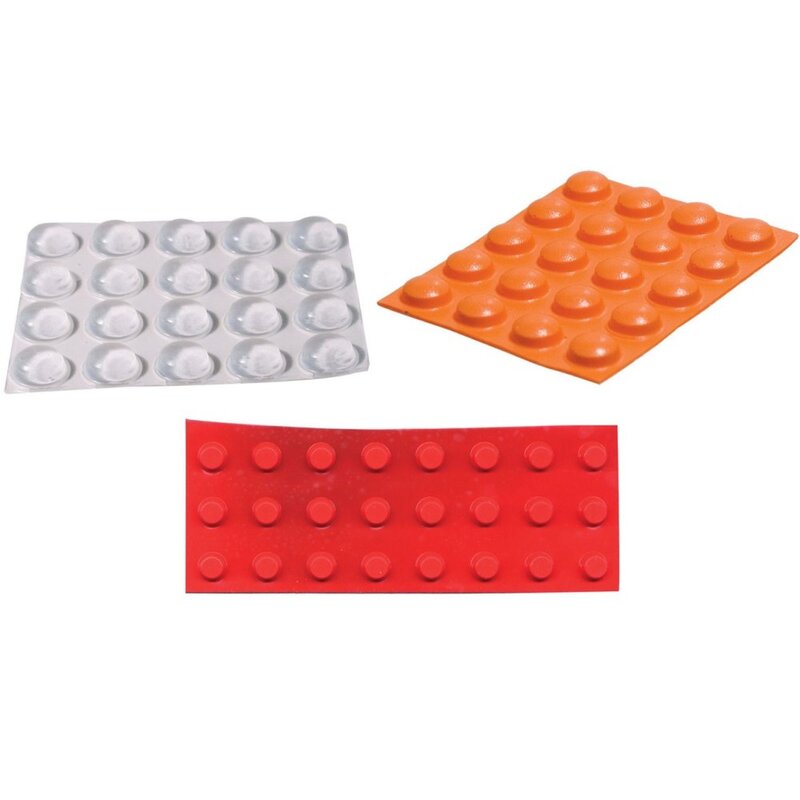
Bump Dots Mixed Pack, 64 pieces
Raised dots that stick to anything your parent needs to find by touch: the stove's off position, the microwave's start button, the thermostat, the washer's one cycle they use. A mixed pack covers the whole kitchen with dots to spare, and the bright colors help a parent who still has some sight.
Watch for: Clean the surface first so they stay put, and put them on together so your parent knows what each dot means. Keep them off anything hot.
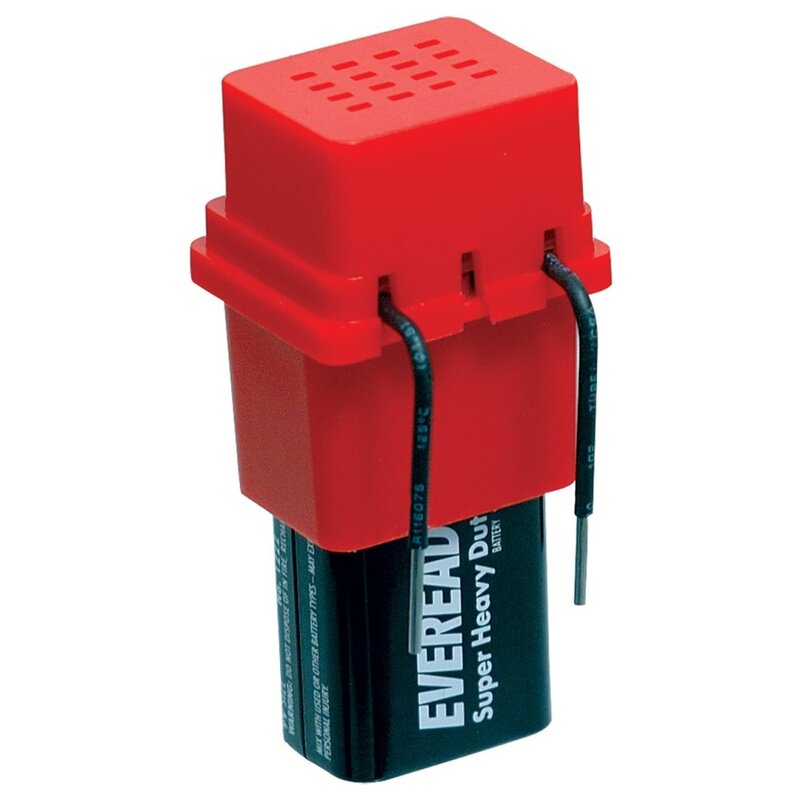
Vibrating Liquid Level Indicator
It hangs on the lip of a mug or glass, and when the liquid reaches the probes it vibrates so your parent stops pouring before it overflows. For someone who can't see the level in a dark mug, it turns the most common kitchen burn into a non-event. One 9-volt battery is included.
Watch for: It's for cups and mugs, not pots. If your parent can't hear well, this vibrating version beats the beeping one.
Your dad used to do the crossword in pen. Now the paper sits folded by his chair, and when you ask, he says the print got smaller. Last week he poured orange juice into his coffee instead of milk. He isn't careless. His eyesight is fading in a way new glasses won't fix, and he's quietly giving up the things he can't see well enough to do. The good news is that most of what helps is inexpensive, some of it is free, and a few of the best tools are already in his pocket.
What low vision is, and the appointment to make first
Low vision is vision loss that makes everyday tasks hard and can't be fixed with glasses, contact lenses, medicine or surgery, according to the National Eye Institute. The most common causes are age-related macular degeneration, cataracts, diabetic retinopathy and glaucoma. Aging alone doesn't cause it, which is why a dilated eye exam comes first.
The signs usually show up as dropped habits before anyone says the word vision. Watch for:
- Mail piling up unopened, or bills paid late
- Spills, burns or scorched pots in the kitchen
- Sitting right in front of the TV, or giving up the newspaper
- Missing a step, or reaching for the wall in dim rooms
- Not recognizing people until they speak
Ask for vision rehabilitation
If your parent's eyesight is getting in the way of daily life, ask the eye doctor for a referral to vision rehabilitation. NEI describes it as training with magnifying devices, help setting up the home so it's easier to get around, and help adjusting phone and computer settings. A low vision specialist can also prescribe a magnifier of the right strength for your parent's eyes.
Go to that appointment with a short list of the three things your parent misses most: reading recipes, paying bills, seeing faces at church. Rehab works best when it's aimed at real tasks. Here's how to prepare for the visit so the right questions get asked.
Light, glare and contrast: the cheapest fixes
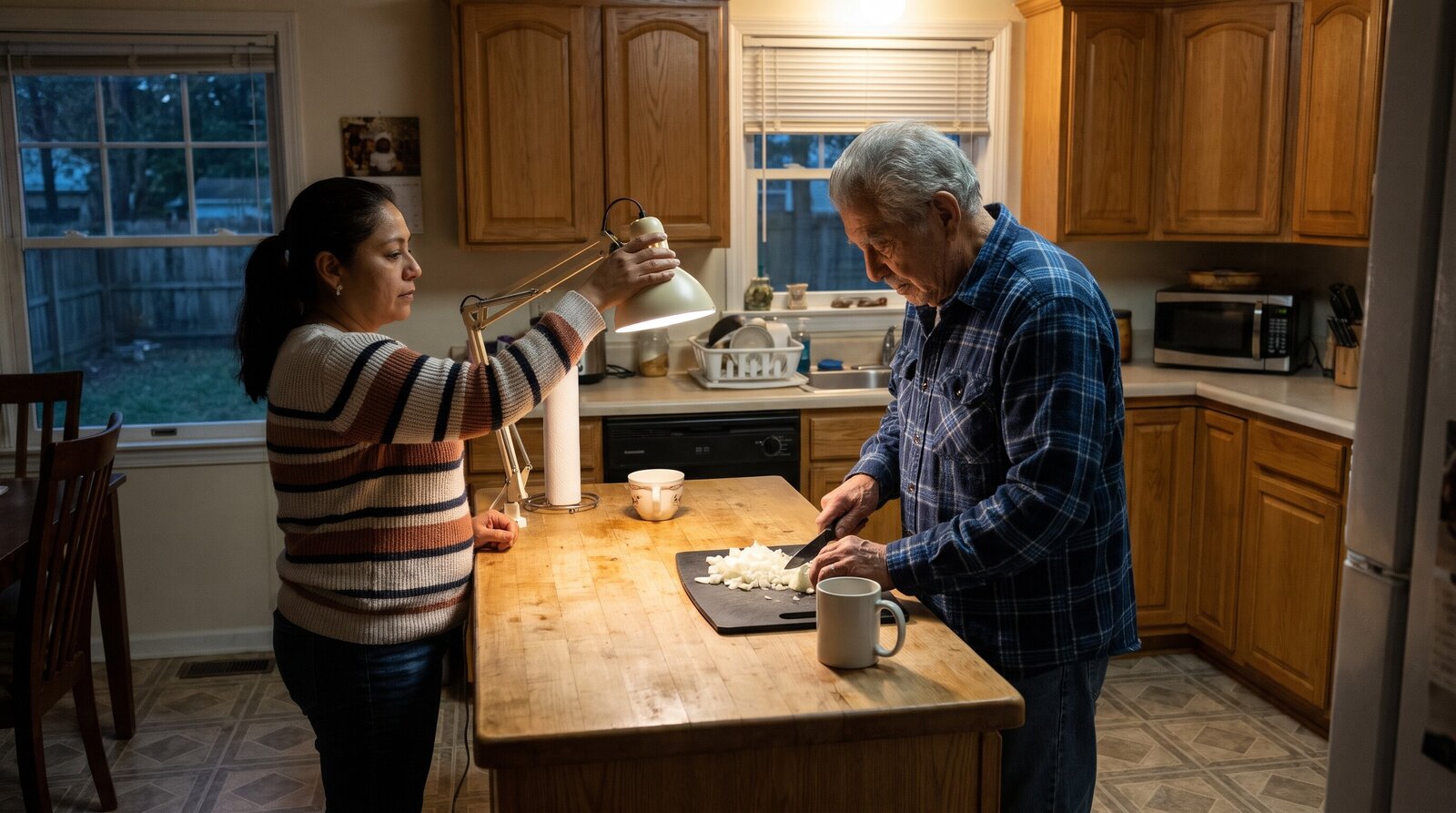
Brighter light is the first thing NEI recommends, and it costs the least. Put an adjustable lamp right where your parent reads, sorts pills and chops vegetables, and aim it at the task, not at their eyes. Light hallways and stairs evenly, so there's no dark stretch between rooms. Our home fixes for fall prevention cover the night path.
Glare is its own problem. Sheer curtains soften window glare, and anti-glare sunglasses help outside.
Contrast makes things visible without making them bigger:
- A dark cutting board for onions and a light one for tomatoes
- A white mug for coffee, a dark plate under rice or eggs
- Bright tape on the edge of each step
- Raised bump dots on the stove's off position, the microwave's start button and the thermostat
- Bold-lined paper and a thick black marker for lists and phone numbers

The magnifier enlarges the letter; Tiina explains it. Your parent shares a photo of the bill or the small print and hears what it says in plain words, as many times as they need.
Magnifiers: match the type to the job
There's no single best magnifier. Different jobs need different ones, which is why a low vision exam is worth it before you spend much.
- Handheld magnifiers are for quick looks: a price tag, a prescription label, a menu. Lighted ones help in dim stores and restaurants.
- Stand magnifiers rest on the page, so the distance stays right. They suit longer reading and hands that shake.
- Video magnifiers use a camera and screen to enlarge print and boost contrast. They cost the most, and they're built for longer reading, like going through the day's mail.
- Stronger isn't always better. A more powerful lens shows less of the page at once, which can make reading slower. Let the specialist pick the strength.
Cooking and pills: the two jobs to make safe first
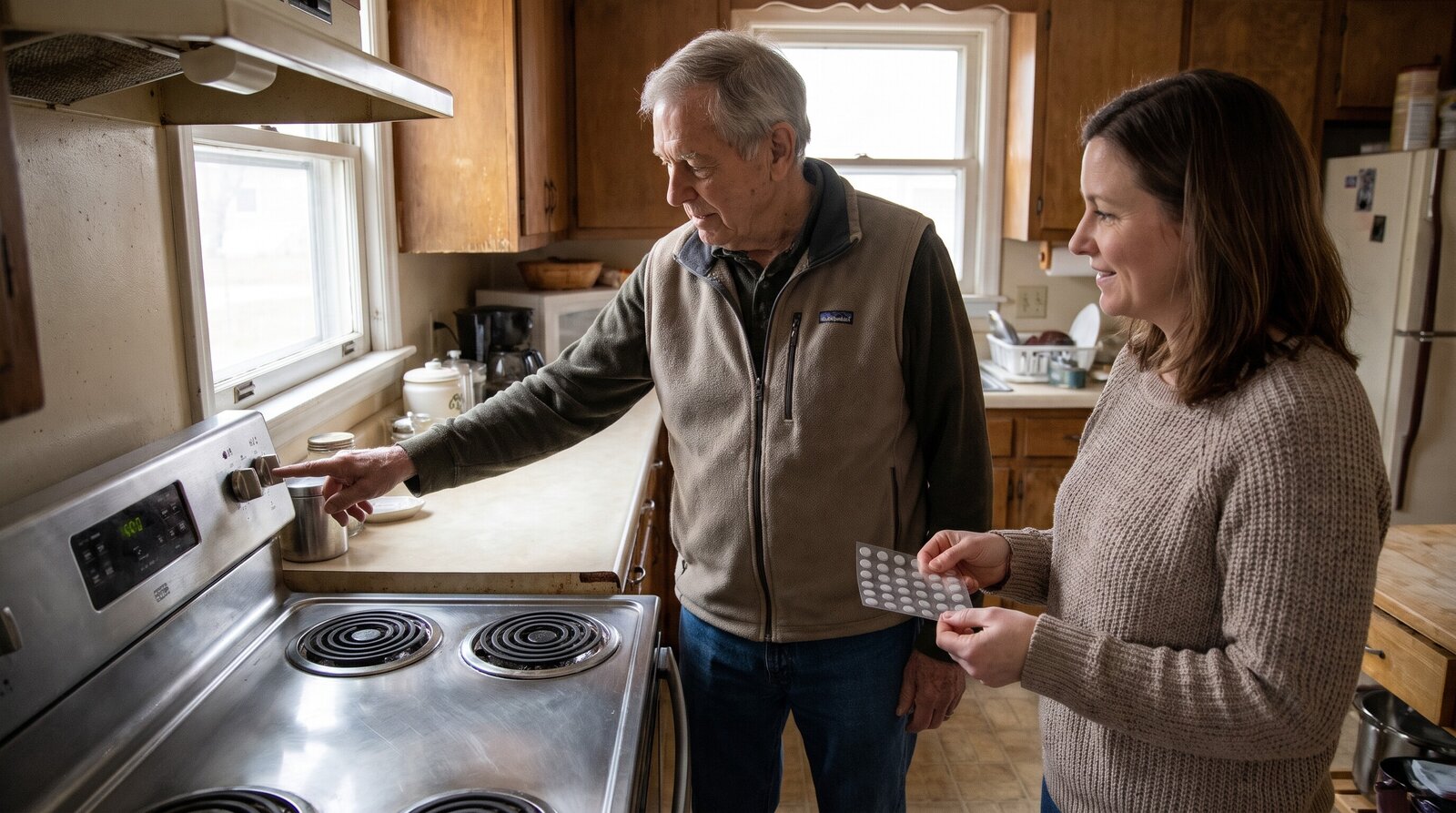
The kitchen and the pill box are where poor vision causes real harm, so start there. In the kitchen, keep the setup the same every day so your parent can find things by memory, and mark the controls they use most with bump dots. A talking or large-number timer beats squinting at the oven clock. A liquid level indicator, a small device that hangs on the cup and signals when it's nearly full, prevents hot-water burns. Long oven mitts and a microwave at counter height make heating food safer than reaching over a burner.
If you're finding scorched pans or burners left on, that's a safety problem as much as a vision one. Here's what to do when a parent forgets the stove.
For pills, ask the pharmacist for large-print labels and, if the bottles all look alike, for caps in different colors or a pharmacy that sorts pills into packets by date and time. Put a lamp and a magnifier right where the pills are taken, and keep an up-to-date medication list in large type on the fridge.
Their phone is already a low vision tool
If your parent has an iPhone, the built-in Magnifier app turns the camera into a magnifying glass, freezes a frame so they can study it, and can read text out loud. Apple warns not to rely on its detection features in risky situations, so it's for menus and mail, not crossing streets.
Be My Eyes is a free app that connects a person with low vision to a volunteer who looks through the phone's camera and says what's there: the expiration date on the milk, the setting on the oven. Pair these with bigger text, bolder fonts and spoken content in Settings. These 10 iPhone settings for seniors take about 20 minutes to set up.
Free help most families never hear about
The Library of Congress runs the National Library Service for the Blind and Print Disabled, a free audiobook and braille library for people whose vision makes print hard to read. There's no cost to readers. Books and players arrive by mail and go back the same way, postage free, and books can also be downloaded to a phone. A librarian can often certify eligibility over the phone. Call 1-888-NLS-READ to reach your state's talking-book library.
Every state also runs a program for people 55 and older with serious vision loss, funded through the federal Independent Living Services for Older Individuals Who Are Blind program. It teaches skills like cooking, grooming, getting around and using assistive technology. Find your state's agency through the APH ConnectCenter directory.
Hadley offers free how-to lessons, discussion groups and peer support for adults adjusting to vision loss, and its helpline is 1-800-323-4238.
On cost: Medicare Part B usually doesn't cover eyeglasses, and magnifiers are generally out of pocket. It does cover one pair of glasses with standard frames after cataract surgery with an implanted lens. Some Medicare Advantage plans add vision benefits, so call the plan and ask.
- Sit in their reading chair at night with the usual lamp on and try to read a pill bottle
- Add a bright, adjustable lamp at the reading chair, the kitchen counter and wherever pills are sorted
- Put bright tape on step edges and a light in every hallway and stairwell
- Stick bump dots on the stove off position, the microwave start button and the thermostat
- Swap in contrast: dark and light cutting boards, white mugs, a dark placemat
- Write the most-called phone numbers in thick marker on a card by the phone
- Turn on bigger text, bold text and the Magnifier shortcut on their phone
- Call the state talking-book library and start the free enrollment
Low vision doesn't keep Dad out of his own mail anymore.
The lamp and the magnifier bring back the crossword. Tiina explains the fine print, and he decides what to do next, the way he always has.
Try Tiina with Dad →Frequently Asked Questions
Methodology & editorial policy
Reviewed and updated October 31, 2026 by the Tiina Editorial Team. Facts, programs and prices in this guide come from the sources listed below.
About composite scenarios. The opening scene is a composite.
About Tiina. Tiina is a voice-first AI companion for older adults: an app for iPhone and iPad that your parent opens whenever they want someone to talk to, day or night.
Sharing. Quote freely with a link back to this page. For full reprints, email hello@tiina.ai.
Sources. 13 references: National Eye Institute, MedlinePlus, Library of Congress, Rehabilitation Services Administration, APH ConnectCenter, Medicare.gov, Apple Support, Be My Eyes, Hadley, MaxiAids.View all
- National Eye Institute. Low Vision. nei.nih.gov
- MedlinePlus. Vision problems. medlineplus.gov
- Library of Congress. National Library Service for the Blind and Print Disabled: Frequently Asked Questions. loc.gov
- Library of Congress. How to Enroll (NLS). loc.gov
- Rehabilitation Services Administration. Independent Living Services for Older Individuals Who Are Blind (IL-OIB). rsa.ed.gov
- APH ConnectCenter. Blindness and Low Vision Support Resources. aphconnectcenter.org
- Medicare.gov. Eyeglasses & contact lenses coverage. medicare.gov
- Apple Support. Magnify or get information about things around you with Magnifier on iPhone. support.apple.com
- Be My Eyes. Be My Eyes app. bemyeyes.com
- Hadley. Help for Adults Living with Vision Loss. hadleyhelps.org
- MaxiAids. Illuminated Magnifier. amazon.com
- MaxiAids. Bump Dots Mixed Pack, 64 pcs. amazon.com
- MaxiAids. Vibrating Liquid Level Indicator. amazon.com