Blister Packs for Medication: Get a Parent's Pills Sorted by the Pharmacy
Instead of filling a weekly pill box, let the pharmacy do it. How multi-dose packs work, who offers them and what to ask before you switch.
Some links below are affiliate links: if you buy through them, Tiina may earn a small commission at no extra cost to you. As an Amazon Associate I earn from qualifying purchases.
Blister packs and pill packets are medicines sorted by the pharmacy: each dose comes sealed and labeled with the date and time to take it. Amazon Pharmacy's PillPack does it at no extra cost for people with two or more eligible prescriptions, and some local pharmacies offer blister cards, sometimes for a fee. Before you switch, ask who updates the packs when a dose changes.
We're not doctors or pharmacists, and this is general information. Never change, skip or rearrange your parent's medicines without asking their doctor or pharmacist. If your parent may have taken the wrong pills or a double dose, call Poison Control at 1-800-222-1222 or use its online tool. Call 911 if they collapse, have a seizure, have trouble breathing or can't be woken up.
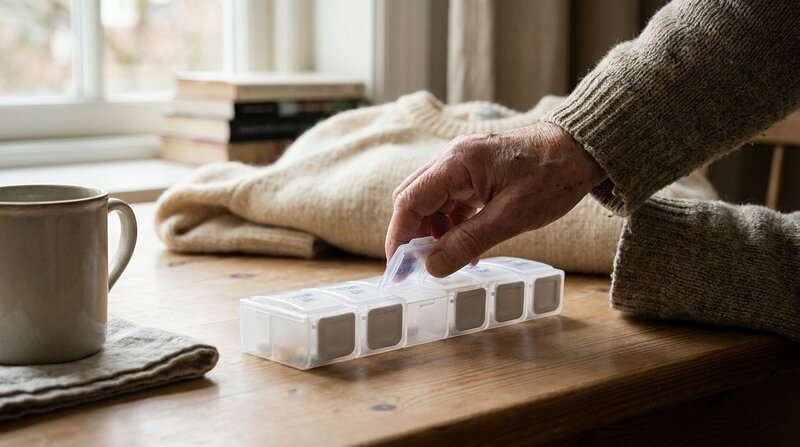
Every Sunday night you sit at your dad's kitchen table with eleven bottles and a 28-slot pill organizer. It takes forty minutes. Twice this year you've found Tuesday's morning pills still in their slot on Thursday, and once a new prescription never made it into the box at all. You're not doing it wrong. Sorting a stack of medicines by hand every week is a job pharmacies can take over, and some will do it at no extra cost. Here's how it works and how to set it up.
What blister packs and pill packets are
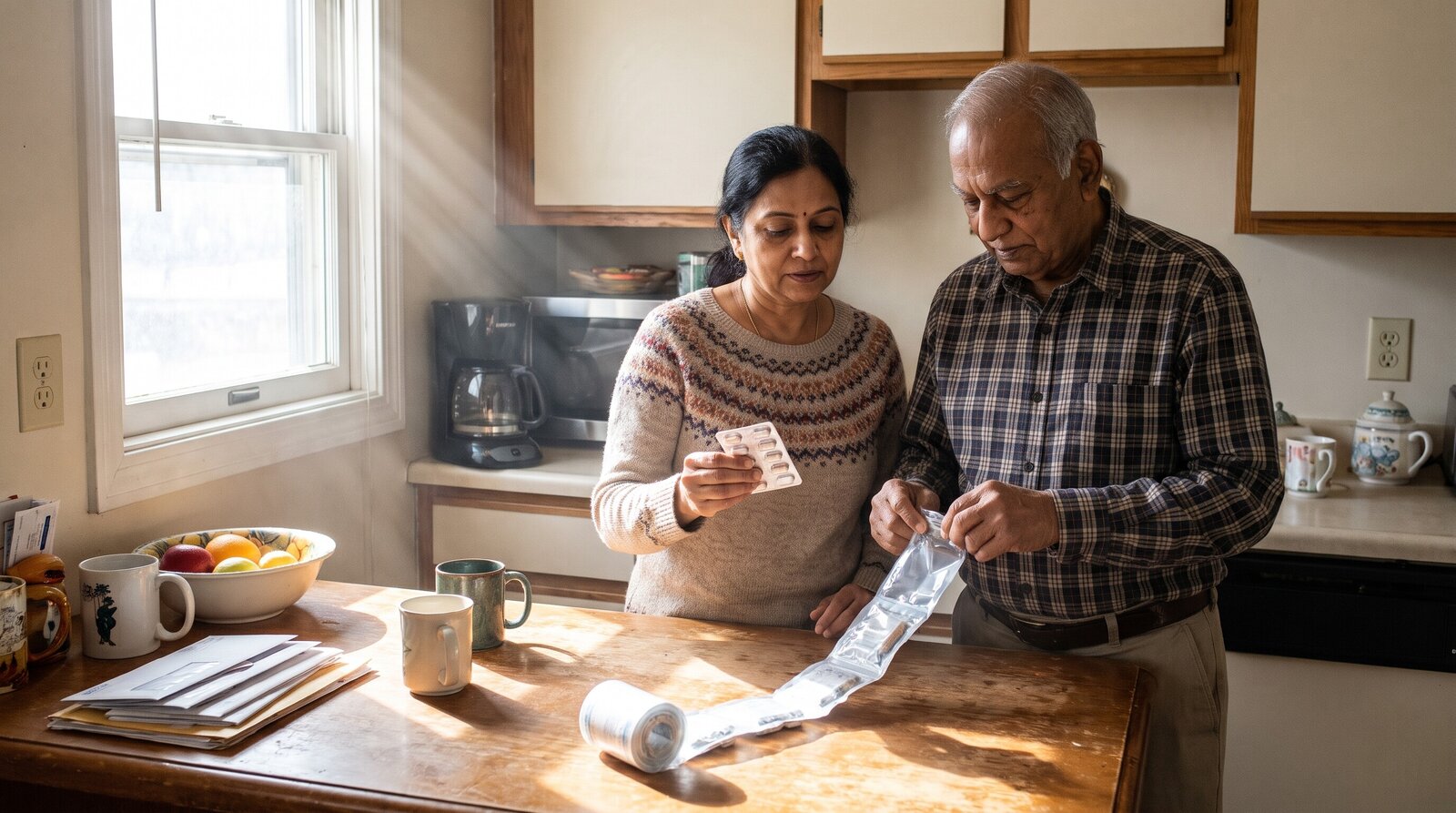
Pharmacies call it multi-dose packaging, adherence packaging, blister packs or bubble packs. The idea is the same: the pharmacist sorts all of your parent's pills by the time of day they're taken and seals each dose in its own pocket, labeled with the date and time.
It comes in two main formats:
- Blister cards. A card of clear plastic bubbles, one for each dose time, covering a week or more. Your parent pushes the pills out through the foil backing.
- Pouch strips. A roll of small plastic packets, one per dose time, printed with the date, time and each pill's name. Your parent tears off the next packet and opens it.
Why it helps
Nobody has to sort pills anymore, and nobody has to remember whether Tuesday's evening dose went down. If the packet for this morning is still there, it wasn't taken. You can see it at a glance on a visit or a video call.
Consumer Reports notes that presorted packs are thought to cut down on mistakes like taking the wrong drug or taking it at the wrong time, and that taking five or more medications raises the risk of those mistakes.
It suits a parent who takes several daily medicines at different times, has mild memory trouble, finds tiny bottle labels hard to read, or relies on you to fill a pill box every week. If your parent's eyesight is the issue, these low vision aids help with the rest of the label reading.
Who offers it
Amazon Pharmacy's PillPack. PillPack sorts medications into packets by date and time and mails them to the door. The service and delivery are free; you pay only for the medicines, and it accepts most major insurance plans. Your parent needs two or more eligible prescriptions, and refills arrive every 30 days. It can take a few shipments to get every medicine into packets, so some may come in bottles at first. Each month it sends a list of every medicine with dose instructions and pictures of each pill. A trusted family member can be invited to help manage the account. It isn't available with every insurance plan or in every state, so check on the sign-up page or call (855) 745-5725.
Local pharmacies. The big chains mostly don't. CVS ended its SimpleDose multi-dose packaging in March 2023 and told patients its stores can't offer multi-dose packaging. Independent pharmacies are the best bet. Many use blister-card systems such as Dispill or Medicine-On-Time, where each dose sits in its own labeled blister with a pull tab. Find independents near your parent with the NCPA pharmacy locator, then call and ask for adherence packaging or blister packs by name. Some include it; others charge a monthly fee. If your parent's current pharmacist offers it, that's worth something: they already know the history.
Before any switch, ask whether your parent qualifies for Medication Therapy Management. Medicare drug plans must offer it to members who meet certain requirements, at no cost, and it usually includes a full review of every medicine with a pharmacist. Simplifying the list first makes the packs simpler too.

With notifications on, your parent can ask Tiina to remind them when it's time for the morning packet, then stay on the line and talk through whatever else is on their mind.
How to switch, step by step
Expect the changeover to take a few weeks. PillPack, for one, says it can take a few shipments to get every medicine into packets.
- Make a complete medication list, including over-the-counter pills, vitamins and supplements. Here's what to put on a parent's medication list.
- Ask the doctor or pharmacist to review it, and to line up refill dates so everything renews at once. Until the packs take over, keep tracking refills on the refills sheet from your Survival Guide.
- Pick the pharmacy and ask the questions below before you commit.
- Have the new pharmacy transfer the prescriptions. They can request them from the old one.
- Keep the old system running until every medicine has moved into packs. Don't throw away bottles until the pharmacist says each one is covered.
- Do the first week together. Show your parent where today's packet is and where the empty ones go.
Questions to ask before you switch
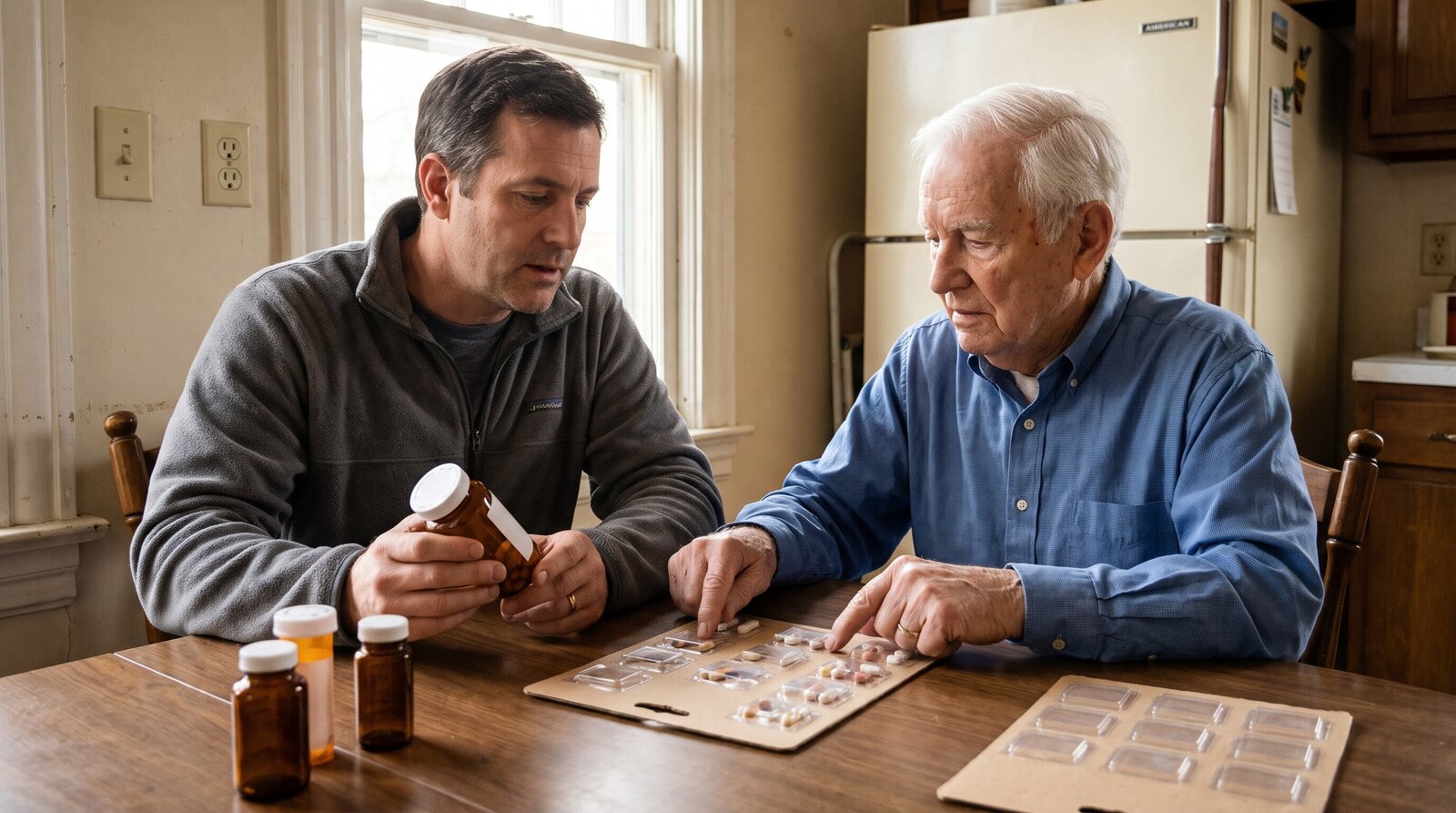
Ask these on the phone and write down the answers. The first one matters most.
- When the doctor changes a dose mid-month, who updates the packs, how fast, and what happens to the old ones?
- Which of my parent's medicines can't go in the packs, such as liquids, inhalers, injections, refrigerated or as-needed medicines?
- Is there a fee for the packaging, and does insurance cover the medicines the same way?
- Is it delivered, or picked up? What happens if a delivery is late?
- Can the packs be made easier to open for weak or arthritic hands, with large-print labels?
- Can I talk to the pharmacist about my parent's medicines, and what permission do you need on file?
- What happens after a hospital stay, when the medicine list often changes?
Making packs work at home
Keep the packs in one place, right where your parent takes them: next to the coffee maker, by the bed. Only the current day should be within easy reach, especially for a parent with memory trouble.
Pair the packs with a reminder at the same times every day. A pack shows what to take; it doesn't tell your parent when. These medication reminders that actually work cover phone alarms and other options.
Check the strip or card when you visit. A few missed packets is information, not a failure. Bring it up with the doctor, since it may mean the schedule is too complicated or a medicine is causing side effects. And when the list changes, make sure the old packs leave the house, so nobody takes a dose that's been stopped.
Dad tears open the morning packet, and Sunday night is yours again.
No more forty minutes at the kitchen table sorting pills. The pharmacy packs them, Tiina can remind him when the next one is due, and when he just wants someone to talk to, he taps Call Tiina.
Try Tiina with Dad →Frequently Asked Questions
Methodology & editorial policy
Reviewed and updated October 31, 2026 by the Tiina Editorial Team. Facts, programs and prices in this guide come from the sources listed below.
About composite scenarios. The opening scene is a composite.
About Tiina. Tiina is a voice-first AI companion for older adults: an app for iPhone and iPad that your parent opens whenever they want someone to talk to, day or night.
Sharing. Quote freely with a link back to this page. For full reprints, email hello@tiina.ai.
Sources. 9 references: Amazon Pharmacy, Consumer Reports, Medicare.gov, National Institute on Aging, Poison Control (National Capital Poison Center), pharmaphorum, Dispill USA, Medicine-On-Time, National Community Pharmacists Association.View all
- Amazon Pharmacy. PillPack. pharmacy.amazon.com
- Consumer Reports. Tips for How Best to Organize Medications. consumerreports.org
- Medicare.gov. Safety checks, drug management programs, and Medication Therapy Management. medicare.gov
- National Institute on Aging. Taking Medicines Safely as You Age. nia.nih.gov
- Poison Control (National Capital Poison Center). Poison Control. poison.org
- pharmaphorum. CVS ends multi-dose packaging offering SimpleDose (May 1, 2023). pharmaphorum.com
- Dispill USA. Dispill multi-dose blister packaging. dispill-usa.com
- Medicine-On-Time. Multi-Dose Medication Adherence Packaging. medicineontime.com
- National Community Pharmacists Association. Find Independent Pharmacies Near You. ncpa.org