Pill Organizers for Seniors: Which Type Fits Your Parent
A simple weekly box is enough for some parents. Others need push buttons, four slots a day or a locked dispenser. Here's how to tell which.
Some links below are affiliate links: if you buy through them, Tiina may earn a small commission at no extra cost to you. As an Amazon Associate I earn from qualifying purchases.
Match the organizer to the problem. A weekly AM/PM box works if your parent just needs a visual check. Push-button lids help stiff or arthritic hands. A four-times-a-day box fits medicines taken morning, noon, evening and bedtime. If your parent forgets whether they took their pills or might take extra, a locked automatic dispenser that opens at set times is safer. Ask the pharmacist first: some medicines must stay in their original bottles.
We're not doctors or pharmacists. Before you move any medicine into an organizer, ask your parent's pharmacist which ones can go in it. Some can't: the label for the blood thinner Pradaxa, for example, says to keep the capsules in the original bottle and not to put them in pill boxes or organizers. If your parent takes a double dose or the wrong pills, call Poison Control at 1-800-222-1222. If they collapse, can't be woken or have trouble breathing, call 911.
The pill organizers worth buying
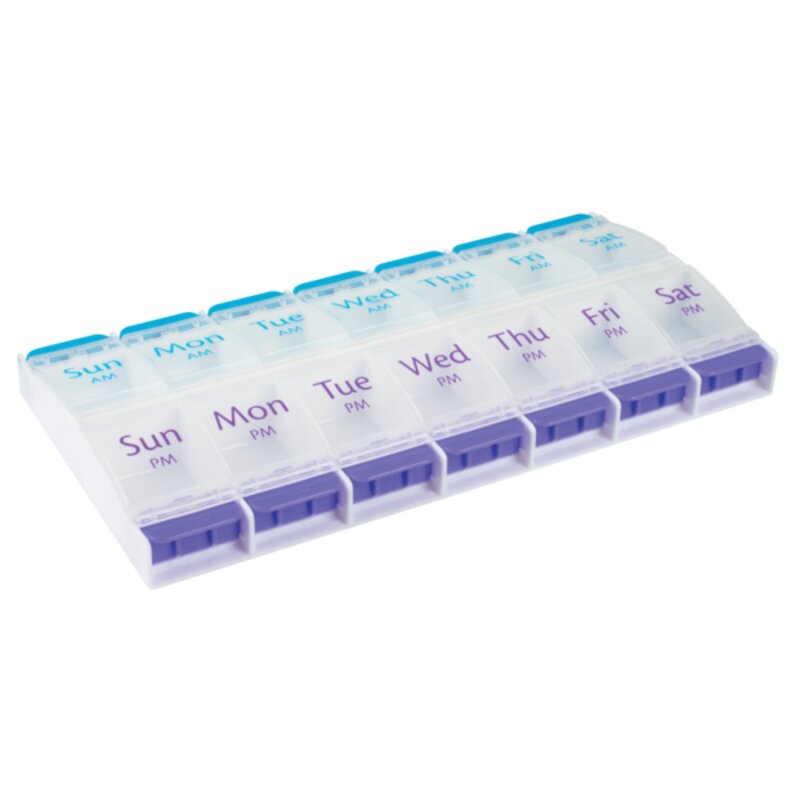
Ezy Dose Push Button Weekly AM/PM Pill Organizer (XL)
Big push buttons pop each compartment open with very little effort, and four silicone feet hold the box to the counter so your parent can open it one-handed. Extra-large compartments hold up to 60 aspirin-sized tablets, the lettering is bold and large, and it earned the Arthritis Foundation's Ease-of-Use Commendation.
Watch for: It's easy to open for everyone, including visiting grandchildren, so store it out of their reach. Only two slots a day.
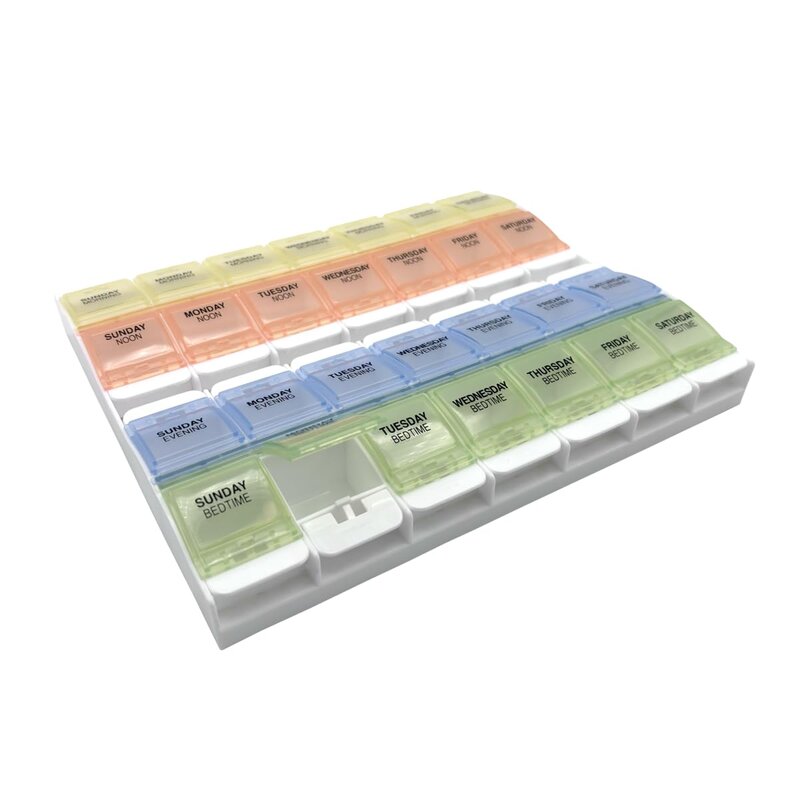
Ezy Dose Push Button Weekly 4x/Day Pill Organizer
Four color-coded rows for morning, noon, evening and bedtime, with push-button lids and scooped bottoms that make pills easy to slide out. Each compartment holds up to 30 aspirin-sized tablets, and a non-skid base keeps it in place. It also carries the Arthritis Foundation's Ease-of-Use Commendation.
Watch for: Twenty-eight lids is a lot to fill and a lot to check. Fill it at a table in good light and double-check each row against the bottles.
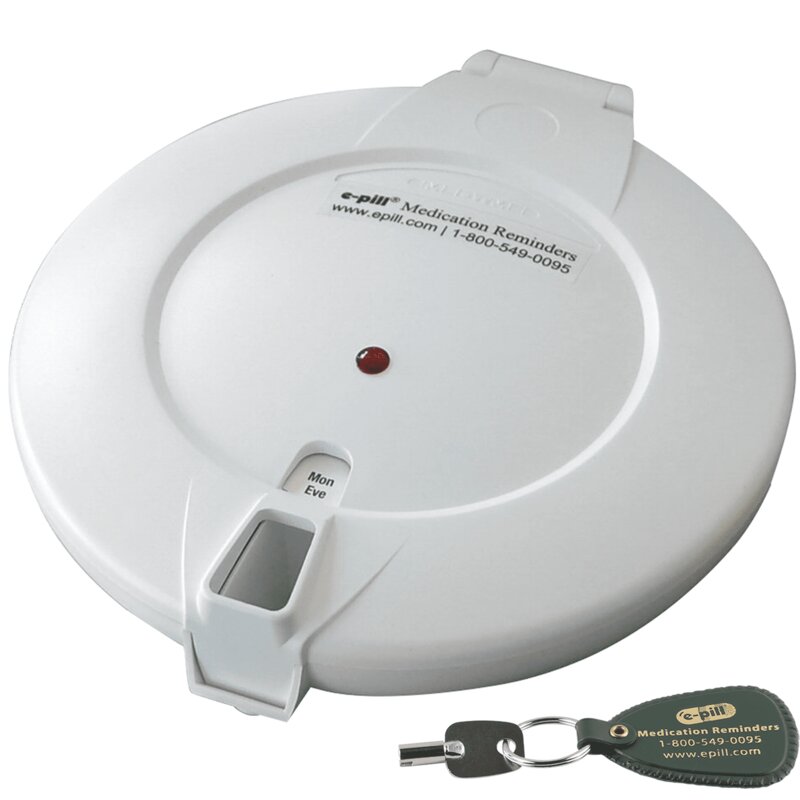
e-pill MedTime Locked Automatic Pill Dispenser
A key-locked device that holds 28 compartments, enough for four weeks at once a day, and opens only the compartment that's due. It sounds and flashes at set times, up to 28 alarms a day, and keeps a log of when each compartment opened. A second tray comes with it so the next month can be filled ahead of time. No monthly fee.
Watch for: It's expensive, and someone still has to fill it correctly. The alarm only helps if your parent can hear or see it, and it can't make them take the pills.
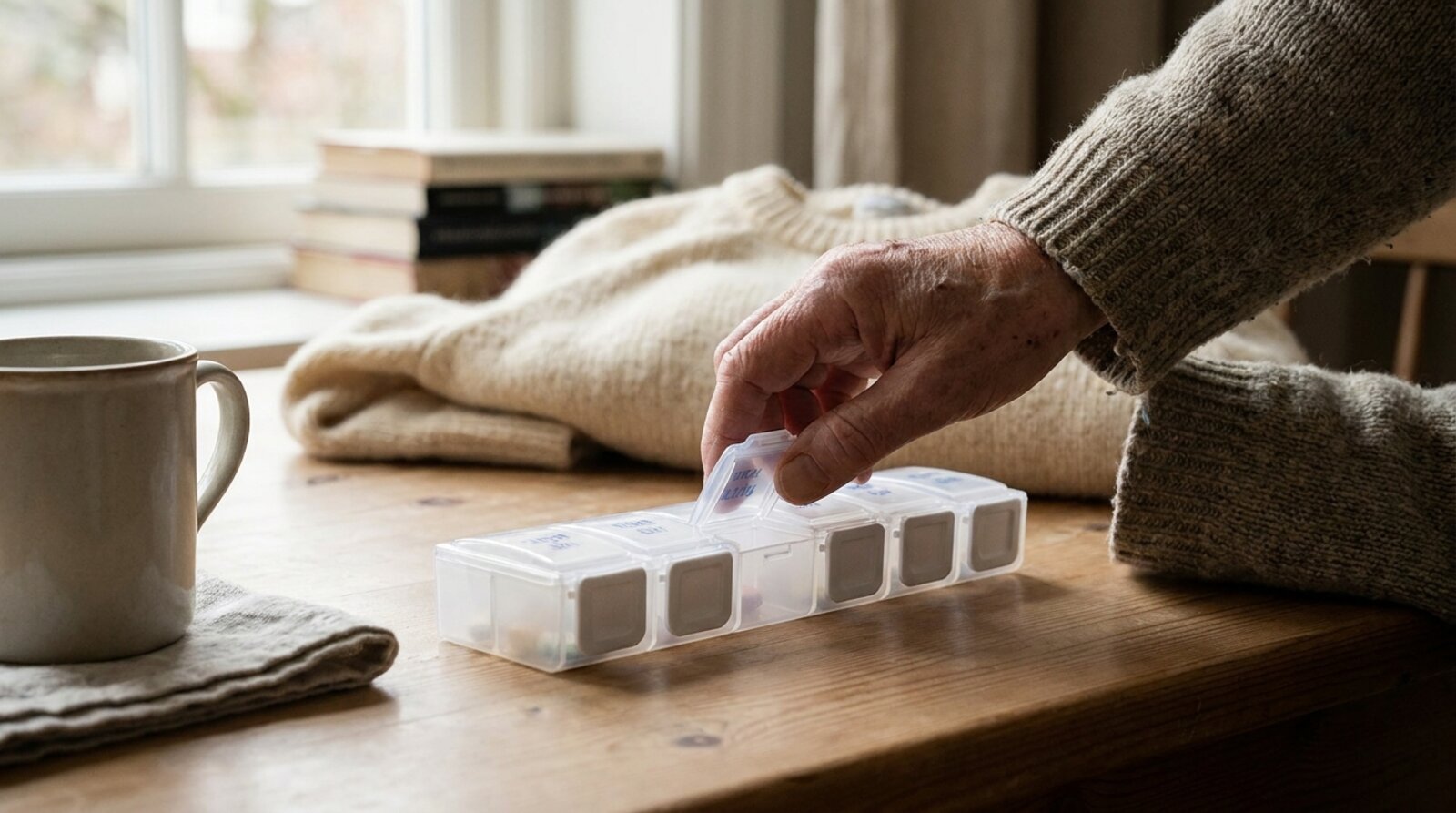
You fill your dad's pillbox every Sunday night. By Wednesday, Tuesday's evening slot is still full and Thursday's morning slot is mysteriously empty. He swears he took everything. The lids on the drugstore organizer are so stiff that he pries them open with a butter knife, and sometimes two pop at once. A pill organizer seems like the simplest thing in caregiving. It is, once it fits the actual problem. Here's how to match the box to your parent, and when a box isn't enough.
Signs your parent needs a better system
Taking medicine on time is harder than it looks when there are five or six bottles with different schedules. The National Institute on Aging suggests weekly pill boxes, charts, calendars or timers as ways to stay on track. It's time to set one up, or switch to a different kind, if you notice:
- Full slots in the box days after they should have been taken
- Bottles running out early, or lasting much longer than they should
- Your parent isn't sure whether they took today's pills
- Struggling to open bottles or lids, or prying them with a knife or fingernail
- A new prescription, a hospital stay or a dose change that shook up the routine
The four main types, and who each one suits
Weekly AM/PM boxes. Seven days, two rows. Good for a parent who takes pills once or twice a day and just needs a visual check of whether today's are gone. Look for big compartments and large, clear letters.
Push-button or easy-open lids. Same idea, but each compartment pops open with a press instead of a fingernail. Best for arthritis, weak grip or shaky hands. Some, like the Ezy Dose models we picked, have rubber feet so the box doesn't slide while your parent presses.
Four-times-a-day boxes. Seven days, four rows: morning, noon, evening and bedtime. For a parent with a busier schedule. They take longer to fill, so fill them carefully.
Locked automatic dispensers. A locked device that holds a few weeks of pills, sounds an alarm at each set time, and only opens the right compartment. Best for a parent who forgets, takes extra or gets confused about what's already been taken. Some are a one-time purchase; others, like Hero, are a monthly subscription that runs $29.99 to $59.99 a month depending on the plan and needs Wi-Fi.
If filling a box every week isn't working at all, ask the pharmacy whether it can package your parent's pills by date and time for you. Some pharmacies do, and it takes the weekly filling off your plate.
Ask the pharmacist first
This step takes five minutes and prevents real mistakes. Bring every bottle, or the list, and ask which medicines can go into an organizer. Some medicines need their original packaging to protect them from moisture. The Pradaxa label is blunt about it: "Do not put PRADAXA Capsules in pill boxes or pill organizers."
While you're at the counter, NIA suggests a few more things worth asking for:
- Fill every prescription at the same pharmacy, so the pharmacist can catch interactions.
- Ask for larger type on labels if your parent has trouble reading them.
- Ask for easy-open caps if your parent can't manage childproof bottles, and then store those bottles carefully if grandchildren visit.
- Make sure your parent can tell their pills apart by size, shape, color or the number printed on them.

With notifications on, Tiina can remind your parent each morning that the weekly box is waiting, and when the pharmacy printout for a new pill is confusing, she reads it back in plain words. Questions about the medicine itself still go to the pharmacist.
How to set it up so it works
Fill the organizer at the same time every week, at a table with good light, from the original bottles. One person fills it, and that person checks each row against the medication list before closing the lids. Keep the bottles: you need the labels for refills and to identify any pill that ends up loose. Keep that list on the medicine list sheet from your Survival Guide, or see how to build a medication list that stays up to date.
Put the box where the routine already happens, next to the coffee maker or the toothbrush. NIA notes that some people use meals or bedtime as their cue. Add a reminder that works for your parent, whether that's a phone alarm, a talking clock or an app; here are the medication reminders that actually work for older adults.
If your parent finds a slot they missed, they shouldn't double up the next time to catch up. NIA warns against taking a larger dose than prescribed, and the right move depends on the medicine. Call the pharmacist and ask what to do about that specific pill. If more than one person helps with medicines, the dose record sheet in your Survival Guide shows the next person what was actually taken.
Then check the box when you visit or ask on the phone: "Is Wednesday's evening slot empty?" It's a gentle way to catch a problem early without hovering.

Reset the box after every change
Watch the box most closely right after something changes: a hospital stay, a new prescription, a dose that went up or down. Old pills sitting in a box that was filled from last month's list are an easy way to take something that was stopped.
When anything changes, empty the organizer, update the medication list, and refill from the current bottles. Ask the pharmacist or doctor how to get rid of the medicines that were stopped or expired, as NIA recommends, so they don't end up back in the box. Then show your parent what's different, in plain words: "The white oval one is gone. The new one is the small yellow pill at night."
When a pillbox isn't enough
If your parent is skipping doses even with an organizer, or doubling up, the problem may be memory rather than the box. That's when a locked dispenser, pharmacy packaging or a daily check-in from someone else makes sense, and it's worth telling the doctor what you've seen.
It's also worth asking whether all those medicines are still needed. People 65 and older tend to take more medicines than any other age group, and NIA notes that more medicines bring more risk of side effects. Ask the doctor or pharmacist whether any can be reduced or stopped safely. Our doctor questions checklist includes the questions to ask.
Dad opens the pillbox on his own, and his mornings run on his routine again.
The box is filled, the reminder is set, and the coffee maker is right next to it. When the insurance letter about the new prescription makes no sense, he reads it to Tiina or shares a photo, and she explains it as many times as he needs.
Try Tiina with Dad →Frequently Asked Questions
Methodology & editorial policy
Reviewed and updated October 31, 2026 by the Tiina Editorial Team. Facts, programs and prices in this guide come from the sources listed below.
About composite scenarios. The opening scene is a composite.
About Tiina. Tiina is a voice-first AI companion for older adults: an app for iPhone and iPad that your parent opens whenever they want someone to talk to, day or night.
Sharing. Quote freely with a link back to this page. For full reprints, email hello@tiina.ai.
Sources. 7 references: National Institute on Aging, DailyMed, National Library of Medicine, Poison Control, Apothecary Products, e-pill, Hero Health.View all
- National Institute on Aging. Taking Medicines Safely as You Age. nia.nih.gov
- DailyMed, National Library of Medicine. Pradaxa Medication Guide. dailymed.nlm.nih.gov
- Poison Control. Poison Control: get help online or by phone. poison.org
- Apothecary Products. Ezy Dose Push Button Weekly AM/PM Pill Organizer (XL). amazon.com
- Apothecary Products. Ezy Dose Push Button Weekly 4x/Day Pill Organizer. amazon.com
- e-pill. MedTime Automatic Locked Medication Dispenser. amazon.com
- Hero Health. Hero pricing. herohealth.com