Loss of Appetite in Elderly Parents: Causes, Warning Signs and Help
Why older parents eat less, when it's a reason to call the doctor, and the practical things families do that help.
Some links below are affiliate links: if you buy through them, Tiina may earn a small commission at no extra cost to you. As an Amazon Associate I earn from qualifying purchases.
Eating less can come with age, but it's often tied to something fixable: a medicine side effect, dental pain, depression, loneliness or an illness. Call the doctor if your parent loses more than 10 pounds, or 5% of their weight, in 6 to 12 months without trying. Call 911 for new confusion or fainting. Meals on Wheels and a registered dietitian can help.
We're not doctors or dietitians, and nothing here is medical or nutrition advice. It's general information to help you notice changes and know who to call. Your parent's doctor and a registered dietitian can tell you what's right for them.
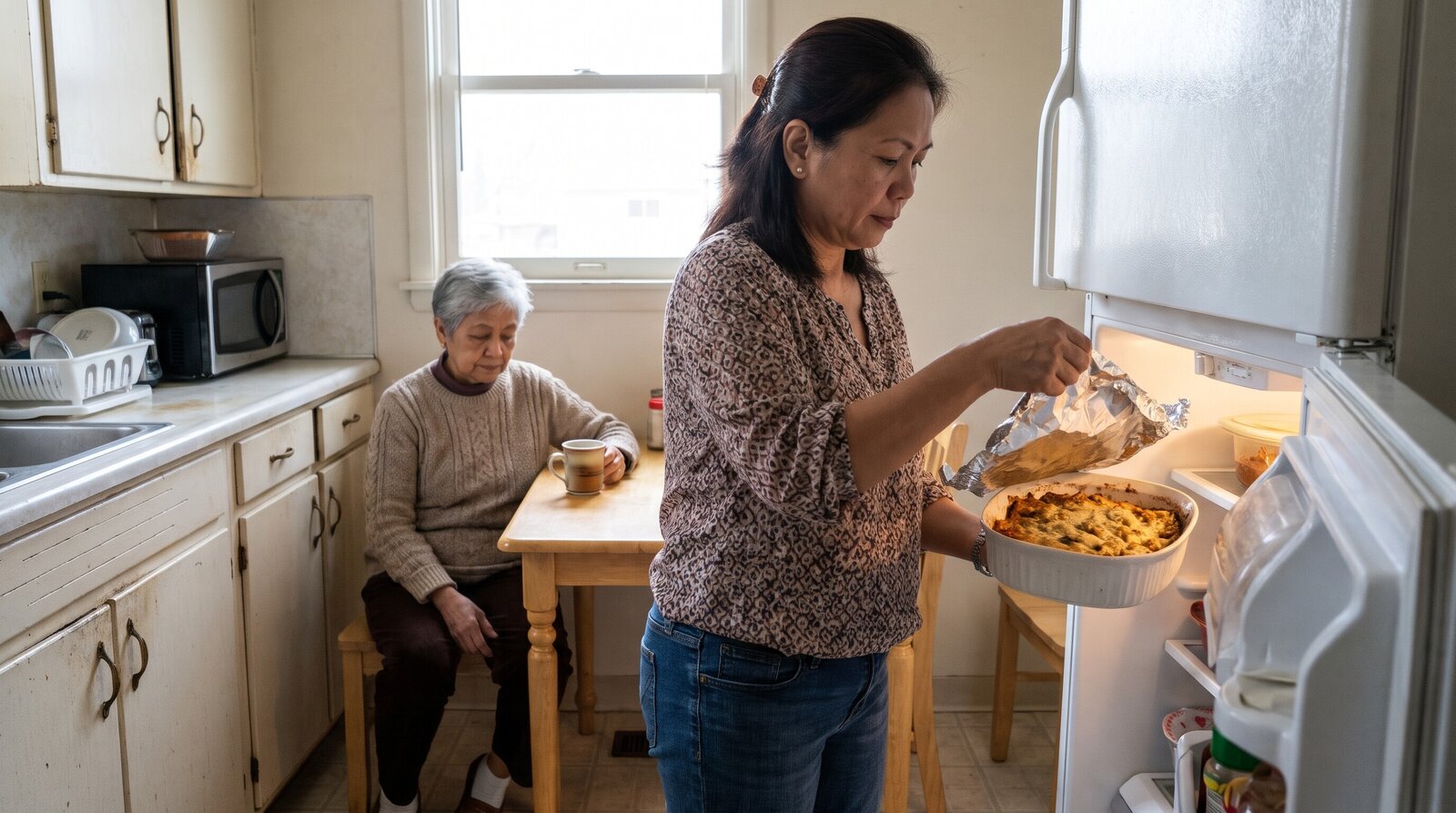
You open your mom's fridge and find the casserole you brought last Sunday, barely touched. She says she had a big breakfast. Her pants look looser than they did at Easter. Or your dad, who always cleaned his plate, now pushes food around and says he's just not hungry. It's frightening, because food feels like the most basic thing and you can't make someone eat. You don't need to become a nutritionist. You need to notice the right things, get the doctor involved, and make eating easier and less lonely.
Why older adults lose their appetite
Some of it is ordinary aging. The National Institute on Aging explains that bodies change in ways that make people feel full sooner, and that taste and smell often fade with age, dental problems and medicines, so food seems bland. The National Council on Aging says this kind of age-related appetite loss affects about a quarter of older people.
But appetite loss is also a symptom worth taking seriously. These are the common causes families can raise with the doctor:
- Medicines. Some drugs reduce appetite, dull taste, dry the mouth or cause nausea. A new prescription is a common culprit.
- Mouth and teeth. Loose dentures, sore gums or a painful tooth make chewing hard, and people quietly avoid meat, fruit and vegetables.
- Mood. Sadness, depression and grief can all take away appetite.
- Loneliness. Cooking for one and eating alone, night after night, is a real reason people stop bothering.
- Illness. Heart failure, kidney or liver disease, COPD, thyroid problems, dementia and some cancers can all lower appetite.
- Practical barriers. Trouble shopping, cooking, opening packages or affording food.
When to call the doctor, and when to call 911
Call your parent's doctor if they lose more than 10 pounds, or 5% of their normal weight, over 6 to 12 months without trying, according to MedlinePlus. Also call if poor appetite comes with signs of depression, if chewing or swallowing has become hard, or if the change started around a new medicine. Don't stop any medicine without talking to the doctor first.
Call 911 if your parent faints or becomes confused, unusually drowsy or hard to wake. Signs of severe dehydration, like barely urinating, very dark urine, dizziness, a racing heart or confusion, are also an emergency. If your parent says they feel hopeless or don't want to live, call or text the 988 Suicide & Crisis Lifeline right away.
Get ready for the appointment
Doctors can do much more with specifics than with "she's not eating much." This doctor appointment prep guide covers the visit itself. In the week before it, gather these:
- A record of everything your parent ate and drank for at least a day or two. MedlinePlus calls this a diet history, and doctors use it.
- Their weight, if you can get it on the same scale a few times, and how their clothes are fitting.
- A full list of medicines, with a note on anything new or changed in the last few months.
- Anything else you've noticed: mood, sleep, memory, mouth pain, nausea, constipation.
- Three questions to ask: could any medicine be lowering their appetite, would smaller, more frequent meals help, and would a referral to a registered dietitian help?

The doctor checks the medicines and the teeth. Company at the table is something you can add today: your parent taps Call Tiina while the soup heats and talks about the garden, an old family recipe or whatever they're curious about.
Practical things families do at home
Start with the meals sheet in your Survival Guide, which helps you find the part of mealtime that's hard and who covers which meal. Beyond that, these are the everyday changes the NIA and the National Council on Aging suggest. They aren't diets or meal plans, just ways to make food more appealing and eating less of a chore. Check any special diet or nutrition drink with the doctor first.
Keep regular times for meals and snacks, because routine helps hunger signals. Bring back favorite or nostalgic foods, add flavor with herbs, spices or lemon, and vary the colors and textures on the plate. Ask your parent to help plan or cook, which gives them a say. A short walk before a meal can help, too, since being active often makes people hungrier.
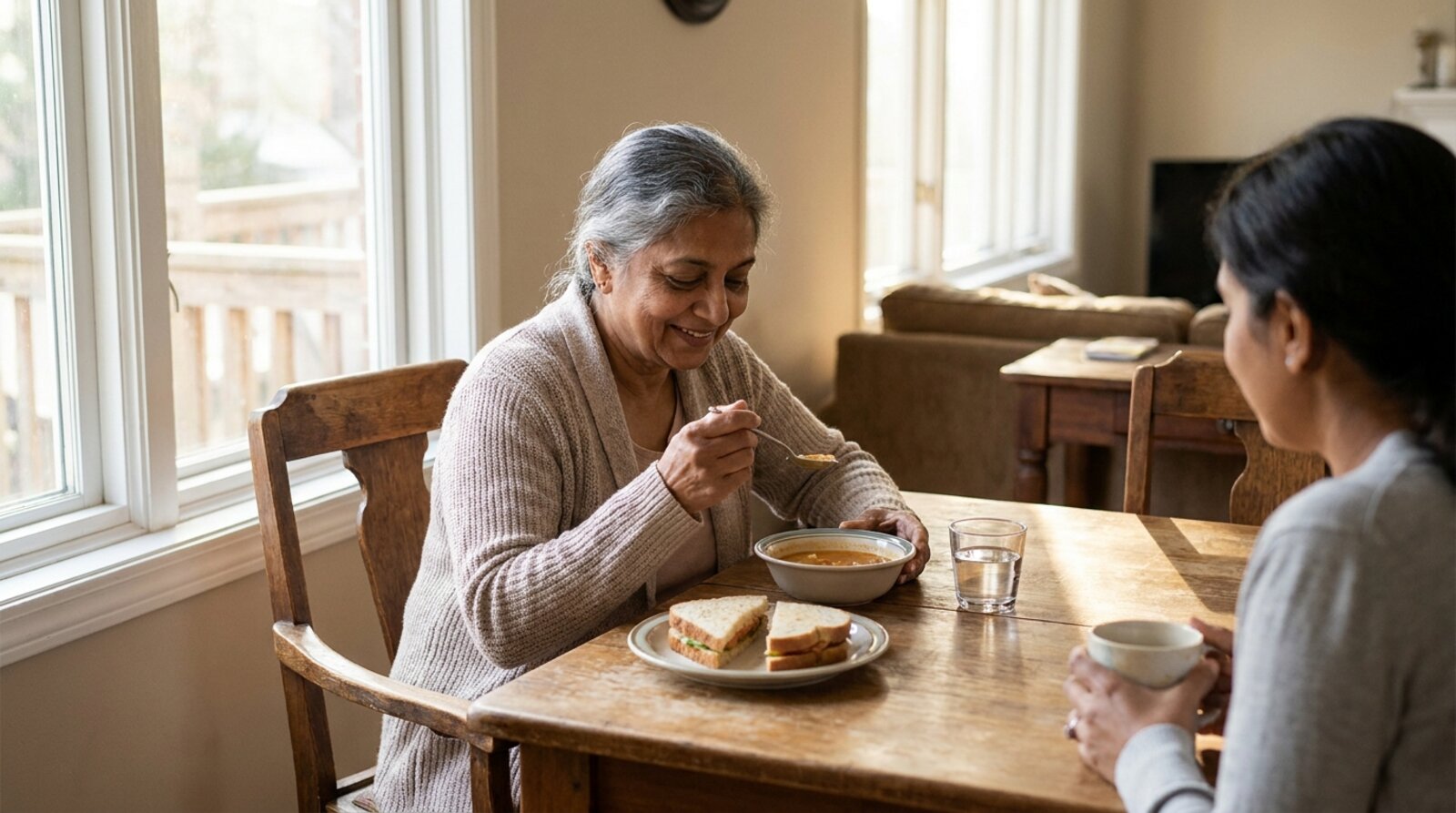
Most of all, add company. Eating with someone is one of the most effective things families can do. Sit down and eat with your parent when you visit, set up a regular video call at dinnertime, or look for a senior center lunch nearby. If isolation is part of the picture, these ideas for easing loneliness in elderly parents can help.
What doesn't help: arguing, pleading or watching every bite. Pressure tends to make meals tense and appetites smaller.

Help with meals: Meals on Wheels, senior centers and SNAP
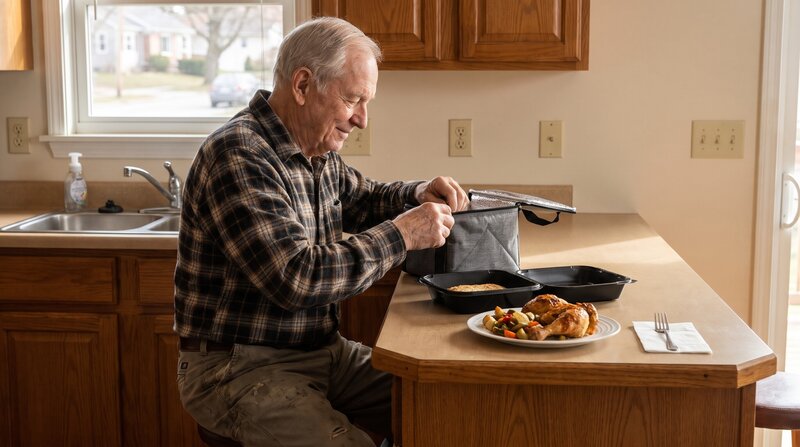
If shopping and cooking are the barrier, outside help can fill the gap. Meals on Wheels programs usually serve adults 60 and older who have trouble shopping, cooking or getting out. Depending on the area, meals may be free, paid by donation or priced on a sliding scale, and you can apply on your parent's behalf. Enter their zip code on the Meals on Wheels site to find the local provider.
Many senior centers and community centers serve free or low-cost group lunches, which bring company along with the food. If money is tight, check whether your parent qualifies for food benefits through their state's SNAP office. And if you shop for your parent, a standing weekly grocery order with a few favorites they can heat or eat cold takes one daily decision off their plate.
For expert help, ask the doctor for a referral to a registered dietitian, or find one through the Academy of Nutrition and Dietetics. Medicare Part B covers medical nutrition therapy from a registered dietitian, at no cost, for people with diabetes or kidney disease, or a kidney transplant in the last 36 months, with a doctor's referral.
Look at the bigger picture
Appetite is often the first visible sign of something else. If your parent has also pulled away from friends, lost interest in things they enjoyed or seems flat, read about the signs of depression in elderly parents and raise it with the doctor. Depression in older adults is common and treatable.
If the empty fridge comes with unpaid bills, missed medicines or a messy house, it may be time to ask whether your parent can still manage at home on their own. These signs a parent can't live alone can help you think it through.
Mom's appetite is the doctor's job. The quiet at lunch isn't.
She taps Call Tiina while the kettle boils and talks about the garden, the news or the way her mother made rice pudding, in her own words and at her own pace. A table with a conversation at it is less of a chore, and nothing she says is reported back to the family.
Try Tiina with Mom →Frequently Asked Questions
Methodology & editorial policy
Reviewed and updated October 31, 2026 by the Tiina Editorial Team. Facts, programs and prices in this guide come from the sources listed below.
About composite scenarios. The opening scene is a composite.
About Tiina. Tiina is a voice-first AI companion for older adults: an app for iPhone and iPad that your parent opens whenever they want someone to talk to, day or night.
Sharing. Quote freely with a link back to this page. For full reprints, email hello@tiina.ai.
Sources. 10 references: National Institute on Aging, National Council on Aging, MedlinePlus, 988 Suicide & Crisis Lifeline, Meals on Wheels America, USDA Food and Nutrition Service, Medicare.gov, Academy of Nutrition and Dietetics.View all
- National Institute on Aging. Overcoming Roadblocks to Healthy Eating. nia.nih.gov
- National Council on Aging. 4 Common Nutrition Challenges of Older Adults and What to Do About Them. ncoa.org
- MedlinePlus. Appetite, decreased. medlineplus.gov
- MedlinePlus. Weight loss, unintentional. medlineplus.gov
- MedlinePlus. Dehydration. medlineplus.gov
- 988 Suicide & Crisis Lifeline. 988 Lifeline. 988lifeline.org
- Meals on Wheels America. Find Meals and Services. mealsonwheelsamerica.org
- USDA Food and Nutrition Service. SNAP State Directory of Resources. fns.usda.gov
- Medicare.gov. Medical nutrition therapy services. medicare.gov
- Academy of Nutrition and Dietetics. Find a Nutrition Expert. eatright.org